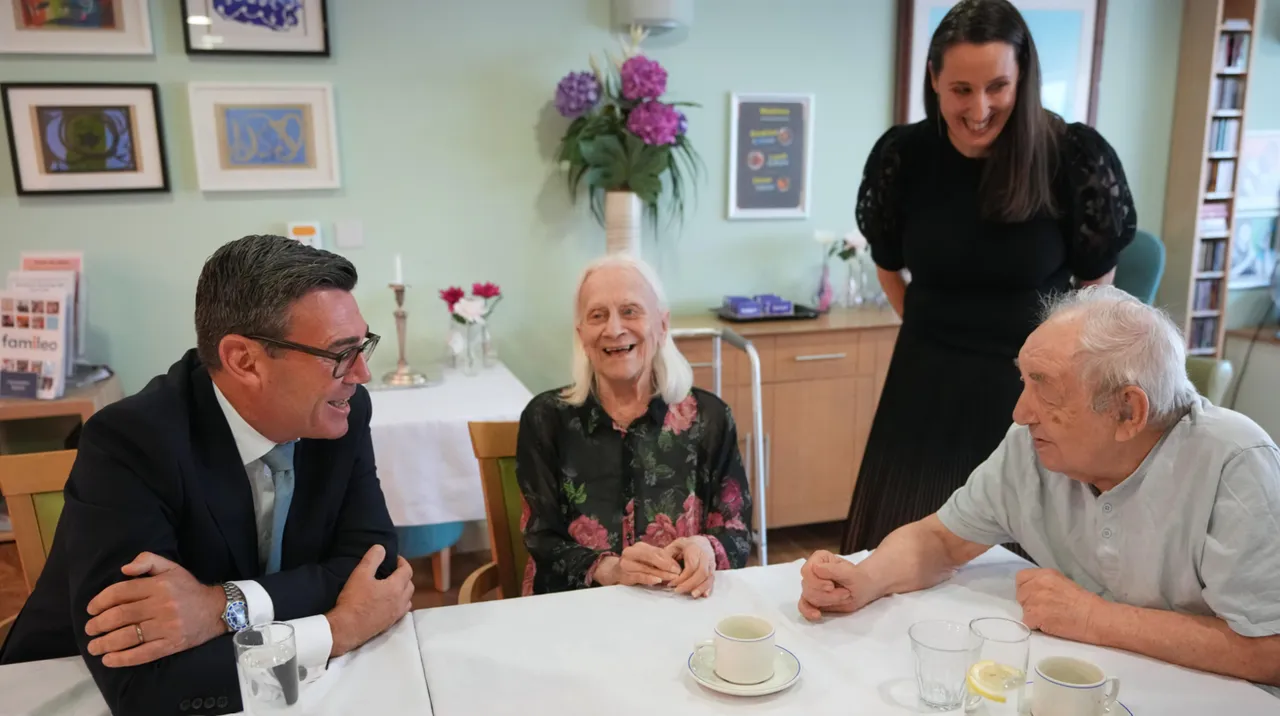
British Prime Minister Andy Burnham has announced he intends to fight the next general election on a platform of free, universally funded national social care, reigniting a debate that has defeated multiple governments before him.
Burnham made the pledge in a television interview, saying he will propose a free-to-use national care system as a flagship election commitment. He stated he would put "whatever political capital I have into fixing broken social care."
The announcement marks the first concrete outline of how Burnham hopes to overhaul a system he has described as broken, though significant questions remain over funding and delivery.
The Health Foundation has previously estimated that a free national care system could cost taxpayers around 18 billion pounds a year. Burnham disputed that figure but acknowledged that pursuing the reform could make him "unpopular" with some voters.
He argued that the current system already carries hidden costs, including people being forced to sell their homes to pay for care and patients spending time in accident and emergency departments because adequate home care is unavailable.
Burnham acknowledged that the manifesto on which Labour was elected at the last general election would make it "hard" to achieve his goal. That manifesto pledged not to raise income tax, VAT, or National Insurance.
His comments were widely interpreted as a signal that he may go into the next election proposing tax increases to fund social care.
Darren Jones, a former chief secretary to the Treasury under Sir Keir Starmer and regarded as an internal critic of Burnham, warned against taxing, spending, and borrowing without accompanying spending cuts. Jones suggested that if Burnham wished to prioritise social care, he might need to consider scrapping the triple lock for pensioners, a commitment Labour included in its 2024 manifesto.
The Conservatives have criticised the potential for an increased tax burden. Reform described Burnham's plan as another "death tax," echoing language used against previous social care proposals.
The term "death tax" was first applied to a compulsory levy on estates that Burnham himself proposed when serving as health secretary under Gordon Brown. A later attempt at social care reform by Prime Minister Theresa May collapsed in 2017 after her plans were similarly labelled the "dementia tax."
Some Labour MPs are reported to be uncomfortable at the prospect of defending tax rises or changes to the triple lock on the doorstep during an election campaign.
Burnham has not yet set out detailed funding plans. Those close to the prime minister believe there are significant political rewards for whoever successfully reforms the social care system. However, past prime ministers who failed to convince the public on the issue have not remained long in office.