More than three dozen political prisoners have been released in Venezuela following a second round of negotiations between the country's interim government and the opposition, human rights groups say.
Human rights organisation Justicia, Encuentro y Perdon (JEP) said 39 political dissidents were freed between Friday and Saturday from various prisons. Those released included eight women accused of "narco-terrorism" in 2021 and six people accused of involvement in a 2020 attempt to overthrow former President Nicolas Maduro.
Among those freed in the early hours of Saturday was Wilder Vasquez, who had been sentenced to five years in prison in 2018 on claims he was plotting to kill Maduro.
The releases followed a second round of talks on Friday between the government of interim President Delcy Rodriguez and the opposition, held with US approval. The negotiations have taken place since Washington's military removal of Maduro in January, after which he was put on trial on drug charges.
The talks came days after Rodriguez met US President Donald Trump on the sidelines of the UN General Assembly in New York. Rodriguez used her UN speech on Thursday to reiterate that there "will be elections in Venezuela", without specifying when.
Venezuela's government has made no statement on the latest releases, nor has it indicated whether they were connected to Rodriguez's conversation with Trump.
Gonzalo Himiob, vice-president of rights group Foro Penal, said "a significant number" of political prisoners had been released on Saturday morning from several of Venezuela's detention centres. Foro Penal, which tracks political detentions, said 344 people remained classified as political prisoners as of September 18, down from 391 on August 10, when the government said it had freed 131 people under a separate programme.
US Secretary of State Marco Rubio said more than 1,000 Venezuelans had been released since Maduro's removal, calling it "a crucial step" for the country's reconciliation.
Rodriguez enacted an amnesty law in February under US pressure, though the pace of releases has been slow. Her administration had previously released hundreds of prisoners as part of a reconciliation effort, but those releases slowed sharply in April after Rodriguez said the scheme was "coming to an end."
JEP said in a statement: "We will remain vigilant and continue to demand full freedom for all those who are still waiting."
A first round of talks in August focused on retrieving Venezuelan funds frozen overseas to help recovery from June's earthquakes, which killed more than 6,300 people, and on reforming the judiciary.
Venezuelan Interior Minister Diosdado Cabello, closely associated with Maduro's authoritarian rule, called Rodriguez's meeting with Trump "a great triumph of the diplomacy of peace."
Opposition figures, however, expressed disapproval over the meeting, viewing it as a dismissal of their calls for swift elections — calls the US had previously endorsed. The Trump administration backed Rodriguez, Maduro's former vice-president, as his successor rather than opposition leader Maria Corina Machado.
Venezuela's last elections, held in 2024, in which Maduro was declared the winner, were widely disputed as fraudulent. Opposition tallies suggested their candidate had won by 70 percent of the vote.
Pedro Mario Burelli, a former Venezuelan state oil company executive and opposition commentator, called the two leaders "the shameless puppet and her unscrupulous and undignified puppet-master", adding: "Little has changed in Venezuela under Washington's clumsy and selective oversight."
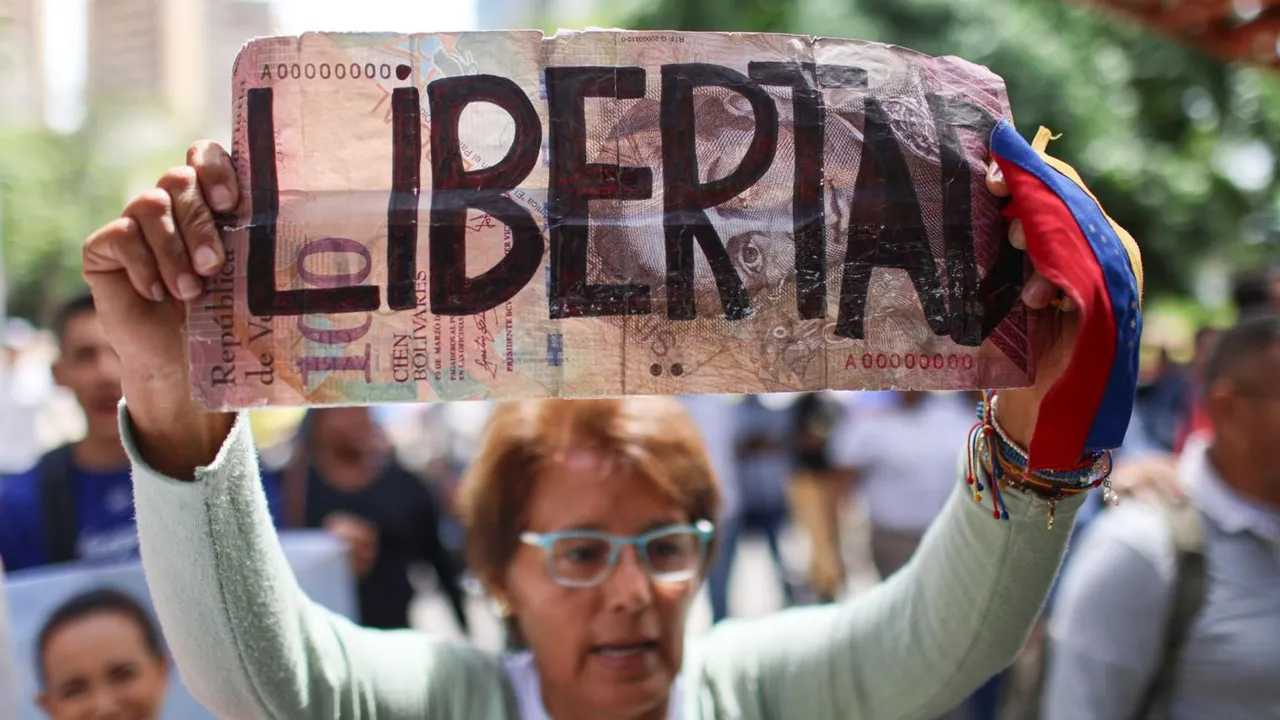
Families of political prisoners have staged ongoing protests outside the US embassy in Caracas and the El Rodeo I prison, which rights groups consider a torture centre.