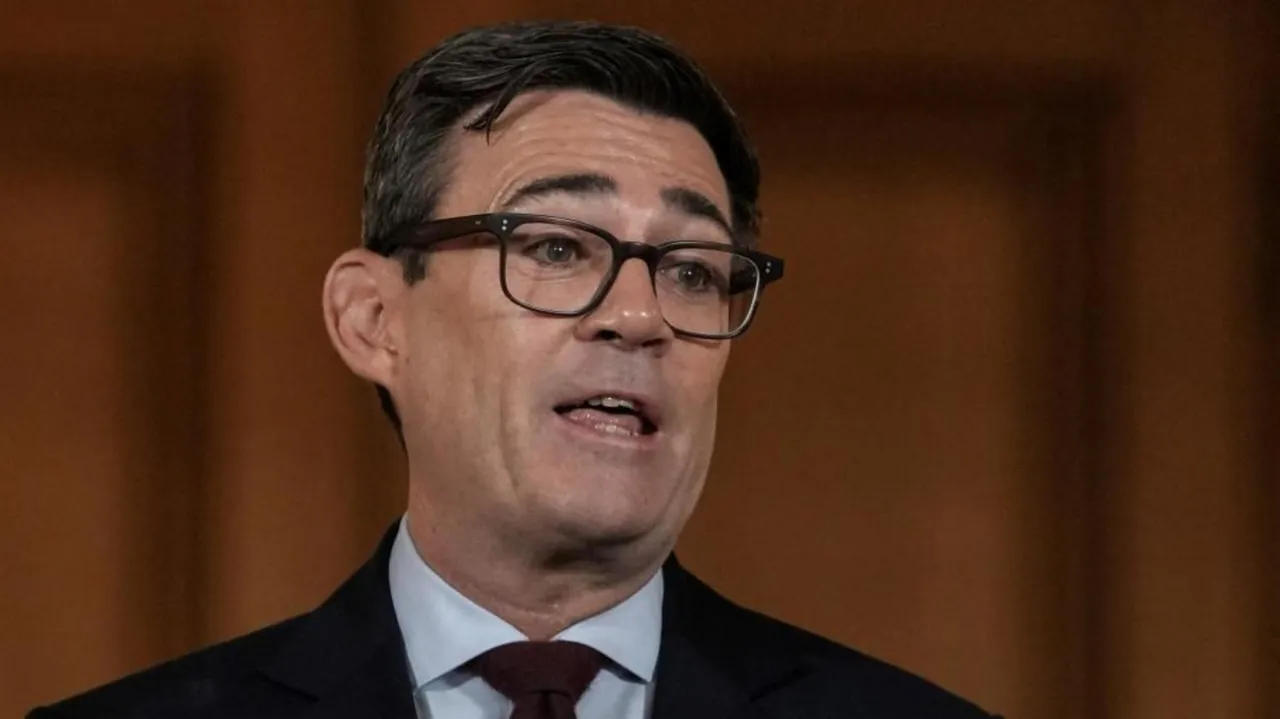
Prime Minister Andy Burnham has said he is "open" to the possibility of the United Kingdom formally apologising for its role in the transatlantic slave trade, but has ruled out financial reparations.
Writing in a piece for a national newspaper, Burnham described the transatlantic slave trade as a "brutal and barbaric violation" and said Britain must "face up to the past."
"I do not think that British people today can be held liable for historical wrongs, however heinous, that happened in a different age under different laws and in which they played no personal part," he wrote.
Burnham said Commonwealth countries had for years been asking for an "honest conversation." He offered a "structured dialogue," adding: "Listening to calls for a formal apology on behalf of the British state will form an important part of this process. I am open to them."
A government source described the move as "morally the right thing to do."
The statement stops short of a formal apology and maintains the position of previous governments, which have never formally apologised for slavery or offered reparations.
The announcement comes ahead of next week's Commonwealth leaders summit in the Caribbean, as King Charles III tours the region. During the first leg of his tour in the Bahamas, the King made reference to the "suffering of the past." He later visited the site of a rebellion of enslaved people against British authorities in Guyana.
The All-Party Parliamentary Group (APPG) for Afrikan Reparations welcomed the statement, though its chair, Bell Ribeiro-Addy, said the government had "still fallen short of a formal state apology and that actually costs nothing."
"Acknowledgment is not the same as understanding," she told a national radio programme. "Until we apologise, we are never going to be on equal footing... it's meant to be a family of nations - a Commonwealth - and it's simply not the case."
Ribeiro-Addy, the MP for Clapham and Brixton Hill, also pushed back on the focus on financial reparations, saying the issue had been mischaracterised. To her knowledge, no invoice for financial reparations had been presented to the UK government.
"My worry is the focus on financial reparations, and I think that is deeply problematic and has not quite listened to what people have said," she said.
Prime Minister of Barbados Mia Mottley, who has sought reparations, welcomed Burnham's statement, saying she would engage in good faith while still seeking reparatory justice.
Denis O'Brien, founder of The Repair Campaign, said the statement was disappointing and did not go far enough. "The British Government must stop obfuscating and give a full and formal apology now," he said. "This would be a significant and symbolic first step towards reparatory justice."
Downing Street is understood to view strengthening the Commonwealth as being in the UK's strategic interest, at a time when Russia and China are seeking to expand their influence. Only this week, President Vladimir Putin hosted a Russia-Africa summit in Moscow.
From the 16th century, English authorities and the monarchy were prominent participants in the centuries-long slave trade. Parliament passed a law abolishing slavery in 1833, under which British plantation owners were compensated for the loss of people they had enslaved. The UK only finished repaying the debt incurred to fund those payments in 2015.


