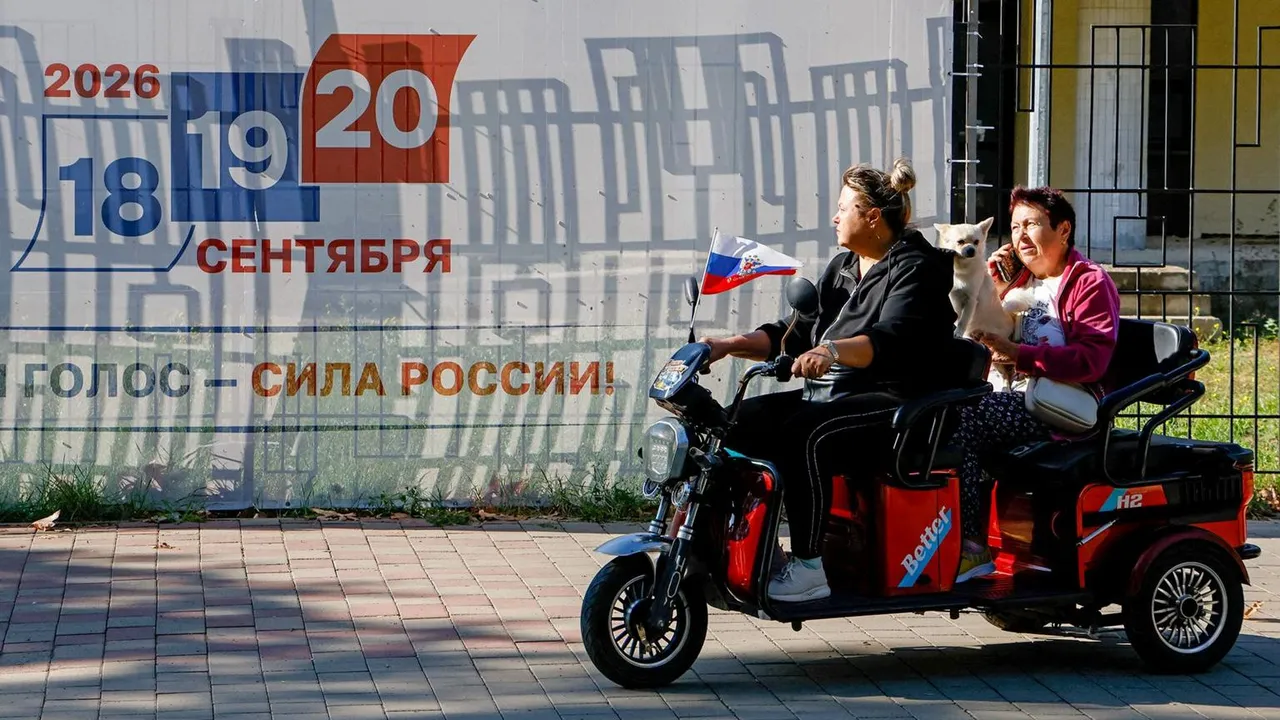
Polling stations opened in Russia's Far East on Friday, marking the start of a three-day parliamentary election that will run through Sunday. Russians are voting to elect members of the State Duma, the lower house of parliament, in the first such election since Russia launched its full-scale invasion of Ukraine in 2022.
Around 111 million voters are eligible to cast ballots. Voting is spread over three days to boost turnout and includes areas Russia occupies in Ukraine. Electronic voting is permitted.
Half of the Duma's 450 seats are filled through party lists, while the other half are contested in single-member constituency races. Voters in 11 regions will also elect governors, and 39 regions will elect members of regional legislatures.
United Russia, the governing party formed in 2001 from a merger of pro-Kremlin parties, is widely expected to retain its dominant position. The party won more than two-thirds of Duma seats in the 2021 election and is poised to repeat that performance. Its party list is led by Foreign Minister Sergey Lavrov and Moscow Mayor Sergei Sobyanin. War correspondent Yevgeny Poddubny, who was badly wounded by a Ukrainian drone, holds the third-highest ranking on the list.
The Kremlin is presenting the vote as evidence of broad public support for President Vladimir Putin and for the war in Ukraine. Officials say nearly 200 military veterans are standing as candidates. Kremlin spokesman Dmitry Peskov has described the process as Russia's own political system and its own political process.
Critics dismiss the vote as neither free nor fair, arguing that with no genuine opposition on the ballot, the result is largely settled in advance.
Alongside United Russia, several so-called systemic opposition parties are expected to retain seats. These parties vote in line with the government on key issues. The Communist Party, led for more than three decades by 82-year-old Gennady Zyuganov, has been a leading force in parliament since the 1990s. It supports the war in Ukraine. "All parties in the Duma, every single one, voted in favour of 170 laws to support the special military operation," Zyuganov said. "In that sense there is 100% agreement in the Duma."
The Liberal Democratic Party, an ultranationalist force present in the legislature since the early 1990s, also staunchly supports the war and counts multiple veterans among its members. A Just Russia, a social-democratic party that has been on the political scene for 20 years, likewise backs the war effort.
Political analyst Alexander Bratersky told sources that the race for second place is worth watching. If the Communist Party finishes second, it would, in his words, "suggest voters are angry about economic hardship and falling living standards." Russians are facing a slowing economy as well as Ukrainian drone strikes on refineries and warehouses far from the front line.
The liberal Yabloko party, the only registered political party that opposed the war, was initially included on the ballot but was removed by the Supreme Court. The court cited, among other reasons, that the party's anti-war stance was akin to seeking the violation of Russia's territorial integrity. Yabloko now runs candidates only in individual constituency races.
In recent weeks, growing numbers of Yabloko candidates have been detained by police, prosecuted for various offences, and barred from standing. "The police are carrying out a political order. That's no secret," said Yabloko candidate Grigory Grishin. "This way, the authorities are setting the boundaries within which they believe the elections should take place. It is well known that the demand for an end to the bloodshed in this conflict with Ukraine is very popular. In my opinion, most people in Russia now want peace and Yabloko helped people express this. That's why it's been excluded from the party lists, and why individual candidates are being barred."
The election campaign has offered glimpses of Russian political life more than four years into the war. During one televised debate, candidates failed to appear, leaving six empty lecterns on screen. The host acknowledged that the candidates had not turned up before ending the broadcast. At the final session of the outgoing parliament in July, MPs stood and applauded as the speaker repeatedly chanted: "Russia, Putin, Victory."