A Kremlin adviser has warned that British factories producing drones for Ukraine could come under attack from "unknown sources", following the UK's decision to share long-range missile blueprints with Kyiv.
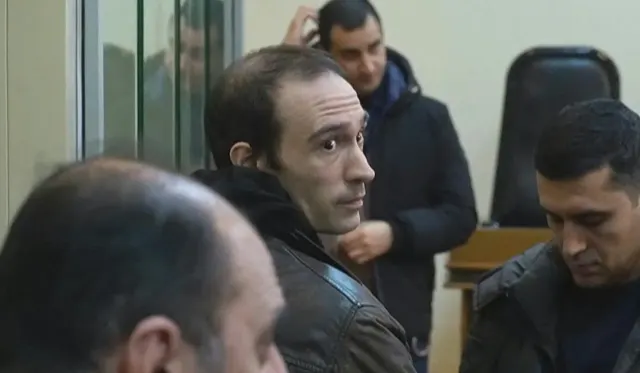
Andrei Fedorov, a former Russian deputy foreign minister and Kremlin adviser, made the remarks in an interview with a British broadcaster on Tuesday. He said he could not "exclude 100 percent" that there might be some "semi-military" action against Britain.
"There are different discussions how it should look like – it might be so-called technical reaction, maybe some hackers attack from unknown source, not from official level, of course," Fedorov said.
"There might be different political steps, and I cannot exclude 100 percent that there might be some semi-military."
"For example, something might happen with enterprises, with the factories which are producing drones for Ukraine, etc."
"They could be attacked not by Russia, but by from unknown sources," he added.
Fedorov said Putin was facing "serious" pressure "to undertake certain measures against UK", adding that the pressure was coming from "public opinion polls, it's coming from journalists, from mass media".
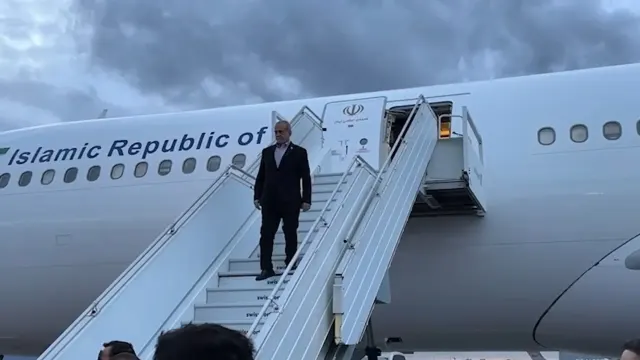
Kremlin spokesman Dmitry Peskov made similar remarks on Monday, saying the UK was "participating in this war" through its missile support and was adding "fuel to the fire". He also told reporters that the Russian military was already gathering data to locate missile production sites in order to destroy them.
The comments follow the UK's decision to share declassified blueprints for British-made components for the Scalp missile, a French-produced version of the Storm Shadow cruise missile that has already been used to strike targets in Russia. The blueprints will allow Ukraine to manufacture the long-range weapon domestically.
The Scalp missile can strike heavily fortified targets such as bunkers, which existing Ukrainian missiles cannot. It has a range of approximately 240 kilometres (149 miles).
Moscow has characterised the blueprint-sharing as evidence of the UK's direct military involvement in the war. Peskov said the move prevented "even the slightest progress" towards peace.
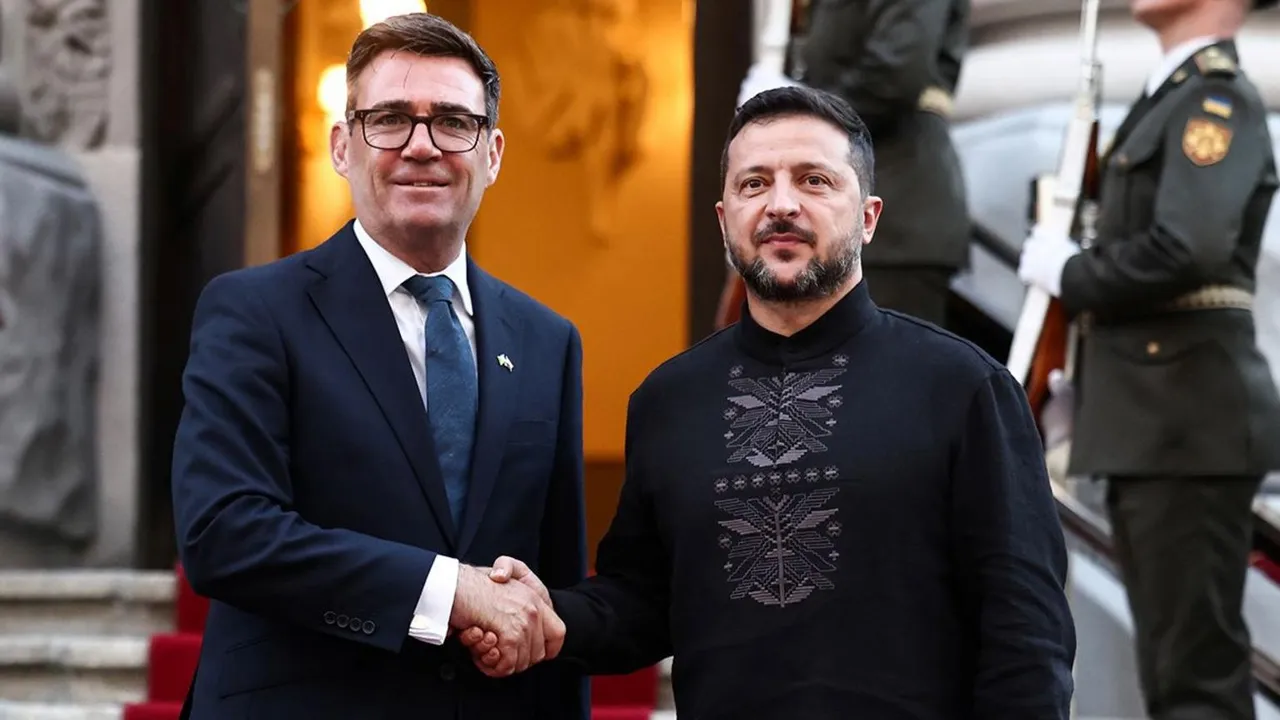
UK Prime Minister Andy Burnham visited Ukraine on Monday, his first official international trip since taking office. He met Ukrainian President Volodymyr Zelensky in Kyiv and chaired his first meeting of the "coalition of the willing", a grouping established by the UK and France under his predecessor.
Responding to Peskov's remarks, Burnham told reporters: "Who started the fire? That's the question, isn't it?" Russia launched its full-scale invasion of Ukraine in February 2022.
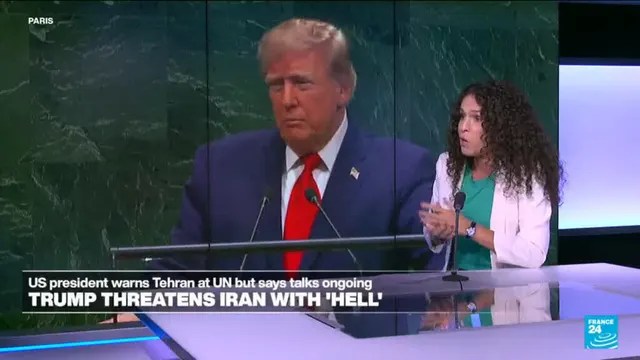
Burnham announced plans to travel to the United States next month alongside European leaders to lobby President Donald Trump on Ukraine's defence needs. The trip would be his first to the US since becoming prime minister.
A key issue on the agenda is the supply of Patriot interceptor missiles. Ukraine has been relying on American Patriot systems to counter Russian ballistic missiles, but stockpiles are running low due to the war in Iran. Zelensky has said he hopes to secure 300 Patriot missiles ahead of winter, when Russia is expected to intensify strikes on energy infrastructure.
Burnham said in an interview that he felt "really confident" the issue was "fixable", noting that the US was not the only potential supplier. "There are other players who could help in the mix who we have influence with," he said. "It's probably going to be a solution that involves a lot of layers and a lot of negotiation."
In July, Trump said the US had not agreed to allow Ukraine to produce Patriots domestically, walking back an earlier offer. "We have not agreed to that. We're talking about it. But it's a hard thing to give away, that kind of technology," Trump said. "These weapons are incredible. We have to be very careful about letting somebody build them," he told a cabinet meeting.
In a joint statement following the Kyiv meeting, Burnham, French President Emmanuel Macron, and German Chancellor Friedrich Merz said the coalition would aim to strengthen Ukraine's air defences "as a matter of urgent priority". They also condemned Moscow's "systemic and escalating strikes against Ukraine's cities, critical infrastructure and civilians" and pledged to "constrain Russia's war chest through sanctions and actions against the shadow fleet".
Ukraine has significantly increased its production of cheaper drones over the past year, using them to strike economic and military targets inside Russia. The country remains vulnerable to Russian ballistic missile attacks amid dwindling Patriot stockpiles.