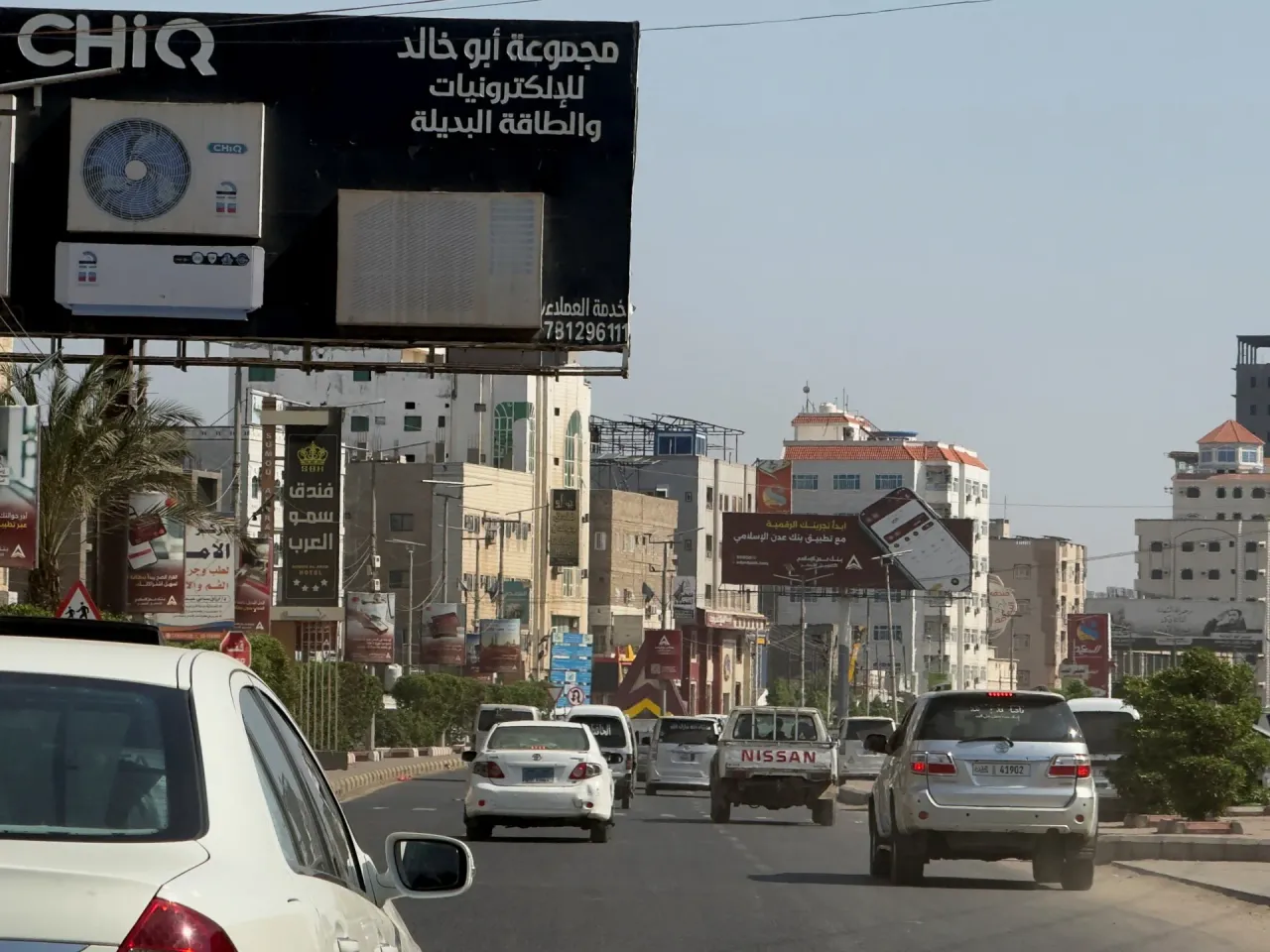
Residents of Yemen's southern city of Aden are stockpiling food, mapping escape routes, and bracing for wider conflict as Houthi missile and drone attacks repeatedly strike the city, shattering four years of relative calm.
The Houthis have claimed attacks on several locations in Aden over the past month, including the international airport, military camps, the city's port, and the presidential palace, which serves as a base for Yemen's internationally recognised government.
Mohammed Abdul Malik, an Aden resident, said the powerful explosions have prompted him to take precautions he hopes he will never need.
"I'll tell you about myself and my close friends: We've started buying and stockpiling basic provisions, like sugar and other staples," he said.
His contingency plan is to flee Aden with his family and seek refuge in Shabwa, to the northeast, or Hadramout, to the east, if the security situation deteriorates further and state institutions collapse.
"We've mapped out an exit route from the city. I've prepared my car, checked it over, and set aside an emergency supply of fuel. I'm ready to pack up my family and head out at a moment's notice," he said.
The renewed threat to Aden comes after Yemen's war reignited sharply in recent months. In early September, the Houthis, also known as Ansar Allah, launched a major offensive to seize government-held areas in the west of the country from the Saudi-backed National Resistance Forces.
Within a week, the Iran-backed group had captured districts in Hodeidah and Taiz provinces, including the port city of Mocha and the strategic Bab al-Mandeb strait.
A government counteroffensive launched in early October has made limited gains along the Red Sea coast. At the same time, the Houthis have tightened their siege of Taiz, Yemen's third-largest city, after capturing a vital road linking it to Aden.
Aden had remained relatively peaceful despite fierce fighting elsewhere and had become a refuge for thousands of people displaced by the conflict. The wave of Houthi strikes this month has shattered that calm and raised fears that the group may be seeking to capture the city.
Accounts from friends who fled Taiz, where fighting and the siege have driven up prices and disrupted supplies, have deepened Abdul Malik's concerns.
"Prices in Taiz have already doubled, and the same could easily happen in Aden. If the port were to be struck, prices would skyrocket," he said.
"At work, my colleagues and I talk about what we should buy, what food we ought to store, what our contingency plan is, and where we would go if we had to leave," he added.
Abdul Malik described how the attacks have disrupted daily life, with some families limiting their movements, especially at night.
"When the explosion occurred, one of my colleagues went to the school to pick up her son and found the students frightened and gathered together in one place. We go to work and take our children to school, but there is a sense of anxiety and tension," he said.
Aden international airport, currently Yemen's busiest, has borne the brunt of the Houthi strikes. The repeated attacks have forced airlines to cancel or delay flights and divert others to airports elsewhere in Yemen or abroad.
For residents living near the airport, the strikes have taken a significant psychological toll, prompting some families to consider relocating to safer areas inside and outside the city.
Ahmed Awadh, a resident of Aden's Khor Maksar district near the airport, said children in his neighbourhood are struggling with fear and anxiety.
"An explosion jolts the children awake in terror, leaving them unable to sleep for the rest of the night. Even the sound of an ordinary airplane now strikes fear into my family," Awadh said.
He said the attacks have disrupted schools and businesses, prompting families to rush home and some parents to keep their children away from school altogether.


