Washington and Tehran have sent conflicting signals over the past week about whether their eight-month war is moving toward renewed large-scale strikes or a negotiated settlement.
The head of US Central Command, Admiral Brad Cooper, briefed President Donald Trump on options for renewed attacks on Iran, according to reports. Separately, the US and Israel have drawn up joint plans to strike Iran after the November 3 midterm elections, according to other reports published last week.
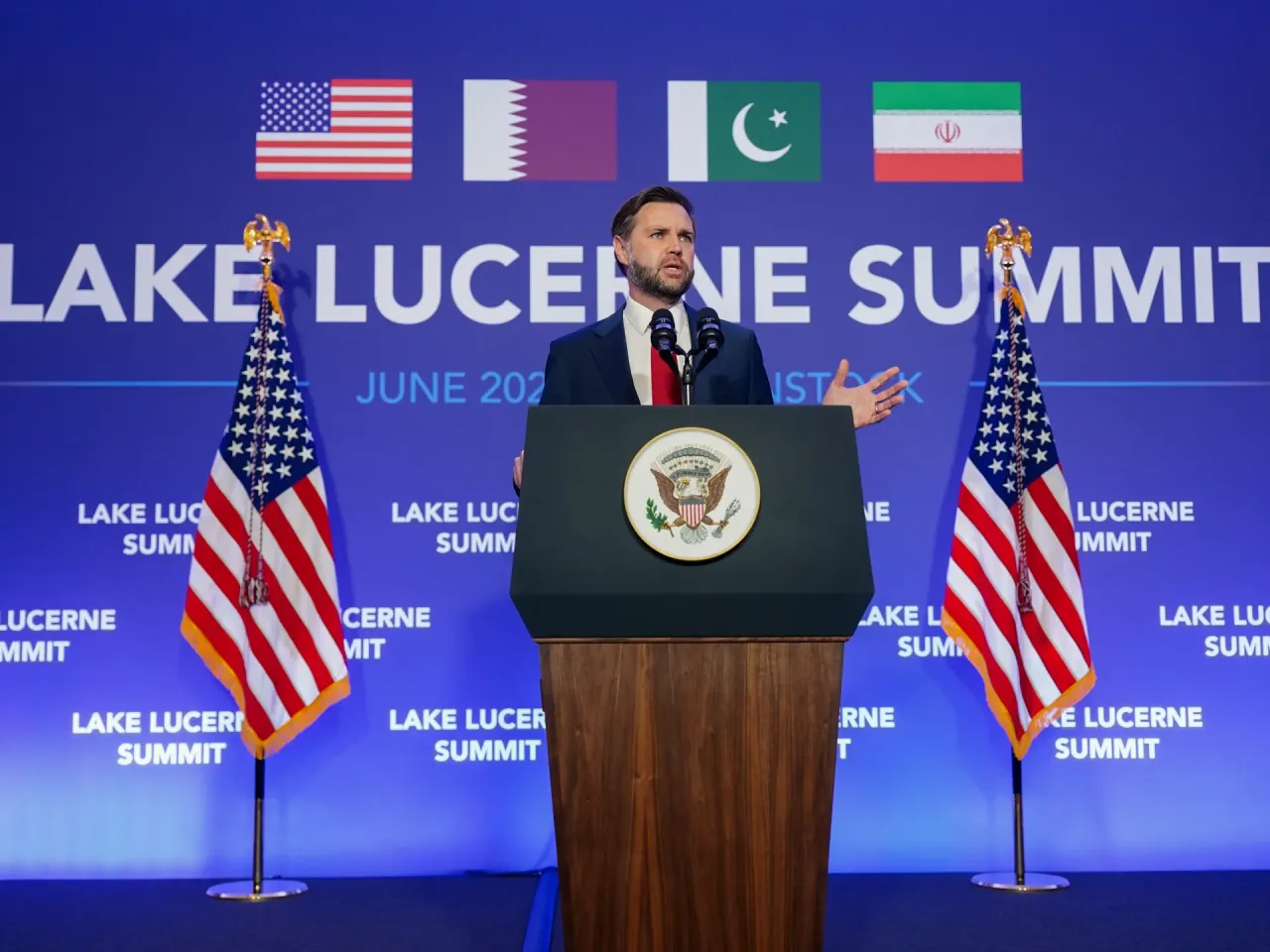
At the same time, Vice President JD Vance offered to meet Mohsen Rezaei, the secretary of Iran's Supreme National Security Council, in person to negotiate an end to the war, according to reports. The offer was delivered to Rezaei through Qatari mediators on Sunday, with Iran's nuclear programme described as a central topic from the outset.
On Friday, Qatari mediators returned to Tehran for talks coordinated with the United States, according to an official cited by sources.
The US has also boosted air defences and munitions in the region and moved some troops away from bases considered vulnerable to Iranian retaliation. Ten US military cargo planes landed at the Ovda and Nevatim air bases in Israel's Negev region on Thursday, with additional aircraft sent to Jordan, Saudi Arabia and Qatar, according to Israeli public broadcaster Kan.
Democratic Senator Chris Murphy, who said he had been briefed on the plans, called them "insane" and warned of a devastating escalation.
Analysts contacted by this outlet offered differing assessments of how much weight the diplomatic track carries.
Rouzbeh Parsi, an Iran analyst and affiliated researcher at Lund University's Department of History and Human Rights Studies in Sweden, described Vance as the "voice of reason" on Iran within the Trump administration, saying his signals have been "the least volatile and unpredictable."
However, Parsi said Vance's position has "never proven to be sturdy enough to actually sway Trump." He added: "Thus, while the optics with Vance look better than anyone else in the Trump administration, I doubt that they [Iranian officials] give the outreach much credence until Vance proves able to actually deliver something on his own."
Nader Hashemi, a professor of Middle East politics at Georgetown University, cautioned that "Rezaei is just one voice among many," adding that "the reality is that decisions are made collectively inside the Islamic republic."
Wolfgang Pusztai, a security and defence analyst and Austria's former defence attache to Libya, offered a different view. "There is no doubt that the IRGC [Islamic Revolutionary Guard Corps] currently calls the shots in Iran," he said.
Pusztai noted that Iran's new supreme leader, the son of Ayatollah Ali Khamenei — who was killed in the initial strikes by Israel and the United States in February — "simply does not have the influence his father did."
"Without the IRGC's approval, there will be no agreement with Iran," Pusztai said. He added that when Rezaei makes a statement or endorses a proposal, it can be assumed to "reflect the position of the IRGC leadership," and that the US was "absolutely right to negotiate with him."
Pusztai said it remains unclear whether Rezaei is prepared to make a serious compromise, but suggested that under sustained US pressure, Rezaei — who holds a doctorate in economics — could conclude that "Iran's interests and the regime's survival can be better secured without nuclear weapons and through a less aggressive foreign policy."


