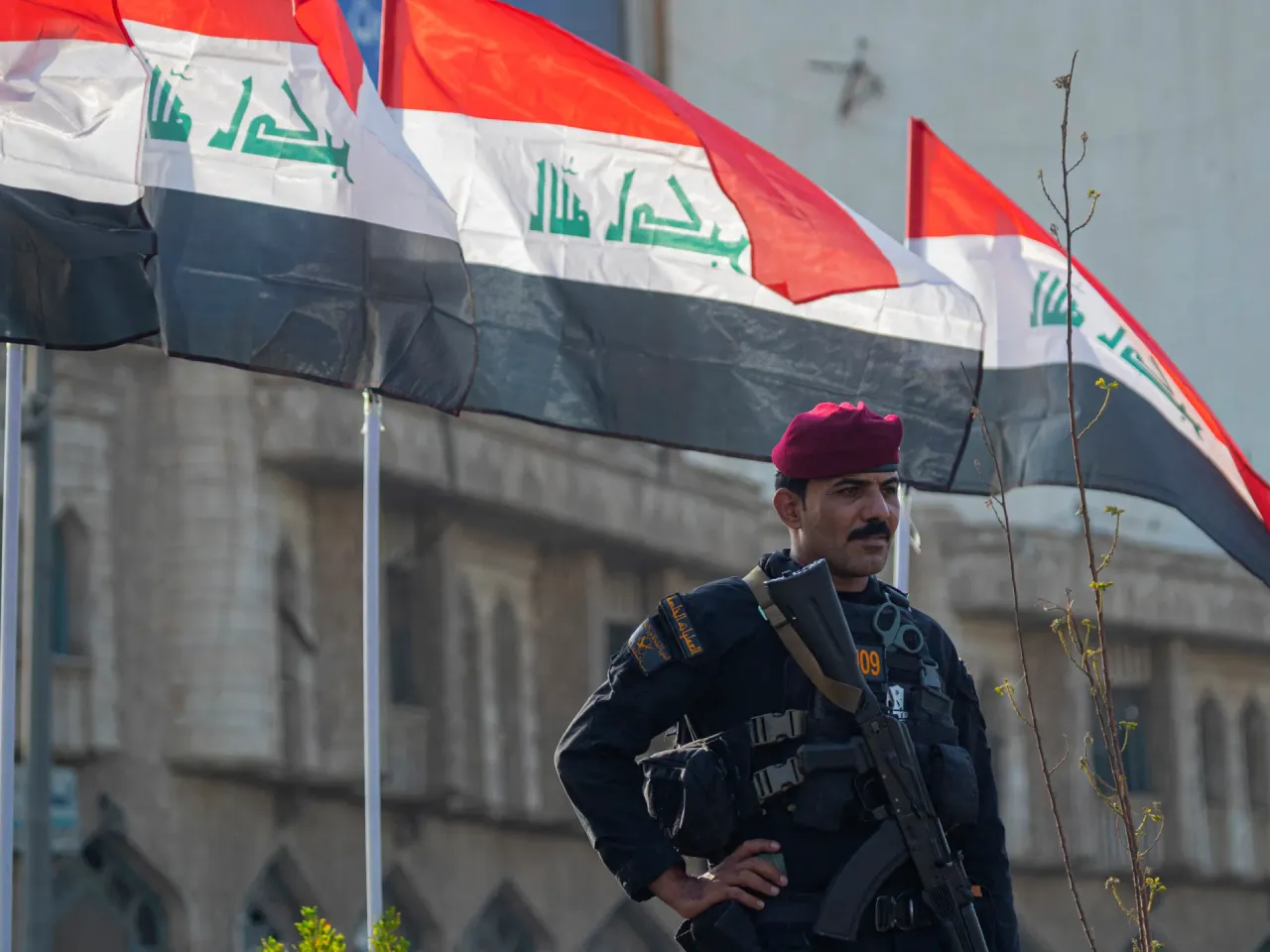
The United States has completed the withdrawal of its remaining troops from Iraq, concluding a 12-year military mission and marking the end of more than two decades of American military involvement in the country.
Iraq's Prime Minister Ali al-Zaidi declared the occasion a historic milestone. "October 1 will be a new day in the course of the Iraqi state, with the country free of any foreign military presence and the completion of national sovereignty over its territory," he said in a statement. The Iraqi government has designated four official public holidays, referred to as "Sovereignty Days," to mark the event.
The withdrawal was completed under a 2024 agreement between Baghdad and Washington. The departing troops — numbering in the hundreds according to some reports, or around 2,500 according to others — had been serving in advisory roles as part of Operation Inherent Resolve, the US-led coalition mission against the Islamic State group (ISIS) first launched in 2014 and 2015. Their departure also concludes a broader period of US military engagement in Iraq that began with the 2003 invasion, followed by a withdrawal in 2011 and a return in 2014 to counter ISIS.
Speaking at the United Nations General Assembly last week, al-Zaidi said his government was "striving to ensure that the state is the ultimate decision-maker in matters of peace and war, and that weapons and tools of power remain in the hands of its constitutional institutions." He added: "With the end of the international coalition's mission in Iraq, we are moving our relationship with our strategic partners to a new phase, moving from military cooperation to economic and development cooperation in service of our common interests."
The withdrawal fits into al-Zaidi's wider strategy of reasserting Iraqi state authority, which includes efforts to disarm and integrate the country's numerous armed militias into national forces. According to Douglas Silliman, former US ambassador to Iraq and Kuwait and president of the Arab Gulf States Institute, the move is designed to "politically weaken" influential militias, including those linked to Iran, by removing their long-standing justification for maintaining independent weapons stockpiles.
"The prime minister is clearly trying to build a political case to Iraqis that these forces that are more beholden to Iran, and have used weapons without government authorisation, no longer have a political reason to have those weapons," Silliman said. He cautioned, however, that the situation remains high-stakes. "It's going to be a very difficult series of decisions — both for the militias and for Prime Minister al-Zaidi and his defence team."
Baghdad had initially linked the end of the US mission to the completion of militia disarmament, but the deadline has since been pushed back. Al-Zaidi confirmed last week that the new target date is June 30, 2027. The revised plan includes a 90-day period during which armed groups have agreed to refrain from attacks, in exchange for assurances that US forces would not target them, followed by a gradual handover of weapons to state control.
However, several of the most powerful armed factions have shown no willingness to comply. "The hardest-line armed groups — Kata'ib Hezbollah, Harakat al-Nujaba and Kata'ib Sayyid al-Shuhada — have so far given no indication that they are prepared to surrender their weapons to the state and integrate into Iraq's armed forces," said Alina L. Romanowski, a distinguished fellow with the Scowcroft Middle East Security Initiative at the Atlantic Council.
Renad Mansour, director of the Iraq Initiative at Chatham House, said he was not surprised by the deadline extension, noting that Iraq's political landscape has been deeply fragmented since 2003. "Many political movements are associated with armed organizations, so it is hard to see a revolution in the security sector happening any time soon," he said, predicting that "even next year, many armed groups will continue to remain free of the central government."
Mansour also warned that Iran-aligned militias remain in an active conflict posture. Groups operating within Iran's "axis of resistance," he said, are "in full-on war mode, working with the IRGC in the region. And so they will continue to target US and US interests."
The US withdrawal does not mark the end of all foreign military presence in Iraq. Turkey still maintains troops in the country, though Ankara said earlier this week that it would gradually hand over a military base in northern Iraq to Baghdad.
The departure of US forces also includes the removal of American air defense systems from Erbil, the capital of the semi-autonomous Kurdistan Region. Kurdish Prime Minister Masrour Barzani has called on Baghdad to provide protection against missile and drone attacks, amid a pattern of strikes on the region since the start of the US-Israeli conflict with Iran.