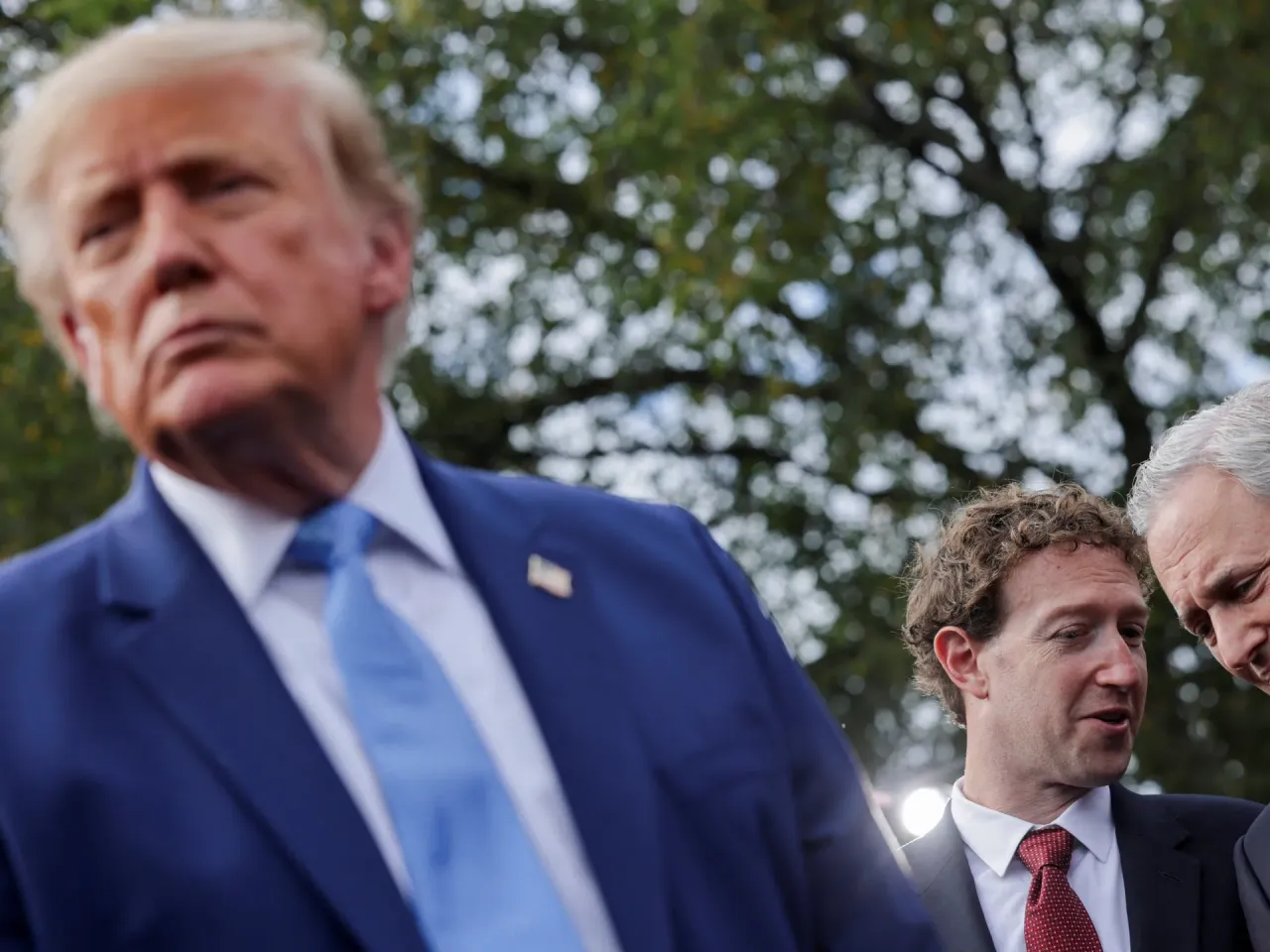
United States President Donald Trump has announced plans to spend 32 days travelling and campaigning ahead of November's midterm elections, which will determine which party controls Congress.
Trump described his travel itinerary as "literally a 32-day tour", set to include visits to competitive states such as Texas and Ohio. A second source reported that Trump vowed to campaign in 35 of the most competitive battleground races. His tour is set to begin in October with stops in Alabama and Oklahoma, two of the most reliably Republican states in the country.
Speaking to reporters on Tuesday, Trump expressed optimism and denied that Republican candidates are seeking to distance themselves from his administration ahead of the vote.
"You love me, and I love them," Trump said, as he outlined his plans for a multi-state tour to support Republican midterm contenders.
"Just so you understand, they all want me to go. I'm one person. They all want me to go campaign," he added.
The upcoming midterms are widely seen as a referendum on Trump's second term in office. Trump has himself speculated that, if Democrats take control of both the House of Representatives and the Senate, he could face a third impeachment.
Critics have warned that Trump's slipping popularity could spell trouble for the Republican Party, which hopes to hold onto its majorities in both chambers of Congress.
A Wall Street Journal poll released last week found Trump's approval rating at 37 percent. According to sources, that marks the lowest rating for a president in the lead-up to midterm elections since the poll began in 1990, when George H.W. Bush was in office.
Recent polls suggest Trump's approval has fallen to new lows as voters express frustration over the rising cost of living, caused in part by his decision to launch a war against Iran that has disrupted global energy markets.
Despite the polling, Trump has positioned himself as a central figure in the Republican Party's midterm strategy. This month, the party held its first-ever midterm political convention in Texas, with Trump delivering a keynote address. His allies have pledged that he would "campaign like it's 2024 again", a reference to his successful second presidential run.
Supporters have speculated he could succeed in mobilising low-propensity voters, considered less likely to cast a ballot.
Some of his campaign tactics have drawn criticism, however. The Department of Homeland Security has come under scrutiny for spending $20 million to produce campaign-style advertisements promoting Trump's record. Democratic and Republican lawmakers have condemned the effort as an inappropriate use of taxpayer funds that could violate anti-propaganda laws.
"We should not have to remind you that using government funding to create or air political ads like the ones that have been running over the last few days is illegal and a shockingly corrupt misuse of taxpayer dollars," Democratic Senator Patty Murray wrote to Homeland Security Secretary Markwayne Mullin in a letter on Tuesday.