The United States has struck Iranian missile launchers on Larak Island, located near the key port of Bandar Abbas at the entrance to the Strait of Hormuz, in what is reported to be the first such attack in several weeks.
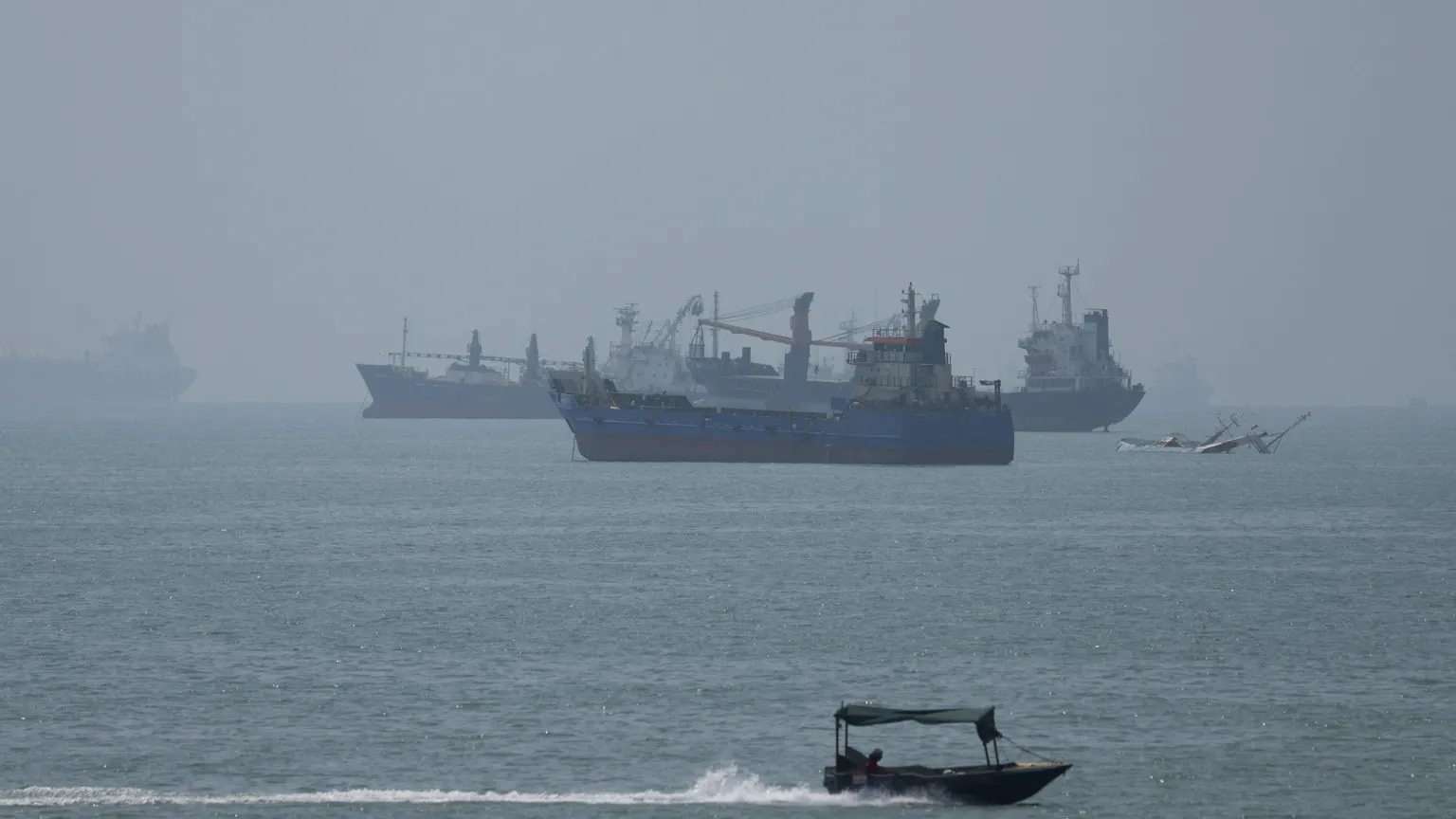
Larak Island sits on one of the world's most critical maritime chokepoints. Iran has been directing tanker traffic past the island for inspection and reportedly forcing vessels to pay two million dollars to cross the strait.
Iran's Tasnim news agency, affiliated with the Islamic Revolutionary Guard Corps, reported that the attack was carried out by drones. Two people were killed and two others injured, according to the same report.
The IRGC's spokesman, Hossein Mohebbi, condemned the strike, calling it a "strategic and fatal mistake by the Trump regime" and warning that the "enemy will pay the consequences of this miscalculation in both the economic and military fields."
Last week, President Trump stated that all mines placed in the Strait of Hormuz by Iran as part of its efforts to blockade the route had been detonated or removed. He warned that any ship or boat deploying new mines would be destroyed.
Iran's Deputy Foreign Minister Kazem Gharibabadi dismissed Trump's claim as a "propaganda" deception.
Iran is facing renewed economic pressure after Washington announced a fresh sanctions campaign on 24 August, aimed at further isolating Tehran and expanding secondary sanctions against its allies.
Iranian officials and state media have largely dismissed the campaign as a continuation of previous US economic measures, which they argue followed what they describe as Washington's military failure in the recent conflict.
The US and Israel launched wide-ranging strikes on Iran on 28 February. Iran responded by attacking Israel, US bases, and allied states in the Gulf, and effectively closing the Strait of Hormuz to maritime traffic. The conflict has now passed the six-month mark.
Before the war began, approximately 20 percent of the world's oil and liquefied natural gas passed through the strait.