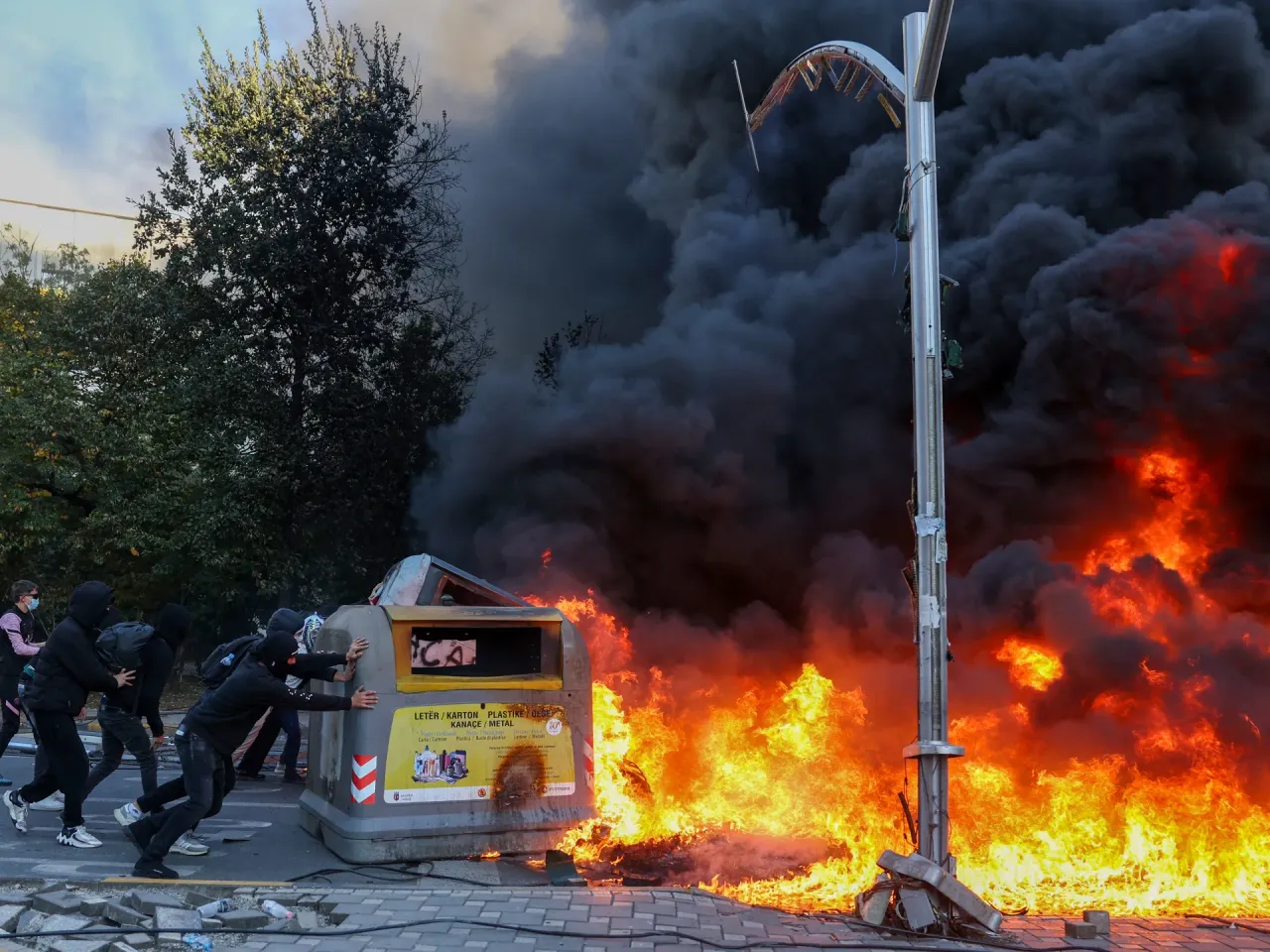
A fire broke out at Albania's Education Ministry in Tirana overnight as student protests, now in their third day, escalated into some of the most violent unrest the country has seen this year.
Demonstrators broke into the ministry building overnight on Tuesday and lit a fire inside, according to police. A bank near the ministry also caught fire, according to a witness cited by reports.
Thousands of protesters gathered in front of the ministry on Wednesday. Many obscured their faces. Some threw bricks at the building, damaged barriers on the sidewalks and overturned trash cans. Demonstrators also ripped out nearby fencing and used it to block the street.
Riot police responded with tear gas and water cannons in an attempt to disperse the crowds.
Police reported around 40 detentions and 13 people injured, including six police officers, in the early hours of Wednesday. At least 16 additional arrests were reported as clashes continued. Unrest persisted long after those initial figures were issued.
Student organizers say the protests centre on conditions at universities, higher education costs, financial support and employment prospects after graduation. Demonstrators are also calling for the resignation of Prime Minister Edi Rama.
Deputy Prime Minister Albana Kociu posted on Facebook, saying it was "disheartening to see the culture of protest degenerate into orchestrated violence." She said attacks on institutions and police and the "senseless destruction of public property" were "not the language through which the youth should express themselves."
In a separate post, Kociu called on students who believe in the right to protest to "distance" themselves from "violence and vandalism."
The current unrest is the most violent outburst of a broader protest movement that began in May. The demonstrations are sometimes referred to as the "Flamingo Revolution" and were partly prompted by a controversial construction project on the Adriatic coast in a protected area of southern Albania. The project has been linked to Jared Kushner, son-in-law of US President Donald Trump.
The project fuelled anger over alleged corruption and a lack of transparency, with protesters demanding Rama's resignation.
Besar Likmeta, editor at the Balkan Investigative Reporting Network in Albania, said "this protest came on the back of four months of daily rallies on the main streets of the capital." He added that the movement had since broadened: "But then they spread into wider demands about better opportunities and anti-corruption, lack of opportunities for youth, and particularly a sign of growing disenfranchisement among this younger generation of Albanians."
The protests reflect wider dissatisfaction with Albania's dominant political forces. Prime Minister Rama's Socialist Party and opposition leader Sali Barisha's Democrats have alternated in government for more than 30 years, since the country's post-Cold War democratic transition.