President Donald Trump has acknowledged that the ongoing war with Iran contributed to his party's heavy losses in the US midterm elections. "I think a part of it was Iran, but, at the same time, people understood the importance of what I've done with Iran," Trump told Fox News, adding that American voters were unwilling to accept the war's impact on gas prices.
Observers say the United States and Israel had been holding off on major attacks on Iran until after both countries had held their respective elections. At the end of October, the Wall Street Journal reported that the Trump administration had already been warning Gulf state governments to brace for a short, intense military campaign once the midterms were over.
The question now is whether the conflict will escalate further.
While foreign policy falls within a US president's purview, analysts have noted that a Congress controlled by the Democratic Party could ostensibly withhold funding for Trump's military operations. However, newly elected Democratic politicians will not take their seats until early next year.
Two US professors of political science, writing in Foreign Affairs magazine this week, warned that past presidents who became "lame ducks" — losing control of Congress while unable to seek another term — have frequently ramped up international interventions. "As they think about their legacy, lame ducks often turn to foreign policy, where the power of the presidency allows them to act unfettered by pesky domestic politics," they wrote. Iran, the professors argued, is one of the most likely arenas for Trump to act.
Trump himself, however, told several media outlets that he was in "no rush" to resume bombing Iran.
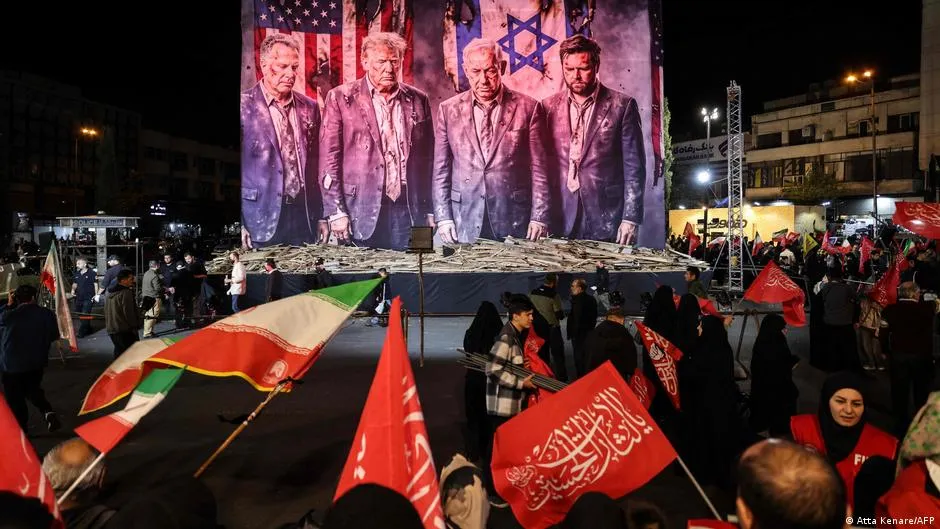
Opinions on Iran's next moves are divided. Iranian leaders have stated they are ready for any attack, and rhetoric from senior officials suggests they may be willing to strike a wider range of targets than previously, potentially including regional energy and economic infrastructure, undersea telecommunications cabling, and data centers.
Ross Harrison, a senior fellow at the Washington-based Middle East Institute and an expert on Iran, said during a virtual briefing hosted by the institute this week that if Iran perceives an existential threat to its leadership, "all bets are off." He added: "I think they will target differently in the Gulf states [this time] … so it really depends on how all this unfolds."
Other experts, however, believe Iran had been deliberately holding back in order to pressure Trump ahead of the midterms. Now that the election is over, some analysts suggest Tehran may be more willing to negotiate a peace deal.
Gulf states, which have been the primary targets of Iranian attacks since the conflict began, find themselves in an increasingly difficult position.
"We find ourselves drawn within a crisis that we worked diplomatically very hard to try to avert," said Anwar Gargash, a foreign policy adviser to the United Arab Emirates leadership, speaking at the Manama Dialogue security conference in Bahrain last weekend, hosted by the International Institute for Strategic Studies. "We are clearly seeking a political off-ramp."
Qatar has been attempting to mediate between the US and Iran while simultaneously conducting emergency drills at its main airport. The UAE has been carrying out similar exercises. Saudi Arabia faces pressure on two fronts, already under attack from Houthi forces in neighboring Yemen. Egypt has also reportedly moved to strengthen air defenses around the Suez Canal.
Regardless of what comes next, the war has already prompted Gulf states to reassess their defense partnerships with Washington. Rather than providing security, the presence of US military bases has made these countries targets.
"There is widespread disappointment across the region with the US over the folly of the war, the erratic nature of Washington's military and diplomatic conduct, and its decision to prioritize Israel's defense over that of its Gulf partners," said Hasan Alhasan, a senior fellow at the IISS, speaking to a news agency this week.
Alhasan drew a stark historical comparison: "If the US liberation of Kuwait in 1991 was the moment that established America's role in the region, the 2026 war may be remembered as the moment that undid it."
Gulf states are now reported to be widening their diplomatic and security outreach beyond Washington, though the full scope of those efforts was not detailed in available reports.