A federal judge has temporarily blocked construction of President Donald Trump's proposed "triumphal arch" in Washington, DC, hours after a federal planning commission approved the project.
US District Judge Tanya Chutkan issued a 14-day pause on all construction activity late on Friday, granting a request filed by the governments of Washington, DC, and Virginia. She laid out her reasoning in a 33-page opinion, in which she agreed that the local governments are likely to be harmed by the construction.
"The threatened harms will materialize as soon as construction begins, in part because the traffic disruptions will occur immediately," Chutkan wrote.
The ruling came less than two hours after the National Capital Planning Commission (NCPC) voted 8-4 to approve the arch following a hearing that lasted nearly nine hours. The commission heard testimony from 131 registered speakers, including veterans, Democratic lawmakers, historic preservation experts and concerned citizens from across the country.
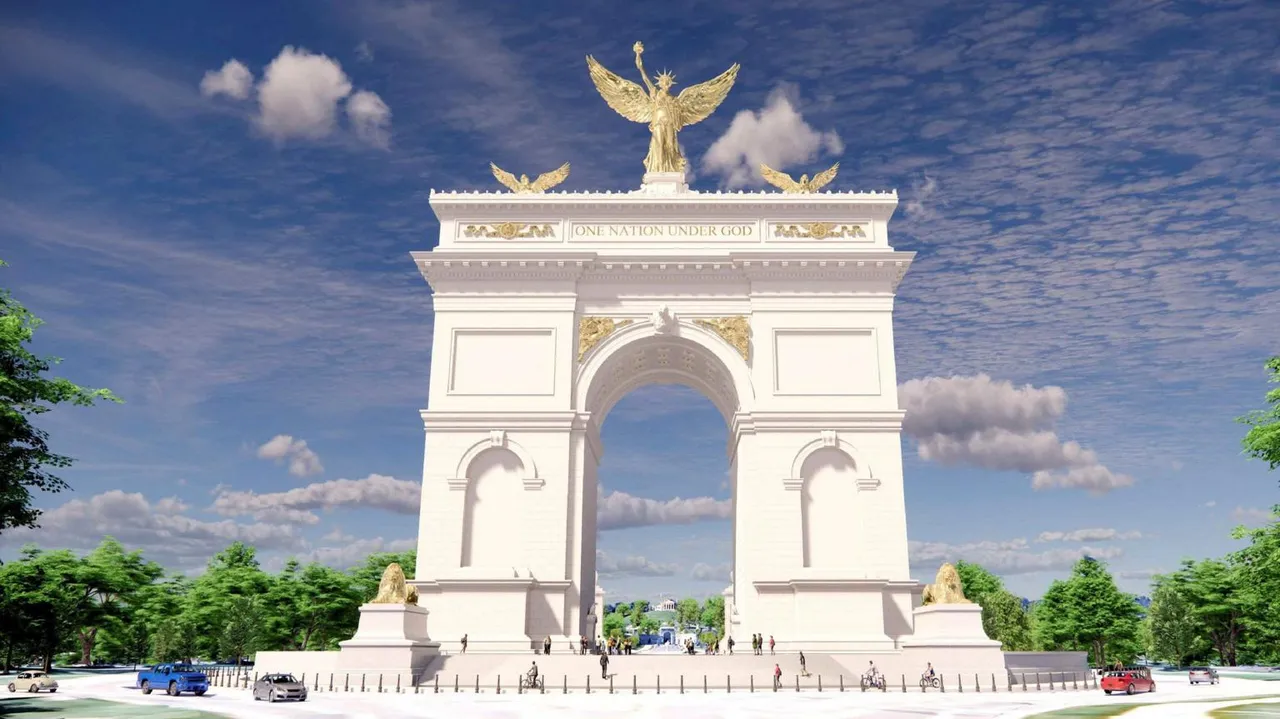
The proposed 250-foot (72–76 metre) arch would stand at Memorial Circle, a traffic island on the bridge linking the Lincoln Memorial to Arlington National Cemetery. The Trump administration had said construction could begin as early as Thursday and would proceed 20 hours a day, year-round, for two to three years.
Trump first proposed the arch to mark 250 years of US independence. A rendering of the design features a golden, winged Lady Liberty statue on top of the arch, flanked by two gold eagles. The phrases "One Nation Under God" and "Liberty and Justice for All" are inscribed in gold on either side of the structure.
The Trump administration has also described the arch as a facility capable of storing military equipment, including the ability to deploy snipers and drones. "There will be no facility like this anywhere in the World," Trump previously wrote on his Truth Social platform.
Mark Paoletta, the NCPC chairman and a Trump appointee, said at Thursday's meeting that the president understood "it's important to our national identity to display who we are through grand monuments." He added that the arch would honour the nation, its veterans and "provide the sacred ground of Arlington National Cemetery with the monumental gateway it deserves."
Opponents have strongly disagreed. Critics argue the structure would obstruct sightlines between Arlington National Cemetery and the Lincoln Memorial — a view they say was carefully designed to symbolise national unity — and would diminish the solemn character of the cemetery.
Anne Wright, a 29-year military veteran who also served in the diplomatic service, said she would attempt to stop the construction physically. "We'll tie ourselves to the bulldozer, we've got veterans in wheelchairs and we'll chain the wheelchairs to these things," she said.
Fellow veteran John Pomeroy, who served six years in the Air Force including during the Vietnam War and whose parents are buried at Arlington, called the arch's proposed military function "silly" and a "half-baked idea," warning it would make the site a target for terrorist attacks.
Democratic Congressman Jared Huffman argued in his statement to the commission that the arch would fracture "a view meant to underscore the unity and sacrifice of the American people, and doing that with a structure we often associate with emperors or kings who built grand arches as tributes to themselves." He added: "This is a tribute to Donald Trump."
A group of Vietnam War veterans and an architectural historian filed suit earlier this year, arguing the arch cannot be built lawfully without congressional approval, which the administration has not sought. The Democratic governments of DC and Virginia filed a similar lawsuit last weekend. Judge Chutkan consolidated the lawsuits before issuing Friday's ruling.
The administration's legal position has also been questioned over its shifting justifications for the project, particularly what critics described as a sudden emphasis on national security.
Many opponents linked the project to broader concerns about Trump's unilateral efforts to reshape the nation's capital. Several speakers at the commission hearing described the Democrats' victory in this week's midterm elections, in which Trump's Republican Party lost control of Congress, as a public rejection of such initiatives.
On Friday, Trump also signed a proclamation designating his Oval Office and Cabinet room as a national monument.