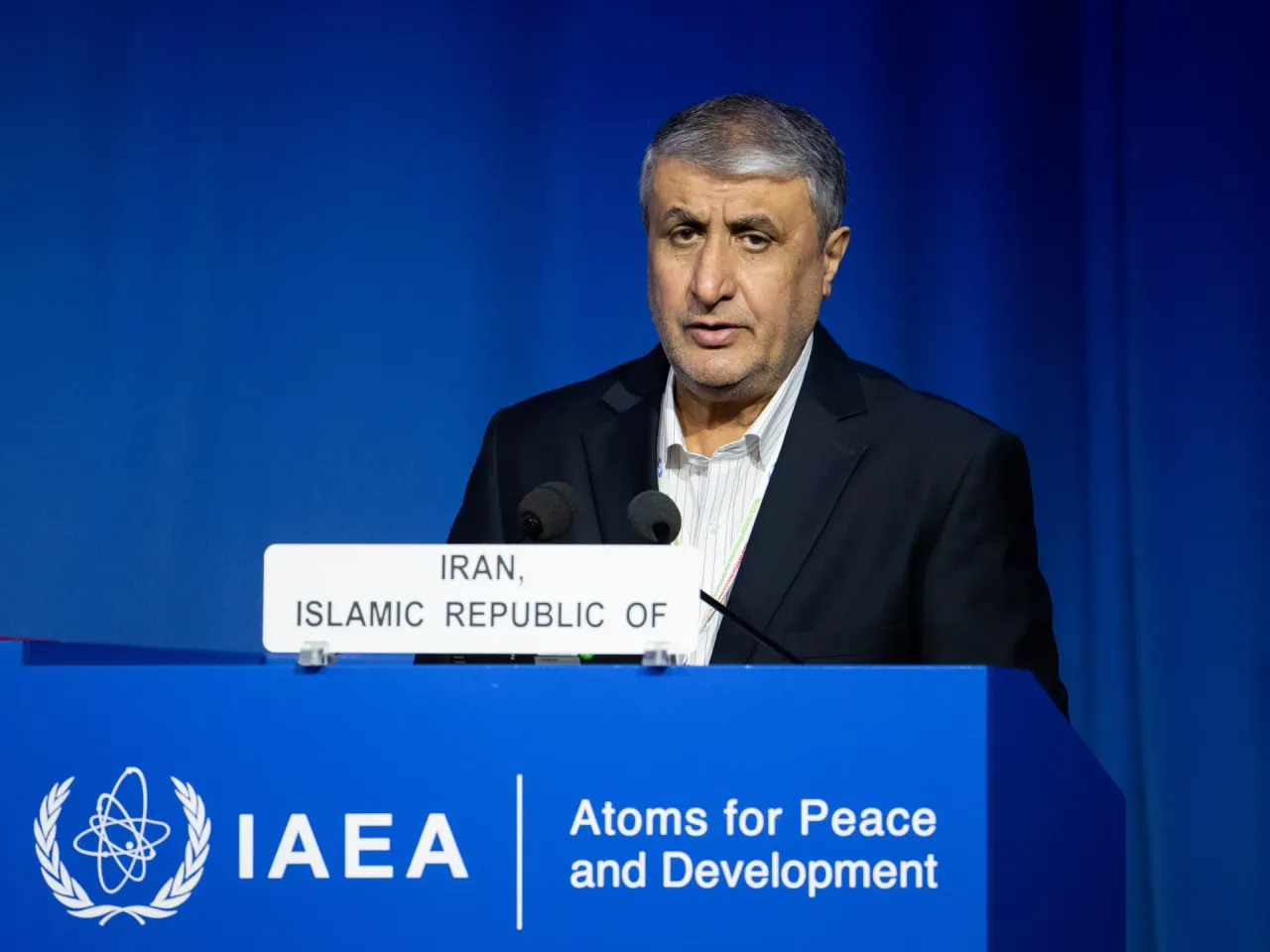
The United States has blocked Iran's nuclear chief, Mohammad Eslami, from attending the annual General Conference of the International Atomic Energy Agency (IAEA) in Vienna, after Washington objected to granting him a travel ban exemption at the UN Security Council.
Eslami and his accompanying delegation were forced to cancel their trip to the five-day conference after Austria revoked his visa, Iranian state media reported. It marks the first time in years that the head of Iran's Atomic Energy Organization has not attended the annual gathering.
Eslami is subject to a UN Security Council travel ban under the "snapback" sanctions framework, which was reinstated last year by France, Germany and the United Kingdom. The mechanism, derived from the Joint Comprehensive Plan of Action (JCPOA), mandates that member states prevent the entry or transit of designated Iranian officials linked to the country's nuclear and ballistic missile programmes.
Austria, as host state to UN bodies, initially sought a Security Council travel ban derogation to allow Eslami to attend. However, the US objected, and under the UN committee's strict "no-objection" rule, Austria was left with no choice but to deny him entry.
"Austria was obliged to deny one member of the Iranian delegation the entry into its territory," Austria's ambassador to the IAEA, Christian Ebner, told the conference.
US Ambassador Preston Wells Griffith III confirmed Washington had objected in New York to granting the exemption. "His participation would have only resulted in Iran exploiting IAEA proceedings as a stage for propaganda while sidestepping substantive cooperation, undermining the credibility of the very body charged with verifying its nuclear commitments," he said.
Speaking at the conference opening, Iran's ambassador to the IAEA, Reza Najafi, confirmed that Eslami's visa had originally been approved before being revoked. He called the move a direct infringement on Iran's rights as a member state.
"By obstructing our full and effective participation, the denial of access contravenes both the letter and the spirit of the legal framework" governing attendance at IAEA meetings, Najafi said, adding that Austria's decision "violates the host country's obligation."
Iran's Foreign Ministry spokesperson Esmaeil Baghaei accused the US of pressuring Austria into the decision. Eslami had regularly attended and addressed the IAEA General Conference since being appointed head of Iran's Atomic Energy Organization in 2021.
Both Iran and Russia characterised the incident as part of a coordinated effort to prevent Iranian officials from securing international travel visas. "The cancellation and so-called legal justification advanced for it are a stark indication of a political act and advanced formal politicisation of this organisation," Najafi told the conference.
The snapback sanctions, triggered last year by the three European signatories to the JCPOA, automatically restored UN measures that had been suspended under Security Council Resolution 2231 when the nuclear deal took effect in 2015. US President Donald Trump withdrew from the accord three years later. The reinstated measures include travel bans, a UN conventional arms embargo, restrictions on ballistic missile-related activities, asset freezes and a ban on producing nuclear-related technology. Iran and its allies, including Russia, do not recognise the reimposed sanctions.
The dispute over Eslami's attendance comes amid a broader standoff over nuclear inspections. Following US and Israeli strikes on Iranian nuclear facilities during a 12-day conflict last June, Tehran has denied IAEA inspectors access to the affected sites, a move described as a breach of its obligations under the Nuclear Non-Proliferation Treaty. Iran maintains that its nuclear programme is entirely peaceful and that it is not pursuing nuclear weapons.
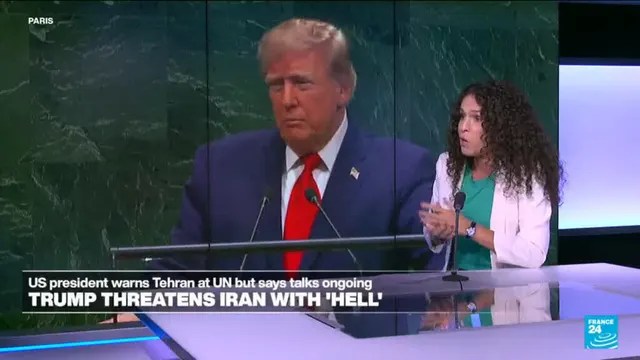
On Monday, Trump signalled a possible diplomatic opening, writing that Iran wanted to reach a deal with Washington. "The failing Nation of Iran wants to make a deal, quickly and badly. I will determine whether or not the U.S.A. will choose to engage - The concept of which we are open to," the president wrote.