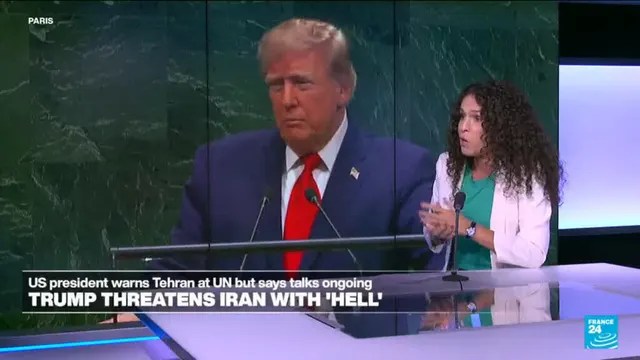
US President Donald Trump threatened to "annihilate" Iran on Tuesday, even as American and Iranian officials held a three-hour meeting on the sidelines of the 81st UN General Assembly in New York.
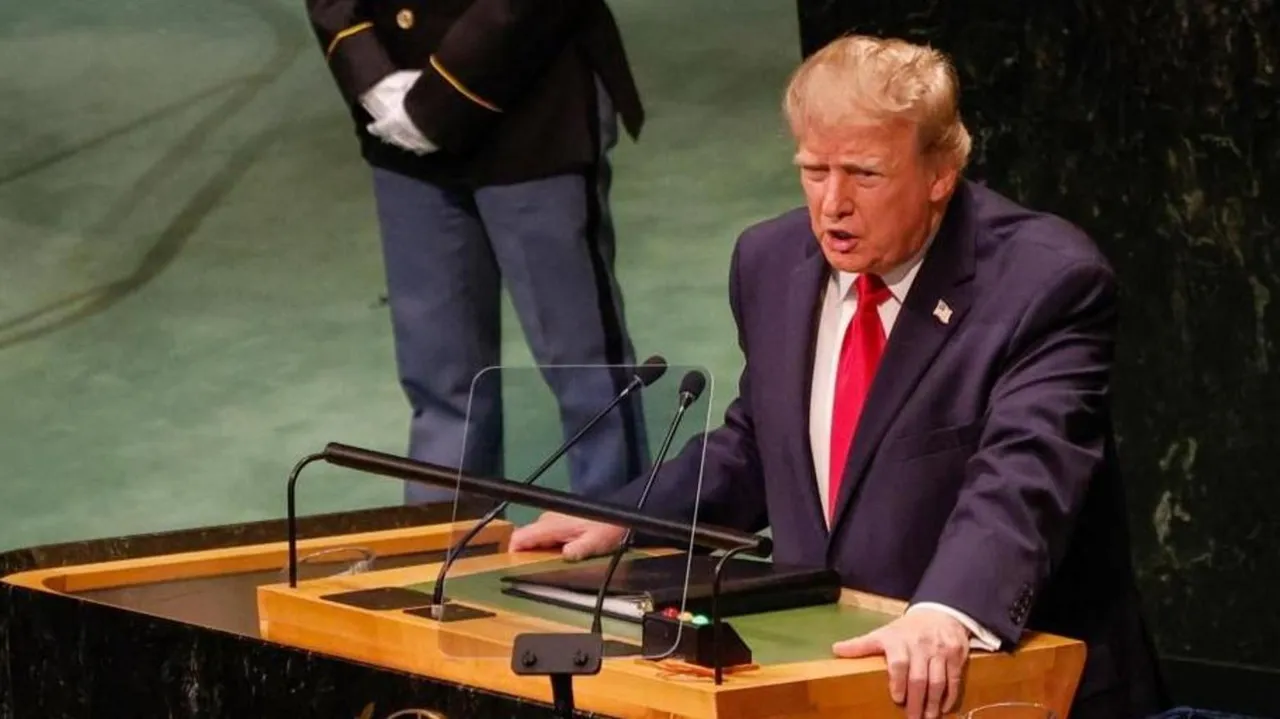
Trump made the remarks during his address to the annual gathering, spending much of his speech justifying the ongoing conflict with Iran. The address stood in sharp contrast to earlier comments by UN Secretary-General Antonio Guterres, who warned that global divisions were deepening and stressed the interdependence of the world's peoples.
"Will a deal be made with Iran that lets them rebuild and create a far greater country than it ever was before?" Trump said. "Or do I annihilate the Islamic Republic and do it quickly, never giving them a chance to kill and destroy people and countries again? Do I drive them into hell?"
Trump opened his address by touting his administration's record on the economy, immigration, border security, and violent crime — remarks observers noted sounded more directed at domestic voters ahead of November's Congressional elections than at the assembled diplomats.
He argued that the conflict had prevented Tehran from obtaining a nuclear weapon and framed the approach as "peace through strength" — a strategy of ultimatums rather than compromise.
Despite the combative tone, Trump later told reporters that US officials had held a "very productive" three-hour meeting with the Iranian delegation on the sidelines of the assembly.
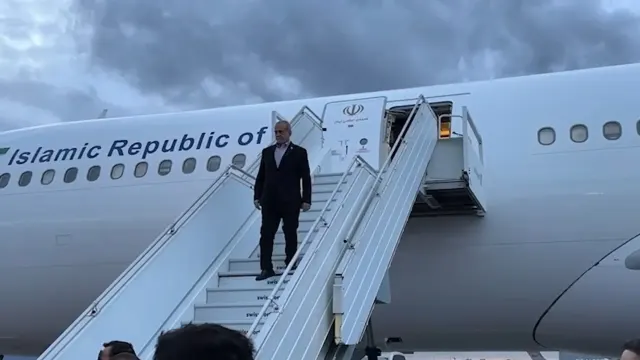
The talks were mediated by Qatar and involved Iranian Foreign Minister Abbas Araghchi and Trump's envoy Steve Witkoff. Iran's state television confirmed Araghchi's participation. It was the first such meeting since a June ceasefire collapsed.
No breakthrough was reported. Iranian foreign ministry spokesman Esmail Baghaei, quoted by state broadcaster IRNA, said negotiations took place through a Qatari mediator who shuttled between the two sides, conveying Tehran's conditions — including an end to the war on all fronts and a halt to US "acts of aggression."
Witkoff confirmed the format of the talks on X. "They successfully completed a round of discussions that we hope will prove constructive and promising," he wrote. "The mediators will continue their work."
The US and Israel launched air strikes on Iran on 28 February. Iran responded by attacking Israel and US bases in the Gulf, striking Arab Gulf allies of the United States, and blocking the Strait of Hormuz.
Before the war, approximately 20 percent of the world's oil and liquefied natural gas passed through the strait. Its closure has caused significant price volatility in global energy markets.
Since the ceasefire collapsed, both sides have continued to exchange fire intermittently. Iran has attacked vessels it says attempted to cross the Strait of Hormuz without authorisation. The US has struck Iranian sites in the strait and targeted Iranian tankers off the country's coast. The US has also maintained a blockade of Iranian ports, causing severe disruption to the Iranian economy.
Trump has threatened sanctions against any country that continues trading with Iran in an effort to pressure Tehran into a deal. So far, there has been no indication of a change of course from Iran, which insists the US and Israel end the war — including military operations against the Iran-backed group Hezbollah in Lebanon.
Yemen's Houthis, also allied to Iran, have recently intensified attacks aimed at disrupting oil shipping from Saudi Arabia, prompting a further escalation of the conflict with the kingdom.
Trump said he believed a deal with Iran would come shortly after November's Congressional elections, framing his approach as coercive diplomacy — maintaining the threat of overwhelming force while keeping negotiations open.
Also on the sidelines of the General Assembly, Trump held a high-level meeting with Ukrainian President Volodymyr Zelensky. Both sides said they wanted the war in Ukraine to end before winter. Zelensky and Iranian President Masoud Pezeshkian were among the leaders expected to address the assembly as it continued its session.