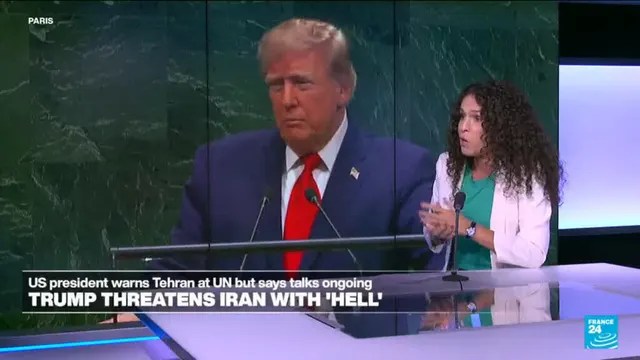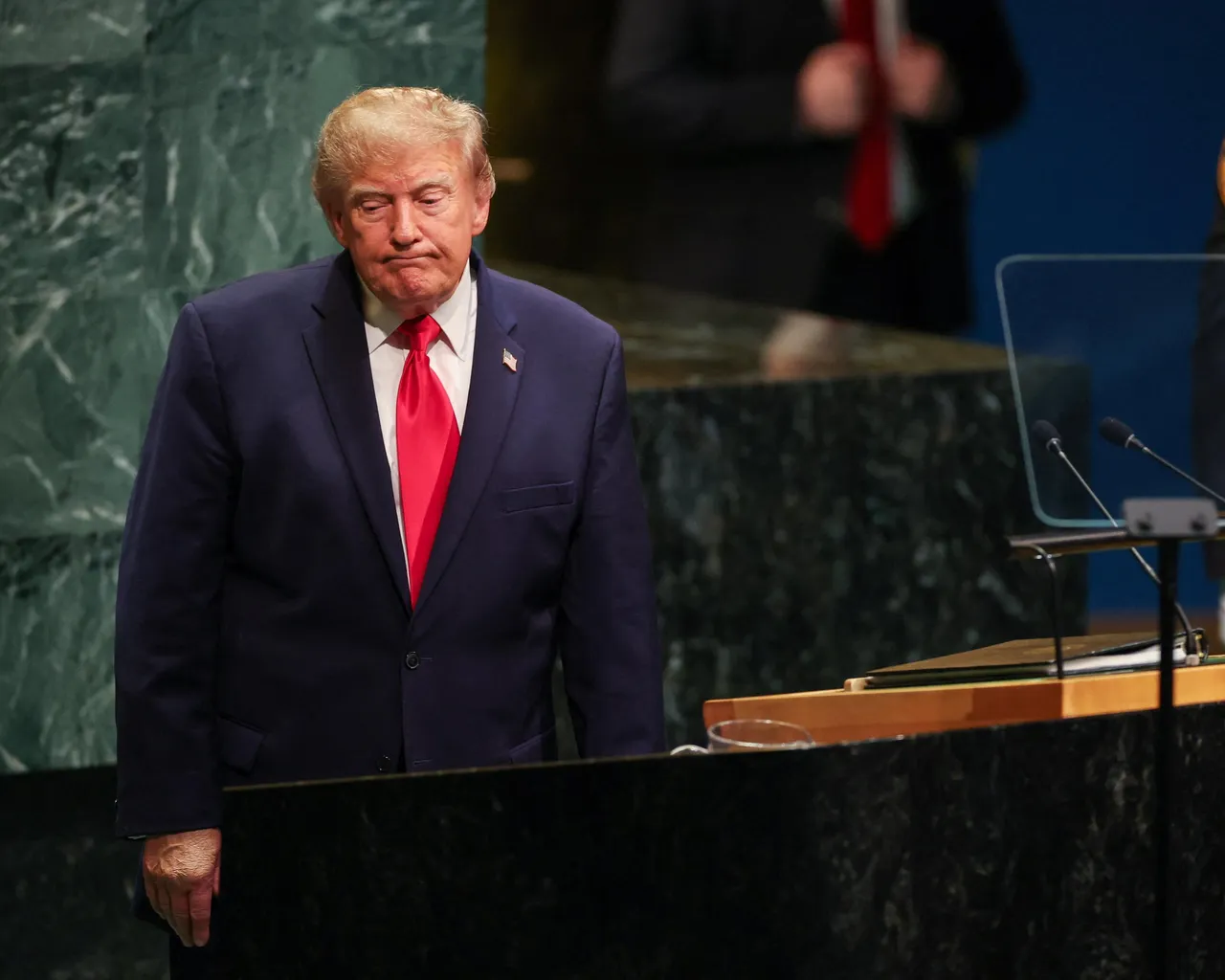
Donald Trump delivered one of the most confrontational speeches in recent United Nations General Assembly history on Tuesday, openly contemplating the destruction of Iran and issuing stark warnings to Cuba and Venezuela before an audience of world leaders.
Eleven minutes into a 40-minute address, Trump declared he had "a big decision to make" over Iran, which has staged stronger resistance than he anticipated when the United States went to war with the country in February.
"Will a deal be made with Iran that lets them rebuild, and create a far greater country than it ever was before?" Trump asked. "Or do I annihilate the Islamic Republic and do it quickly, never giving them a chance to kill and destroy people and countries again? Do I drive them into hell with no chance of survival and no hope of future greatness or generations?"
Trump also told the assembly that Washington would reach a deal with Tehran after the upcoming US midterm elections.
Iran was the focal point of much of the speech, which opened with a catalogue of claimed achievements that appeared aimed at a domestic audience.
Trump twice asserted that Iran's theocratic regime had held power for 51 years. In fact, the Islamic Revolution that toppled the pro-Western Shah, Mohammad Reza Pahlavi, and installed the current government took place 47 years ago, in 1979.
He also cited figures for the number of Iranians killed in anti-government protests last January, weeks before the war began. "The same regime slaughtered over 72,000 of its citizens this year," Trump said, in support of his oft-stated position that Iran must never be permitted to acquire nuclear weapons. No definitive death toll has been established. Previous estimates of those killed during the brutal suppression of January's demonstrations, including figures previously cited by Trump himself, have been significantly lower.
Trump rejected global regulation of artificial intelligence during the address and called on member states of the International Criminal Court to resign from the body, describing it as an "out-of-control institution" and "an evil group of people." He added: "We will never allow US service members or anyone else to be investigated or given show trials by an anti-American tribunal with no jurisdiction."
Members of the Cuban delegation were seen leaving the hall as Trump predicted the imminent collapse of the country's communist government, which has been struggling with a food security and humanitarian crisis amid tightening US sanctions.
"It's an absolutely failed state, it's failing like never before, and it will fall," Trump said. He added that Secretary of State Marco Rubio was engaged in active negotiations with Havana. "Marco Rubio is handling a negotiation. He's deep into negotiations with Cuba. Let's see what happens."
Trump also cited US actions in Venezuela, where special forces seized President Nicolas Maduro in January and transferred him to New York to face drug-trafficking charges, as a warning to other adversaries.
"Our actions in Venezuela are proof that the United States will no longer permit threats to America to gain a foothold anywhere in the western hemisphere, and, if necessary, we will use our unmatched military might to secure the vital national interests of the United States," Trump declared.
He also hailed a recent US oil deal with interim Venezuelan President Delcy Rodriguez, claiming it placed the United States and Venezuela jointly in control of more than 60 percent of the world's oil supply. "It was perhaps the biggest deal ever made. To the victor belong the spoils — you've all heard that," Trump said.
The speech drew comparisons to some of the most dramatic moments in UN history. Former Soviet leader Nikita Khrushchev famously brandished his shoe and allegedly struck a desk during the 1960 General Assembly in protest at a fellow delegate's speech. Observers noted that Tuesday's address appeared to surpass even that episode in its open bellicosity from a major power leader — and that it came in a forum established after the Second World War with the explicit purpose of preventing future conflicts.