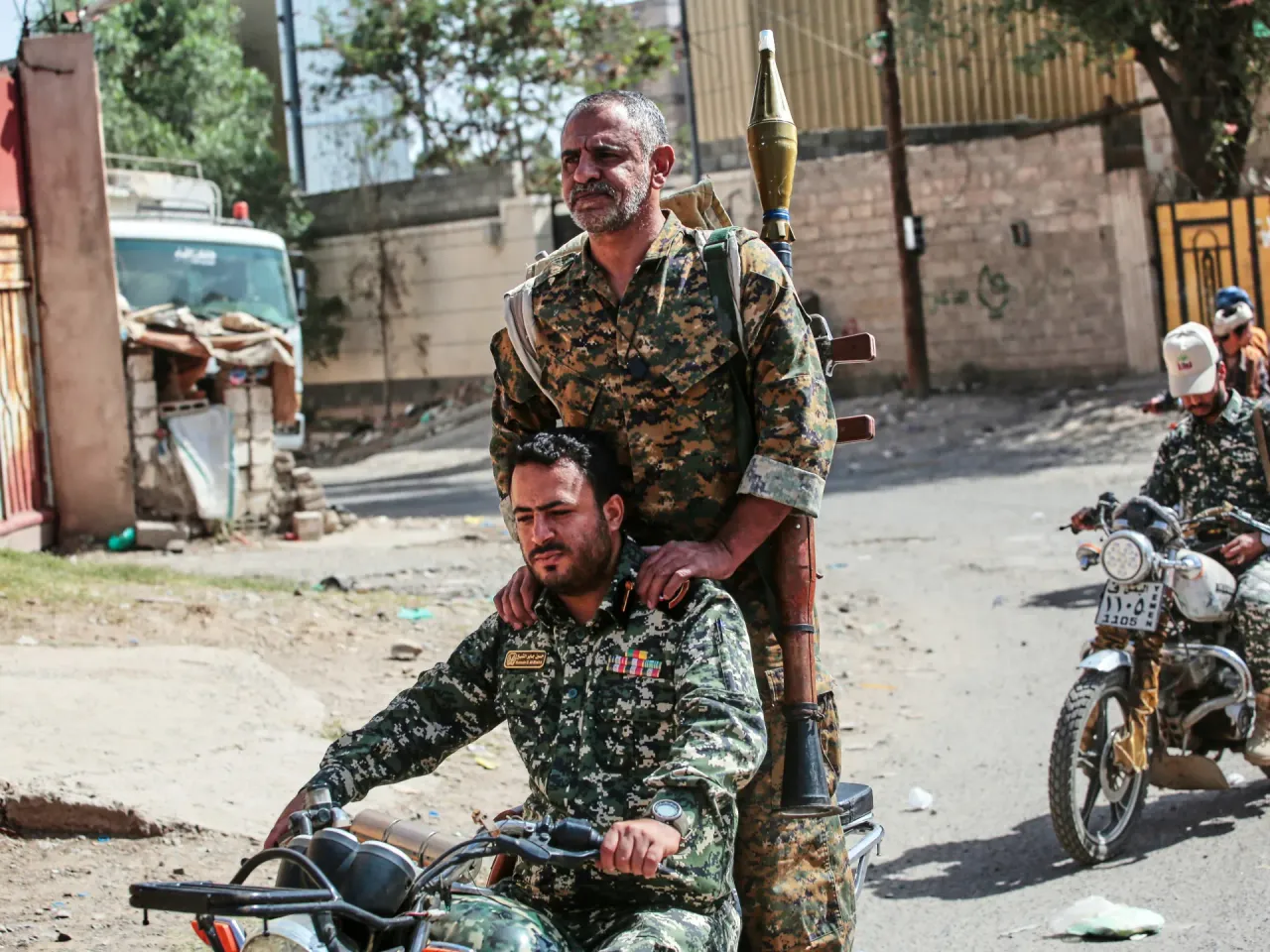
Houthi fighters have broken through front lines that had remained broadly frozen since 2022, seizing the Greater and Lesser Hanish islands, the Red Sea port city of Mocha, and Perim Island near the Bab al-Mandeb Strait. The advances give the Iran-backed group tighter control over one of the world's most critical energy corridors.
The Bab al-Mandeb Strait, which before the current crisis handled roughly 30 percent of global container traffic, has seen vessel transits fall sharply. Maritime analytics firm Kpler recorded only 21 commodity vessels passing through the waterway on Monday.
Saudi Arabia's position has been further weakened by a strike on its East-West Pipeline, a roughly 1,200-kilometre conduit that carries around four percent of global oil supplies from the Gulf coast to the Red Sea port of Yanbu. Officials said repairs could take weeks. With the pipeline down and the Houthis consolidating their hold on the Red Sea coast and nearby islands, Saudi Arabia's two main alternative export routes risk being squeezed simultaneously.
Houthi attacks on Saudi territory have also injured approximately 100 people since the conflict escalated in July, including 13 more injured in an attack on Monday night.
"The current conflict exposes a new level of vulnerability for Saudi Arabia," said Neil Quilliam, associate fellow of the Middle East and North Africa programme at Chatham House. "And it's being tested from all sides."
Analysts say the Houthi advance serves a broader Iranian strategic objective. "Iran knew it couldn't win a traditional battlefront war, so it is inflicting economic warfare on the world," said Baraa Shiban, a researcher and political analyst on Yemen and the Gulf at the Royal United Services Institute. "Through its alliance with the Houthis, Iran is threatening almost a third of the global oil economy."
Saudi Arabia has one of the most heavily armed and technologically sophisticated militaries in the Middle East, but analysts say Riyadh is reluctant to be drawn back into a costly military campaign in Yemen. A Saudi-led coalition intervened there in 2015 and fought for seven years before a UN-brokered truce eased the fighting in 2022.
"Saudi Arabia is now in a very complicated situation," said Sebastian Sons, Middle East observer at the German Middle East Research Center CARPO. "On the one hand, it needs to make it clear to the Houthis that a red line has been crossed and that there must also be a military response. But on the other hand, it also needs to keep the lines of communication open in order to get back to the negotiating table and to de-escalate the situation."
Quilliam echoed that assessment. "The Saudi Crown Prince Mohammed bin Salman is trying to protect both Saudi security and Saudi economic development simultaneously," he said. "The difficulty is that the Houthis are increasingly able to threaten both."
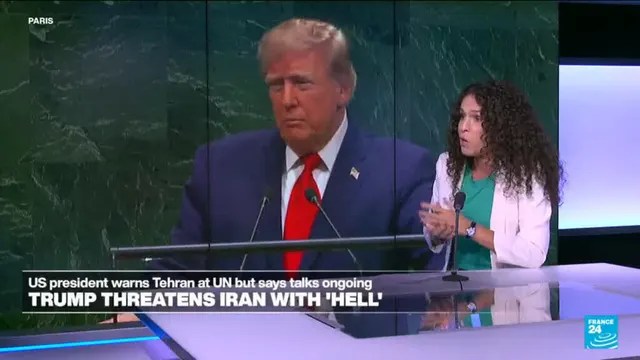
Riyadh has sought US military support. According to multiple sources, Crown Prince Mohammed bin Salman phoned US President Donald Trump on at least two occasions last week, requesting direct military action against the Houthis. Trump declined on both occasions, with one account indicating he offered intelligence support but resisted joining what would amount to another front in the broader US conflict with Iran.
Days later, speaking during a trip to Dublin, Trump told reporters that the Houthis themselves had been in contact, assuring his administration they had no wish to fight US forces. US Vice President JD Vance subsequently confirmed that Washington was engaged in direct talks with the Houthi rebels, as well as with regional allies including Saudi Arabia and the United Arab Emirates.
"The last thing Trump can do is go back to the American public and say they need to get engaged on yet another front inside Yemen," Shiban said. He added, however, that Washington may ultimately have little choice. "Eventually, the US will have to provide at least logistical, intelligence, and tactical support for Saudi Arabia."
Attention has also turned to the Mecca Joint Defence Agreement, signed by Saudi Arabia, Turkey, and Pakistan in August. Pakistan's Defence Minister Khawaja Asif said earlier this month that the pact would be activated in the event of an unprovoked attack on Saudi Arabia or if fighting from Yemen were to spill over into the kingdom. "There should be no doubt in this," Asif said. The precise form any such intervention would take, however, remains unclear.
"Saudi Arabia will unfortunately have to find a military option against the Houthis, whether that is limited or long-term," Shiban said. "In doing so, they will have to test their new agreements."