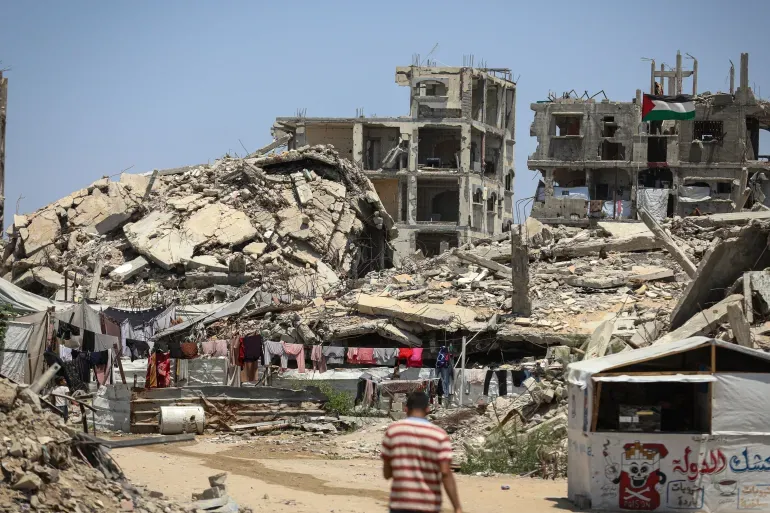
Palestinians in Gaza have reacted with scepticism and frustration following Israeli Prime Minister Benjamin Netanyahu's rejection of a US-backed 15-point plan aimed at ending the war and establishing a framework for the territory's future. The proposal included provisions for a phased Israeli withdrawal, the gradual disarmament of Hamas, a Palestinian-led civilian administration, and steps toward humanitarian aid and reconstruction. On Sunday, Netanyahu said Israel "rejected" the plan, stating that Israeli forces would not withdraw until Hamas is "genuinely disarmed."
For Nesma Harazin, a 27-year-old displaced writer from Gaza City's Shujayea neighbourhood, the announcement came as little surprise. She said Israel had continued near-daily attacks despite a ceasefire agreed with Hamas last October. "We are dealing with an Israeli occupation army that is capable of stopping these operations, but does not accept stopping them and continues to kill the Palestinian people," she said. Harazin described the proposal not as a genuine opportunity for peace, but as a plan that had belonged to US President Donald Trump and Netanyahu "from a long time ago."
Her scepticism was echoed by Mehdi Ahmed, a 53-year-old Gaza City resident. "We are under occupation," he said. "As far as we are concerned, any ceasefire is temporary." Ahmed warned that even a period of calm would not guarantee lasting peace, arguing that the destruction and loss suffered in Gaza would shape future generations. "The generations that are coming will not accept these kinds of solutions," he said. "People who have lost their children, their parents and their families … you cannot expect them to simply forget." Since the October ceasefire, Israeli attacks have killed at least 1,258 people, bringing the total death toll since October 2023 to at least 73,386.
Hamas, in a statement issued late Sunday, said it remained committed to fully implementing the plan and urged mediating and guarantor countries to assume their responsibilities and prevent any violations that could obstruct the process. The Gaza Government Media Office also blamed Netanyahu for what it described as a reversal of the negotiations, calling his rejection of the document, along with his opposition to an Israeli withdrawal, "a clear and unequivocal reversal of the negotiation track."
Not all residents shared the same degree of resignation. Ramez Haniyeh, displaced to Nuseirat in central Gaza after his home was destroyed, described the plan as a genuine missed opportunity to end the fighting and stop the suffering of Palestinians. He warned that its rejection could trigger further escalation. "I expect them to create a new target bank, so that things will escalate and there will be more bloodshed in the coming period," he said. Describing the humanitarian and economic conditions in Gaza as deteriorating, with widespread unemployment and many unable to afford basic necessities, Haniyeh nonetheless said his hope rested on faith. "I have hope in God, but there is no hope that this war will end," he said. "It will continue until God relieves us."