When news broke on October 5 that Yemen's internationally recognised government was launching a major new offensive against Houthi-held territories, Mohammed Ahmed began to prepare for the worst.
Sanaa has been under Houthi control since late 2014, when the group seized the capital in the opening phase of a civil war that has ebbed and flowed for more than a decade. The new operation, named Dawn of Yemen, was declared by Yemeni government forces backed by a Saudi Arabia-led coalition, with the stated aim of retaking all Houthi-held territory, including Sanaa.
"A state of worry and uncertainty overwhelmed my family and me," said Ahmed, a 40-year-old Sanaa resident.
Ahmed said his concern was not about which side would prevail, but about the consequences of fighting near or inside Yemen's most densely populated city. A month on, his anxiety has eased. Sanaa remains largely calm, aside from recurring air strikes.
Meanwhile, the Houthis, an armed group also known as Ansar Allah, have scored territorial gains in other provinces, including Taiz and Lahij in southern Yemen, where fighting has not ceased.
Experts and researchers say the initial momentum surrounding Dawn of Yemen has faded, but view the operation as marking a new phase in a war of attrition that shows no signs of easing.
Turki al-Goblan, head of the Saudi Daimumah Center for Studies, said the Houthis have survived in previous years by adapting to strikes and leveraging complex geography, clandestine supply networks, and the use of civilians as human shields. He said that survival strategy is now under stress.
The Dawn of Yemen offensive has "dealt a blow to the three pillars of this strategy," al-Goblan said.
The first pillar, he explained, is the fuel and supply system that keeps Houthi combat vehicles moving, transports ammunition, and delivers reinforcements. The second is the maritime dimension: the operation has struck Houthi positions around the Bab al-Mandeb strait and the western coast, which serve as outlets for alternative external supply routes. The strait connects the Red Sea and the Arabian Sea and is a major waterway through which Saudi Arabia exports oil and Asian economies ship commodities to Europe.
The third pillar concerns tribal dynamics. Some tribes surrounding Sanaa have begun declaring mobilisation in support of the internationally recognised government, undermining the Iran-backed Houthis' reliance on them.
"When these three pillars are targeted simultaneously, the question shifts from the scale of losses to the ability to replenish them," al-Goblan said. He argued that the pace of attrition has exceeded the Houthis' capacity to recover.
"Attrition ceases to be the opposite of a decisive victory and becomes the means of achieving it as repeated losses translate into an accumulating inability to sustain the fight. This is the scenario I consider more likely," he added.
Abdulsalam Mohammed, chairman of the Yemeni Abaad Studies and Research Center, said the Dawn of Yemen offensive forced the Houthis to move their forces and military capabilities, exposing the group to deadly attacks.
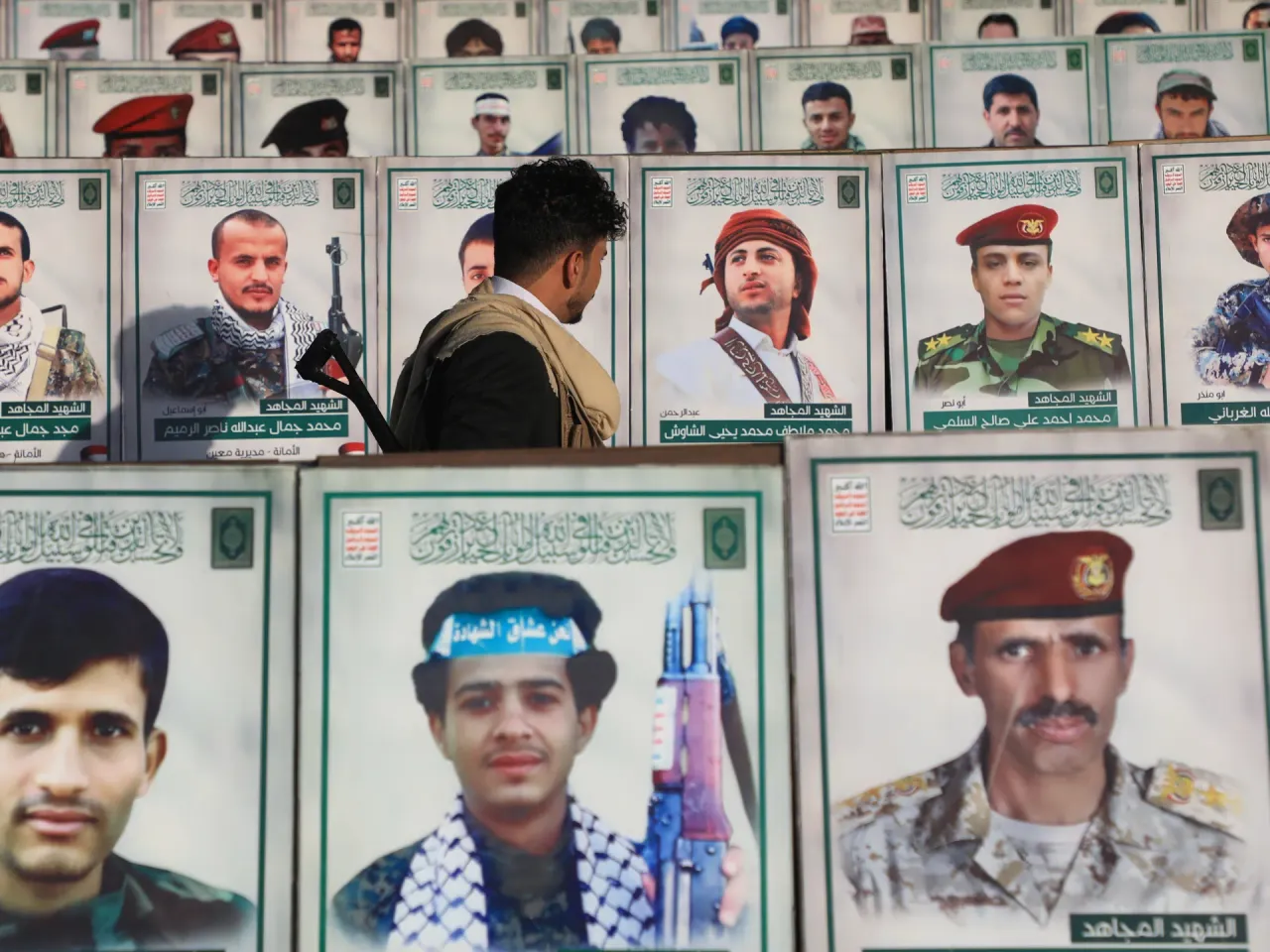
"Many of the Houthi field commanders and hundreds of fighters have been killed in air strikes, especially in Taiz and Yemen's western coast. While the killing of these fighters has not stopped Houthi territorial gains, these gains can be short-lived if the government airpower and ground fighters keep launching coordinated military attacks," Mohammed said.
The Yemeni government reported last month that its forces killed or wounded 1,540 Houthis within a single 24-hour period. Late last week, it said 16,100 Houthi operatives and commanders had been killed or wounded since October 5. The Houthis have not confirmed any death toll.
In parallel, the Houthis have continued firing missiles and drones daily into Saudi Arabia, hitting multiple airports and disrupting air traffic across the kingdom.
Since seizing Sanaa in September 2014, the Houthis have taken control of much of northern and western Yemen. The conflict has remained unresolved in the years since, and analysts say the current offensive, while intensifying pressure on the group, has not yet produced a decisive shift on the ground.