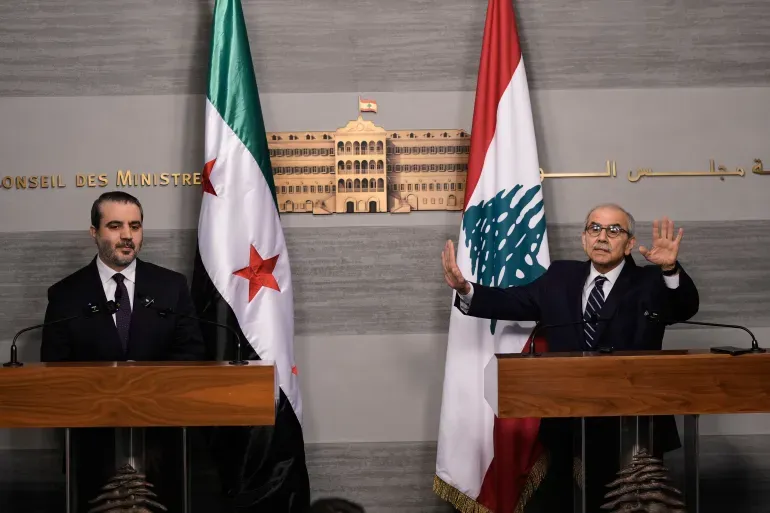
Beirut is no longer a refuge for former officials of the Syrian regime of Bashar al-Assad. Lebanon has begun extradition proceedings against at least one senior figure, and Syrian authorities are pressing for the return of hundreds more accused of war crimes.
The shift follows the collapse of al-Assad's government on December 8, 2024, when the five-decade rule of his family ended as rebel forces entered Damascus. Al-Assad and his brother fled to Moscow hours before the capital fell, leaving many top officials and military commanders to arrange their own escapes. A significant number crossed into neighbouring Lebanon.
Syria's new government is now pursuing those individuals through international judicial channels. "We are seeking to boost the international judicial cooperation to pursue members of the former regime and extradited to Syria to complete judicial procedures and process," judge Mustafa al-Qassem, an aide to the Syrian justice minister, said in an interview with state television.
One of the most prominent cases involves Adel Issa, a former major general in al-Assad's army. He was arrested in Lebanon after staff at the Syrian embassy reportedly alerted authorities when he arrived to complete paperwork. A senior Lebanese prosecutor announced that Issa would be extradited to Syria to face trial for alleged crimes committed during his military service. The case is considered potentially groundbreaking, as it would mark the first time a former regime figure accused of atrocities has been returned from Lebanon to Syria.
Last week, a Damascus court sentenced Bashar al-Assad, his brother Maher, and their cousin Atef Najib to death. Bashar and Maher were sentenced in absentia, as both remain in exile in Moscow. Their presence in Russia is widely seen as protection against extradition.
Sources with knowledge of the whereabouts of former regime members said the most senior figures, including former National Security Bureau head Ali Mamlouk, are in Moscow or the United Arab Emirates. However, Jamil al-Hassan, the former head of the Air Force Intelligence Directorate, is believed to be in Lebanon. Reports from last year indicated that both Syria and France had called on Beirut to arrest and extradite him.
Another figure, Bassam al-Hassan, a former Republican Guard commander described as part of al-Assad's inner circle, was located at a Beirut apartment by a US broadcaster last year. He had been responsible for procuring weapons and liaising with Syria's chemical weapons programme.
Syrian and European sources said most former regime officials still in Lebanon are concentrated in Tripoli's Jabal Mohsen neighbourhood or in parts of the northern Akkar region, which borders Syria. Precise estimates are difficult to establish, as many have moved to third countries, sometimes using false passports, or have been smuggled back into Syria.
One source, speaking on background because he was not authorised to share information publicly, said that in the early days after the regime's fall, former government figures established training camps in Lebanon's Bekaa Valley. Those camps have since been shut down by Hezbollah and the Lebanese army.
Hezbollah fought alongside the al-Assad regime during Syria's war and is viewed negatively by many Syrians as a result. However, the group has stated it has no desire for poor relations with Syria's new government. On August 4, Hezbollah leader Naim Qassem said his party was open to a meeting with Syria's leadership.
Syria has been under pressure from the United States to take action against Hezbollah in Lebanon, though experts believe Syria's President Ahmed al-Sharaa and his government are cautious about such a move, aware it could trigger regional instability and undermine their domestic authority.
Earlier this year, Syrian authorities formally asked Lebanese security forces to hand over more than 200 senior officers who fled to Lebanon following the regime's collapse, according to a media investigation that described Lebanon as a hub for insurgent activity.
The extradition process is complicated by a significant legal difference between the two countries. Lebanon's parliament has passed a law abolishing capital punishment, making it the first country in the Middle East to do so. Syria retains the death penalty, and the recent death sentences handed down in Damascus have heightened concerns.
Wadih al-Asmar, co-founder and president of the Lebanese Centre for Human Rights, said some Syrian officials in Lebanon committed crimes during Syria's occupation of Lebanon, which lasted from 1976 until 2005, and that the Lebanese judiciary therefore has an obligation to prosecute certain individuals.
However, al-Asmar drew a clear legal boundary. "Lebanon cannot, without violating international law and its own law, send back any person to a country where he can face the death penalty," he said. He added: "It's a very complicated situation, and I believe the only way out for the Lebanese government and the Syrian government with respect to the state of law is for Syria to abolish the death penalty."
Experts said Beirut's interest in maintaining a positive relationship with Damascus will likely take precedence over human rights concerns related to capital punishment when decisions on extradition are made.