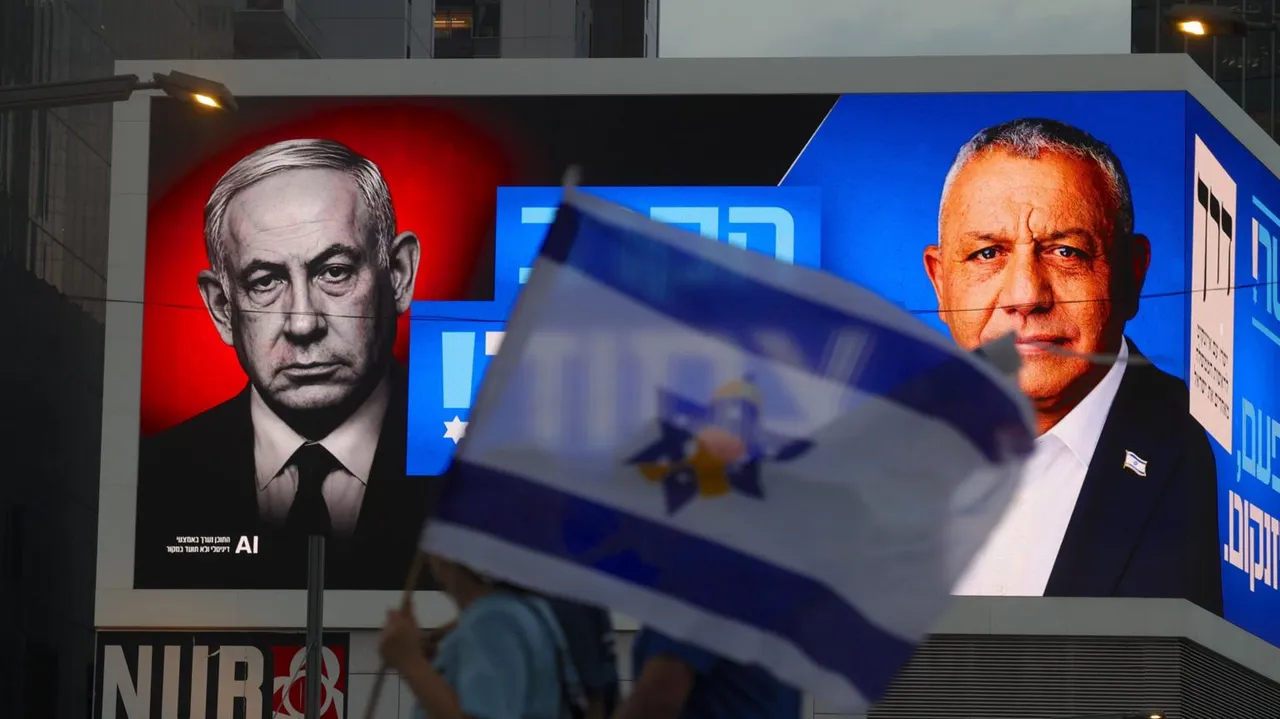
Israel holds a general election on Tuesday in what many describe as one of the most consequential votes in the country's history, with polls showing the governing coalition and the main opposition bloc running almost neck-and-neck.
Around half a million first-time voters are expected to cast ballots, and some 70,000 Israelis have reportedly flown in from abroad specifically to vote.
On Saturday night, vast crowds of opposition supporters gathered in central Tel Aviv to demand a change of government. Thousands had also rallied in the city on Friday, just three days before polling day, in a demonstration widely seen as a referendum on Prime Minister Benjamin Netanyahu.
The election takes place three years after the Hamas-led attack of 7 October 2023, in which gunmen stormed through Gaza's border fence, killing almost 1,200 people and taking 251 hostage. It was described as Israel's worst security failure.
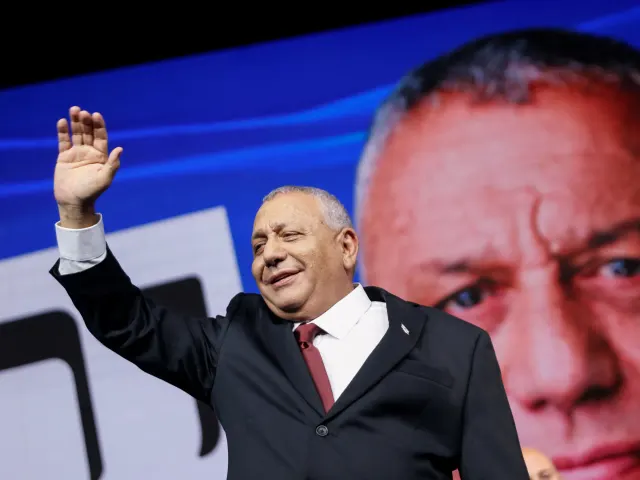
Netanyahu's main challenger is Gadi Eisenkot, leader of the centrist Yashar party and a former military chief of staff. Eisenkot is known for his calm manner and low-key approach, and has been described by some as a "non-politician." His son was killed during the Gaza War.
Eisenkot has regularly led Netanyahu and his Likud party in recent polls, including the last survey published on Friday in line with Israeli election law. He has presented himself as coming "from the periphery," not from Israel's wealthy urban elite, and has drawn support for his personal manner and working-class Moroccan background.
His ethnicity became a campaign flashpoint earlier this month when a pro-Netanyahu speaker used a racist slur during a television debate, referring to Eisenkot with a racial epithet.
"These elections are about many issues," Eisenkot told a crowd at a community centre for Ethiopian Jews in the city of Ramle. "They are about security, economy, education...but primarily, they are about the identity of the State of Israel, and what kind of Israel we want to see. A Jewish state, a democratic state, a liberal, tolerant, egalitarian state."
Netanyahu has run a campaign focused on security, with the core slogan "No Surrender." He has repeatedly cast his rivals as soft on security and suggested that Jewish opposition parties might ally with Arab parties to secure a parliamentary majority, which he argues could compromise national security. Around one-fifth of Israel's population is Arab, many of whom describe themselves as Palestinian citizens of Israel.
The opposition has accused Netanyahu's government of threatening Israeli democracy, pointing to his efforts to curb the powers of the judiciary and his refusal to establish a state commission of inquiry into the 7 October attacks. Netanyahu has said he opposes such an inquiry on the grounds that the Supreme Court would be biased against him.
Eisenkot and other opposition leaders have promised to establish such a commission. A recent survey suggests more than 70 percent of Jewish Israelis support the move.
On the question of a Palestinian state, the leading candidates show little division. Netanyahu has stated: "We are going to fulfill our promise that there will be no Palestinian state; this place belongs to us." Eisenkot has said: "My position on the Palestinian issue has remained consistent: The principle of two states for two peoples is a mistake."
Finance Minister Bezalel Smotrich, leader of the Religious Zionist party, has called on the next government to "destroy the idea of an Arab terror state; finally, formally and practically cancel the cursed Oslo Accords and get on the path of sovereignty, while encouraging migration both from Gaza and from Judea and Samaria [occupied West Bank]. There is no other long-term solution."
Yair Golan, leader of the Democrats, said: "We need to understand that Israeli society is still in trauma from October 7. To make the galactic leap from the current situation to a two-state solution is impossible. It's not enough to return to old formulas, we need to adjust our plans, our ideas, our perceptions. My concept is about civil separation and security responsibility."
Another major issue is the conscription of ultra-Orthodox, or Haredi, Jews into the military. Netanyahu has continued to rely on the two main Haredi parties, Shas and United Torah Judaism, for parliamentary support. They have pressed him to pass legislation overturning a Supreme Court ruling of 25 June 2024 that had cleared the way for Haredi conscription.
Following the arrest this month of around 40 Haredi men for avoiding the draft, Netanyahu said: "We must preserve the world of Torah because it preserved us. These arrests are a deliberate attempt to harm the process of drafting Haredim wi..."
Eisenkot has vowed to enforce court rulings on drafting ultra-Orthodox men into national military service, a position that polls suggest is popular across the political spectrum.
With the predicted result too close to call, Tuesday's vote is being watched closely both inside Israel and internationally.