Partial results from Israel's general election show Prime Minister Benjamin Netanyahu leading his rival, former military chief Gadi Eisenkot, but still short of the parliamentary majority needed to form a government.
With 85% of ballots counted, Netanyahu's Likud party and its far-right and ultra-Orthodox Jewish allies were on track to win 53 seats in the 120-seat Knesset. Eisenkot's Yashar party and three other Jewish opposition parties in his bloc were set for 48 seats. A party needs 61 seats to secure a parliamentary majority.
Final results were expected within a day or two, with between 430,000 and 480,000 absentee ballots from soldiers and diplomats still to be counted.
Earlier in the night, exit polls published by three Israeli broadcasters had projected Eisenkot's "Change Bloc" would emerge with between 52 and 53 seats, compared to 50 for Netanyahu's bloc. The broadcasters later updated their projections, with two showing the rival blocs tied on 51 seats and one giving Netanyahu's bloc a narrow three-seat lead.
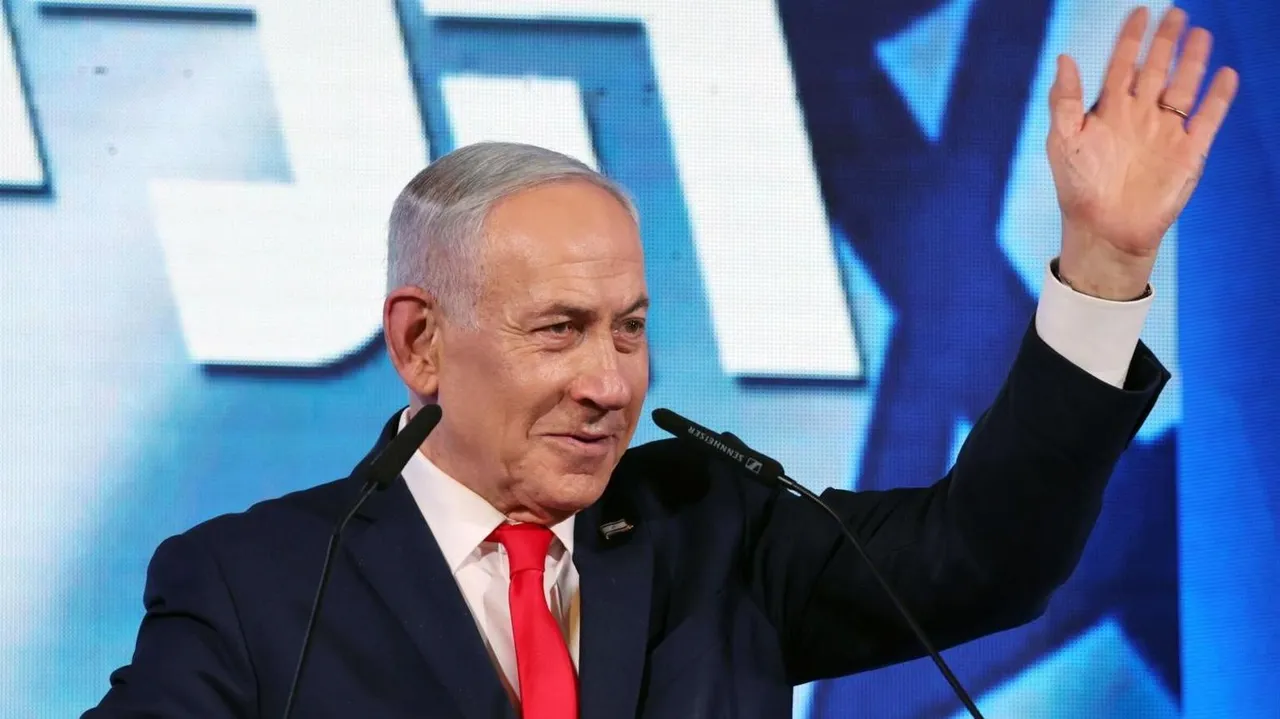
Netanyahu addressed supporters at Likud's headquarters in Jerusalem in the early hours of Wednesday morning and declared that his right-wing bloc had won a "great majority". "We must put in place a strong right-wing national government," he said. "It is forbidden, simply forbidden, to endanger Israel by forming a government that relies on anti-Zionist Arab parties."
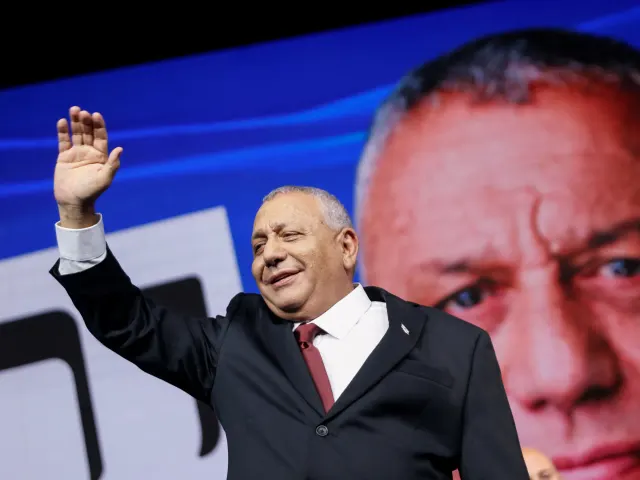
Eisenkot declared that the public had "spoken in favour of change." "The coalition of failure has lost the people's trust," he told supporters at Yashar's election headquarters in Tel Aviv. "I will work with my partners to ensure that the people's decision is translated into a Zionist government."
Arab-led parties could emerge as kingmakers, on course to win an unprecedented 19 seats. All but one of the Jewish parties have pledged not to work with them.
The strong showing by Arab parties was driven by high turnout among Arab Israelis, who account for about a fifth of the population and often describe themselves as Palestinian citizens of Israel.
The chairman of the Joint List, Yousef Jabareen, said his party was "ready and prepared to pave the way to oust the Netanyahu government." "Change runs through a Jewish-Arab partnership - a genuine and equal partnership. Nothing less, and nothing more," he wrote on X.
United Arab List leader Mansour Abbas, who served in a short-lived governing coalition formed after the 2021 elections, said he hoped "the numbers will work out and we, the Change Bloc and the UAL, can ensure that there are 61 Knesset seats."
The leader of the left-wing Democrats party, Yair Golan, told partners in Eisenkot's bloc that there was an "opportunity to form a change government in partnership" with the Arab parties. "We have no future here if we don't stop being afraid. And if we don't put an end to racism," he wrote on X.
President Isaac Herzog praised the 77.7% voter turnout recorded in Tuesday's election, describing it as the highest in more than two decades. "It is a badge of honour for Israeli society, and it was remarkable to see how deep the desire for democracy is in Israel," he said.
Herzog said he expected to receive the official results the following week, after which he would begin consultations with every political faction before inviting the leader he believes has the best chance of forming a government. He urged all parties to approach the process with an open mind. "We must do everything we can, certainly after yesterday, to avoid another round of elections," he said.
If no leader succeeds in forming a coalition, a further election would be required.
Tuesday's vote was the first general election held since the Hamas-led attacks on Israel on 7 October 2023.