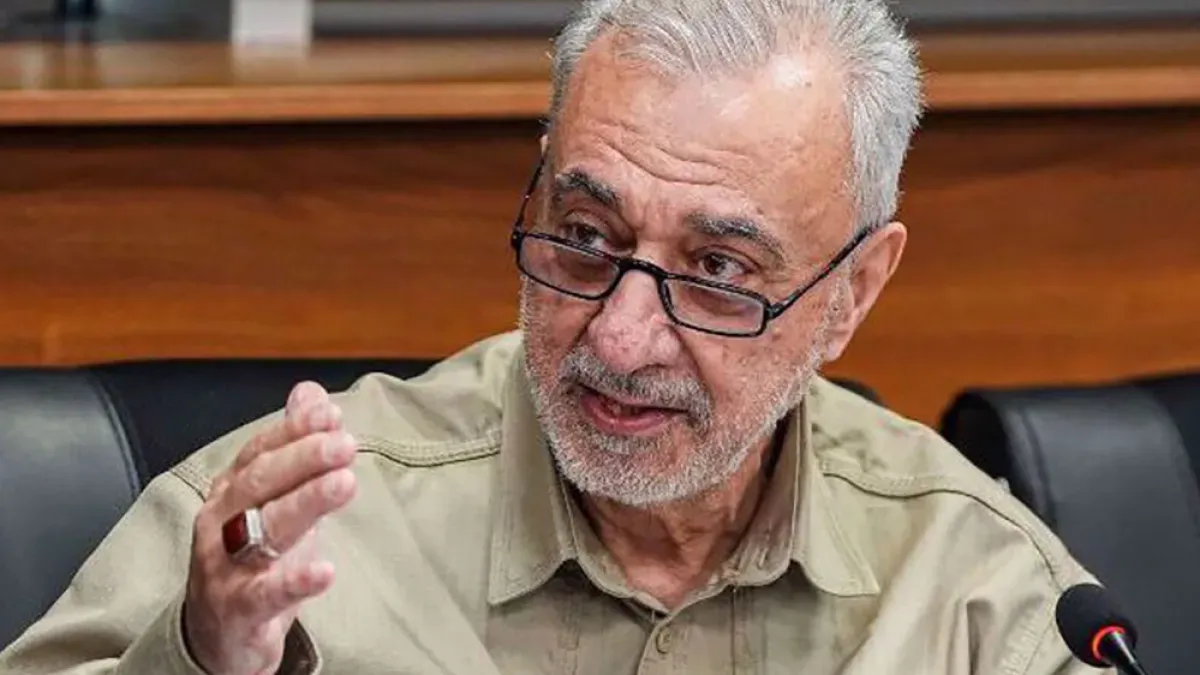
Mehrdad Akhlaghi Ketabchi has been appointed Iran's new defence minister, confirmed by a parliamentary vote on Sunday, as the country faces an escalating conflict with the United States.
The 68-year-old was approved by 237 lawmakers, with 15 voting against. Parliament has been convening online since the start of the US-Israel war on Iran, which began on February 28.
Akhlaghi takes over the Ministry of Defence and Armed Forces Logistics at a critical moment. His predecessor, Aziz Nasirzadeh, was killed on the opening day of the war, along with a large number of other senior figures, including Supreme Leader Ali Khamenei. The position had been filled temporarily by Majid Ebn-e Reza, who will now serve as Akhlaghi's deputy.
President Masoud Pezeshkian said Akhlaghi brings more than 42 years of experience in the Defence Ministry and related organisations. His principal expertise lies in ballistic missiles, solid-fuel propulsion, aerospace technology and military-industrial production, according to state media.
Akhlaghi previously served as head of the Shahid Bagheri Industrial Group, the Aerospace Industries Organization and the Defence Industries Organization. He is subject to sanctions by the United States and is also under United Nations sanctions.
According to reports linked to the Islamic Revolutionary Guard Corps, Akhlaghi played a role in expanding the Sejjil and Zolfaghar families of Iranian ballistic missiles, as well as precision-guided weapons including the Almas missiles and Yasin guided bombs. He is also said to have expertise in space launchers, research rockets and infrastructure associated with the Imam Khomeini Space Center in Semnan.
His defence plans were approved in advance by senior military authorities, President Pezeshkian and parliament's Commission on National Security and Foreign Policy.
Iran's Defence Ministry spokesman, Brigadier General Reza Talaei-Nik, told reporters this month that Akhlaghi's nomination reflected Iran's need to increase the quantity and quality of strategic weapons, particularly missiles and drones. "Offensive arms are being actively improved," the spokesman said.
Akhlaghi told members of parliament that he had met with senior military commanders, including IRGC commander-in-chief Brigadier General Ahmad Vahidi, to assess their requirements during and after the war.
His stated priorities as defence minister include faster military-industrial development, strengthening air defences, incorporating emerging technologies through both government and private sector firms, improving armed-forces welfare and expanding international military cooperation.
The new minister will be responsible for rebuilding and expanding Iran's military-industrial infrastructure, which has been heavily targeted by US and Israeli strikes. The US has repeatedly claimed it has destroyed most of Iran's military-industrial capacities. Tehran has maintained that it retains considerable offensive and defensive capabilities beyond the reach of US and Israeli strikes, and that its weapons have been upgraded based on wartime experience.
In his first public remarks as defence minister on Sunday, Akhlaghi responded to recent threats from the administration of US President Donald Trump, which this month threatened to use the "mother of all bombs" against Iran's nuclear and energy infrastructure. "We have made preparations and continue our work with ease of mind," he told reporters.
President Pezeshkian also addressed the country's position in the conflict. "The Islamic Republic of Iran will not be the instigator of aggression against any country but will defend the territorial integrity of the country strongly and to the death against any aggression," he said.