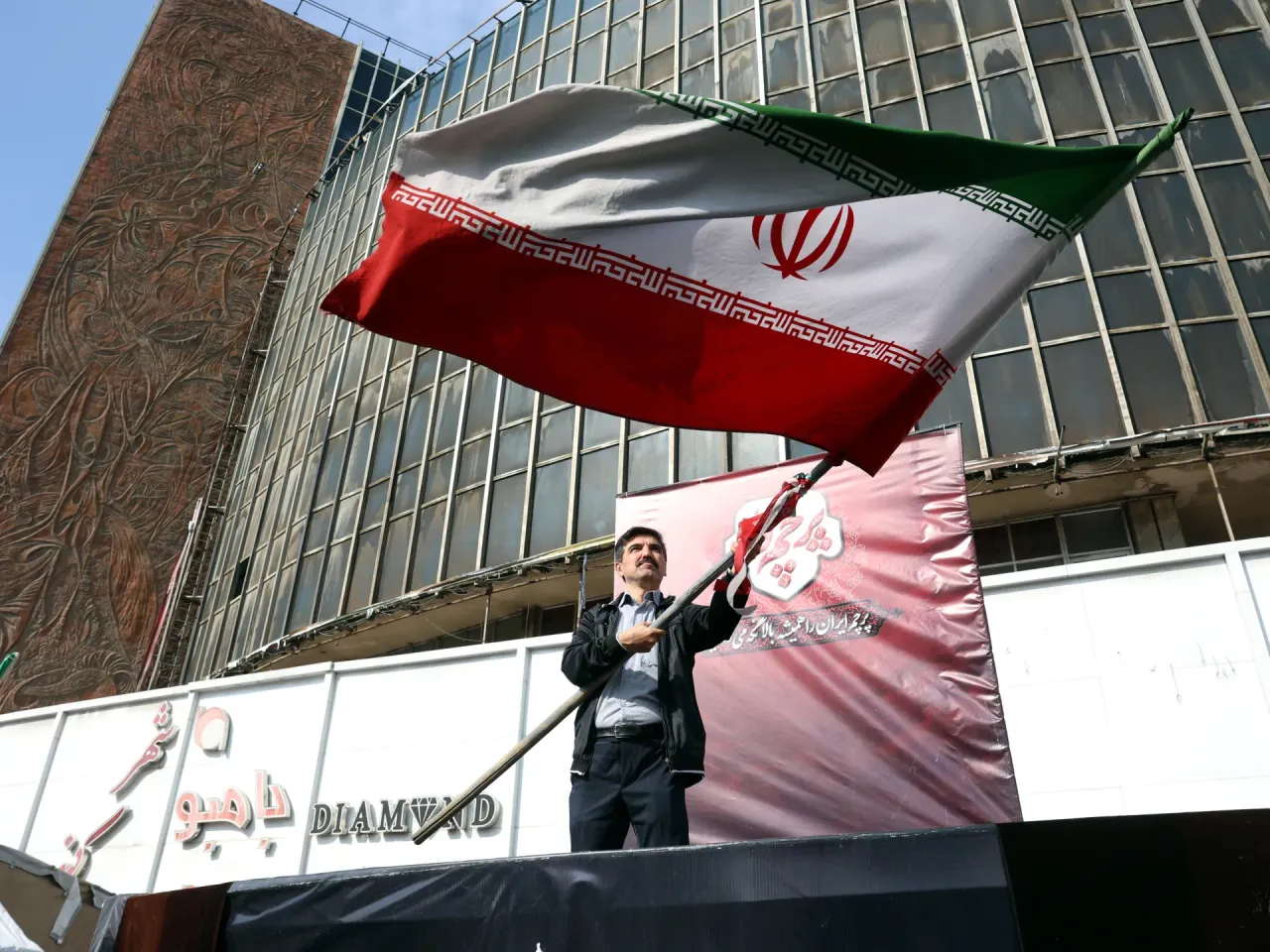
Tehran and Washington are pursuing a potential diplomatic opening through Qatari mediation, even as both sides signal readiness for renewed military escalation.
After two days of mediated talks — first in Tehran on Friday, then in Qatar on Saturday — Iranian authorities indicated that a deal remains possible, provided their demands are tangibly implemented.
Iranian Foreign Minister Abbas Araghchi said Tehran has nonetheless prepared for all outcomes. "We are prepared for all scenarios," he said. "We have upgraded our weaponry, addressed our vulnerabilities, and tested new arms. Our forces are at the highest level of readiness."
US President Donald Trump said on Saturday the talks were going "fine" but added that Iranian authorities were not "reliable." Trump, who ordered attacks alongside Israel against Iran on February 28, has repeatedly raised the prospect of striking the country's civilian infrastructure again.
In recent weeks, he has suggested a further attack could take place after the November 3 midterm elections. "We still have to take care of, I would say, one or two sites, but we can do that in 10 minutes," Trump told reporters at a Halloween party at his Mar-a-Lago Club in Florida, referring to Iran's nuclear facilities.
One tangible result of the mediated talks appears to be a shortening of the timeline attached to Iran's proposal to partly reopen the Strait of Hormuz. Tehran had previously offered a seven-day window before the proposal could be enforced, but that period has now been reduced to two days, Araghchi said.
Negar Mortazavi, a senior fellow with the Center for International Policy, said there are "indications" of US interest in a negotiated settlement, citing the continuing Qatar-mediated talks and recent outreach by US Vice President JD Vance.
"However, Iran is seeking a series of concessions while the United States insists on progress on Iran's nuclear programme before concessions are made," she said. "Therefore the central difficulty is sequencing and leverage. Each side wants the other to act first."
Hamidreza Azizi, a senior Iran analyst at the International Crisis Group, said Araghchi's two-day offer signals some flexibility on sequencing that could allow both sides to claim an initial diplomatic achievement without immediately resolving their fundamental disagreements.
"However, the military statements show the limits of this opening," Azizi wrote on social media. "Iran appears increasingly determined to prevent a repetition of previous scenarios in which negotiations or temporary ceasefires were followed by renewed military conflict."
"From Tehran's perspective, the objective is to make another attack so costly and unpredictable that Washington would have to reconsider the option altogether," he added.
As the talks continued on Saturday, the office of Iran's Supreme Leader Mojtaba Khamenei announced that he had met with top military commanders to demand "maximum deterrence" through preparedness for an immediate response "without geographical restriction" to any threat. Targets would include "tangible and intangible" US and Israeli assets, Khamenei said.
Following Khamenei's statement, commanders of the general staff of the armed forces, the Islamic Revolutionary Guard Corps, and the traditional army separately expressed readiness to launch missile, drone, and other attacks in the event of further escalation.
State media on Sunday aired footage of missiles and drones being moved out of large underground storage facilities and deployed during the eight months of conflict so far.
Iranian authorities also signalled they expect potential further strikes from the US and Israel, including against Iran's power grid. Gholamreza Jalali, commander of the National Organization for Passive Defense, said during a Sunday speech that authorities had identified 14 sectors most dependent on electricity that would require support if the war restarts, without naming them specifically.
"Adopting preventive measures in the area of passive defence for the electricity grid is a fundamental principle that all authorities must observe," Jalali said.


