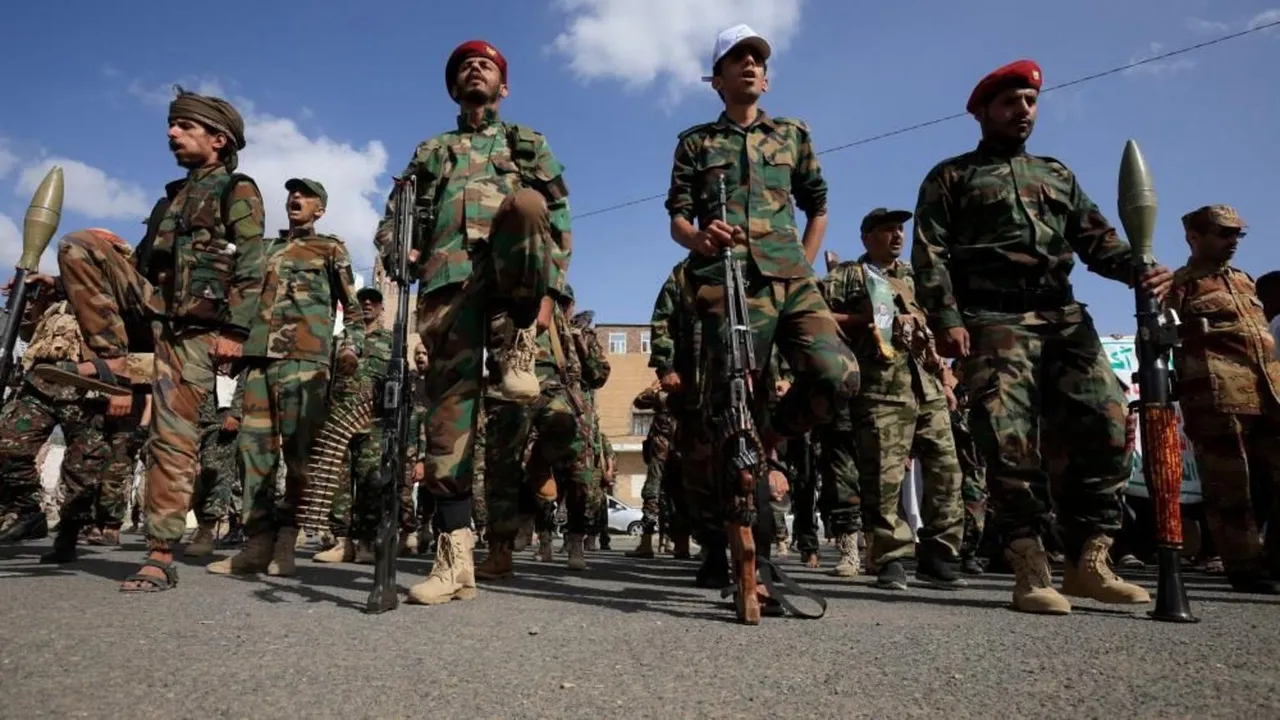
Yemen's Houthi movement has seized a string of strategic locations along the country's western Red Sea coast, consolidating control over the Bab al-Mandab Strait and raising the stakes in the broader regional conflict involving Saudi Arabia, Iran and the United States.
The Iran-backed group captured the port city of Mokha on Thursday, followed by the town of Dhubab and Perim Island — also known as Mayyun — by Friday, according to Yemeni government sources. All three locations had been held by forces aligned with Yemen's internationally recognised government.
A Yemeni military official said the Houthis now control the entire western coastline. Pro-government forces withdrew from Perim Island on Friday, with witnesses and news agencies reporting that Houthi fighters moved onto the island shortly after.
Houthi military spokesman Yahya Sarea said the "large-scale" military operation was launched on 3 September, citing what he described as Saudi Arabia's "blatant aggression" against "our dear people." He said Houthi forces had expelled "Saudi enemy" troops from six districts in the Taiz and Hodeidah regions, claiming hundreds had been killed, wounded or captured.
In a statement, the Houthis said their operation to expel Saudi-backed forces had been a "success" and that "maritime navigation is safe for all companies except for Saudi vessels." The statement did not specifically mention Perim Island.
Perim Island sits at the narrowest point of the Bab al-Mandab Strait, which connects the Red Sea to the Gulf of Aden. The strait has grown in strategic importance following the effective closure of the Strait of Hormuz amid the conflict between the United States and Iran. Saudi Arabia has been relying on the Red Sea route to ship oil to customers in Asia.
Analysts say Houthi control of the strait gives Iran additional leverage in its confrontation with Washington. "This is actually a full-scale war," said Farea Al-Muslimi, a Yemen researcher at the Chatham House think tank in London. "It hasn't been given that name yet but we are marching there full time."
Elham Manea, director of the Middle Eastern and Gulf Studies Research Competence Area at the University of Zurich's Institute of Political Science, said the situation differs significantly from 2015, when a Saudi-led coalition first intervened. "The Houthi movement is militarily and institutionally much stronger," Manea said, "while the camp opposing it, that is, the internationally recognised government, remains more fragmented."
Saudi Crown Prince Mohammed bin Salman has personally pressed US President Donald Trump to take military action against the Houthis during their rapid advance, according to two sources familiar with the matter. Trump has so far declined to involve the US military directly, offering instead to assist with intelligence and targeting support, the sources said.
A senior Trump administration official said: "We are in continuous dialogue with Saudi Arabia and the Republic of Yemen government regarding regional stability."
The conflict has also spilled into Saudi territory. The Houthis launched dozens of ballistic missiles and drones at four cities in Saudi Arabia this week. A Saudi-led coalition responded with air strikes on Houthi-controlled areas in western Yemen.
Separately, Saudi Arabia's foreign affairs ministry said on Friday that drones originating from Iraq had targeted the country's East-West oil pipeline, forcing its closure as a "precautionary measure" and injuring several people. Iraq's government condemned the attack, and the prime minister launched an investigation. The operations commander in the Maysan governorate — a province bordering Iran — was removed from his post after it was confirmed the attack originated from that region.
Saudi Arabia said that, following a call from Iraq's prime minister, it had chosen not to respond to the drone attacks at this stage.
The escalating conflict has contributed to a surge in oil prices. Hundreds of people have reportedly been killed and thousands displaced in Yemen since the Houthis launched their south-western offensive approximately one week ago.
The government-aligned National Resistance Forces announced on Thursday that troops were reorganising and consolidating their defences in Mokha in coordination with other anti-Houthi forces.
Yemen's internationally recognised government is represented by the Presidential Leadership Council, based in Aden, with many senior officials operating from Saudi Arabia. The Houthis control the capital, Sanaa, most of the north, parts of the centre, and now much of the western coastal strip. The political landscape was further complicated in December when secessionists backed by the Southern Transitional Council, supported by the United Arab Emirates, seized areas in the south and east. The STC was dissolved in January.
Analysts suggest Saudi Arabia is weighing its options carefully. "The Saudis would like to avoid war at any cost," Al-Muslimi said. Manea assessed that Riyadh is more likely seeking to restore deterrence and negotiate from a stronger position than to pursue outright military defeat of the Houthis.
Saudi Arabia has not publicly commented on the latest territorial developments.