A missile launched by Yemen's Houthi movement struck an administrative building belonging to Saudi Arabia's state oil company Aramco in the eastern city of Dhahran overnight, the Saudi Ministry of Energy confirmed.
The ministry said the strike caused a "limited fire" in the building, located within Aramco's headquarters complex, but reported no injuries. Sources with knowledge of the incident said a ballistic missile hit an office tower, causing extensive damage and a fire that spread between the sixth and 10th floors. One Aramco employee was quoted as saying the "top three floors have gone."
The Houthis' military spokesman, Yahya Sarea, said the group had targeted Aramco's headquarters in Dhahran, an Aramco refinery in Riyadh, and the capital's King Khalid International Airport using ballistic missiles, cruise missiles, and drones. "Operations towards Saudi depths will continue in the coming days, targeting Saudi enemy airports and oil facilities," he said.
Saudi coalition spokesman Major General Turki al-Maliki said coalition forces had intercepted and destroyed a ballistic missile launched toward Dhahran, but that debris fell in a residential area. He also said missiles and drones launched toward Riyadh, al-Kharj, Haradh, and the country's south were intercepted on Tuesday and Wednesday morning.
The General Directorate of Saudi Civil Defence issued two alerts through its national early warning platform, later saying the danger had passed. The General Directorate of Civil Defence said two women, a man, and a child were injured by debris from two intercepted cruise missiles in Riyadh, which also caused limited material damage to 15 homes in the city.
The Houthis said the attacks were carried out in retaliation for Saudi-led coalition air strikes on the Yemen Petroleum Company's al-Sabaha Central Station on the western outskirts of Sanaa, as well as facilities at the Ras Isa oil terminal on the Red Sea coast, north of the port city of Hudaydah. Two civilians were killed and two others were injured in the Ras Isa attack, according to the Houthi-run health ministry.
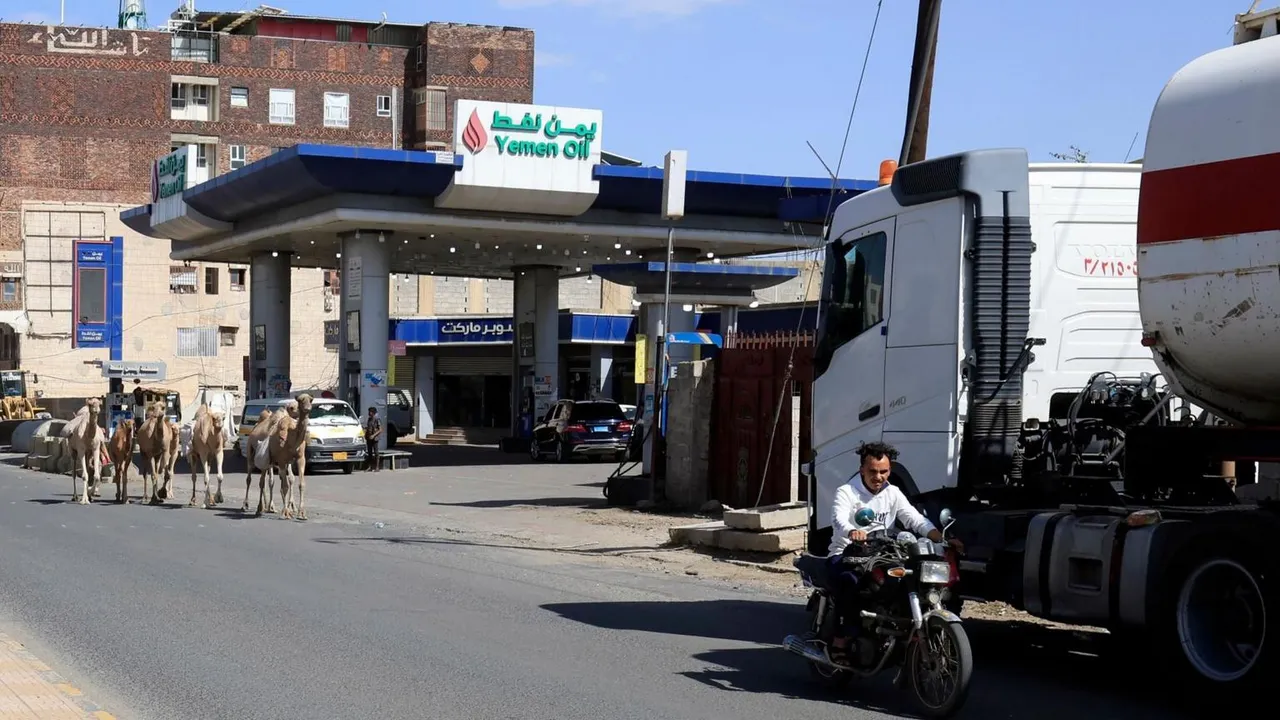
The coalition had issued a rare warning to civilians to evacuate the al-Sabaha fuel depot ahead of the strike, describing it as a planned "special operation." Queues reportedly formed at petrol stations in Sanaa following the warning, with many residents concerned about fuel shortages. The Yemen Petroleum Company, which is run by the Houthis, said the facility "does not contain any stock of petroleum products" and that it had taken precautionary measures to ensure supply stability.
Al-Maliki said the coalition targeted al-Sabaha and other facilities because they were being used to support Houthi military operations, including the supply of missiles and drones.
The Houthis have said they are targeting airports, oil and gas facilities, and military bases in Saudi Arabia in retaliation for Saudi air strikes on territory they control in western Yemen, including Sanaa. The group has controlled Yemen's most populous areas, including the capital, since seizing it in 2014, forcing the internationally recognised government to flee to southern Yemen.
The Saudi cabinet, chaired by Crown Prince Mohammed bin Salman, vowed on Tuesday that the Houthis would "bear the consequences" of their attacks on the kingdom. The statement followed a missile strike on Riyadh's airport on Saturday. Reports put the death toll from that strike at between 13 and 14 people, with more than 300 others wounded. Houthi attacks have also been reported on Abha International Airport, where two people were killed.
Fighting in Yemen between the Iran-aligned Houthis and Saudi-backed Yemeni government forces escalated sharply last month, shattering a United Nations-brokered ceasefire that had largely held since 2022. Saudi-backed Yemeni government forces have launched a counteroffensive to retake coastal territory from the Houthis near the Bab al-Mandeb strait, a vital maritime trade chokepoint at the entrance to the Red Sea.
The Muslim World League condemned the continued Houthi attacks on Saudi Arabia, saying they deliberately target civilians and civilian infrastructure. The league's secretary-general, Sheikh Mohammad bin Abdulkarim Al-Issa, said the nature of the attacks confirms "the criminal approach of this terrorist militia in deliberately targeting civilians and civilian infrastructure."
International Monetary Fund director Kristalina Georgieva said the escalating conflict could have "potentially negative spillovers for everybody, everywhere."