Four years ago this week, Mahsa "Jina" Amini, a 22-year-old Iranian Kurdish woman, was detained by Iran's morality police at a Tehran metro station. Officers alleged her headscarf had slightly receded from her forehead. She was placed in a van and taken to a so-called re-education centre.
Security camera footage released by the government showed Amini collapsing to the ground inside the facility as a policewoman scolded her. She was transferred to a nearby hospital and pronounced dead three days later, on September 16, 2022.
Authorities claimed Amini had pre-existing health conditions and denied any wrongdoing. Her father, Amjad Amini, said fellow detainees told him his daughter had been beaten inside the police van.
Two female journalists working for local newspapers helped break the story, publishing a widely circulated image of Amini's parents embracing outside the intensive care unit where she died. Both journalists were later imprisoned on national security charges.
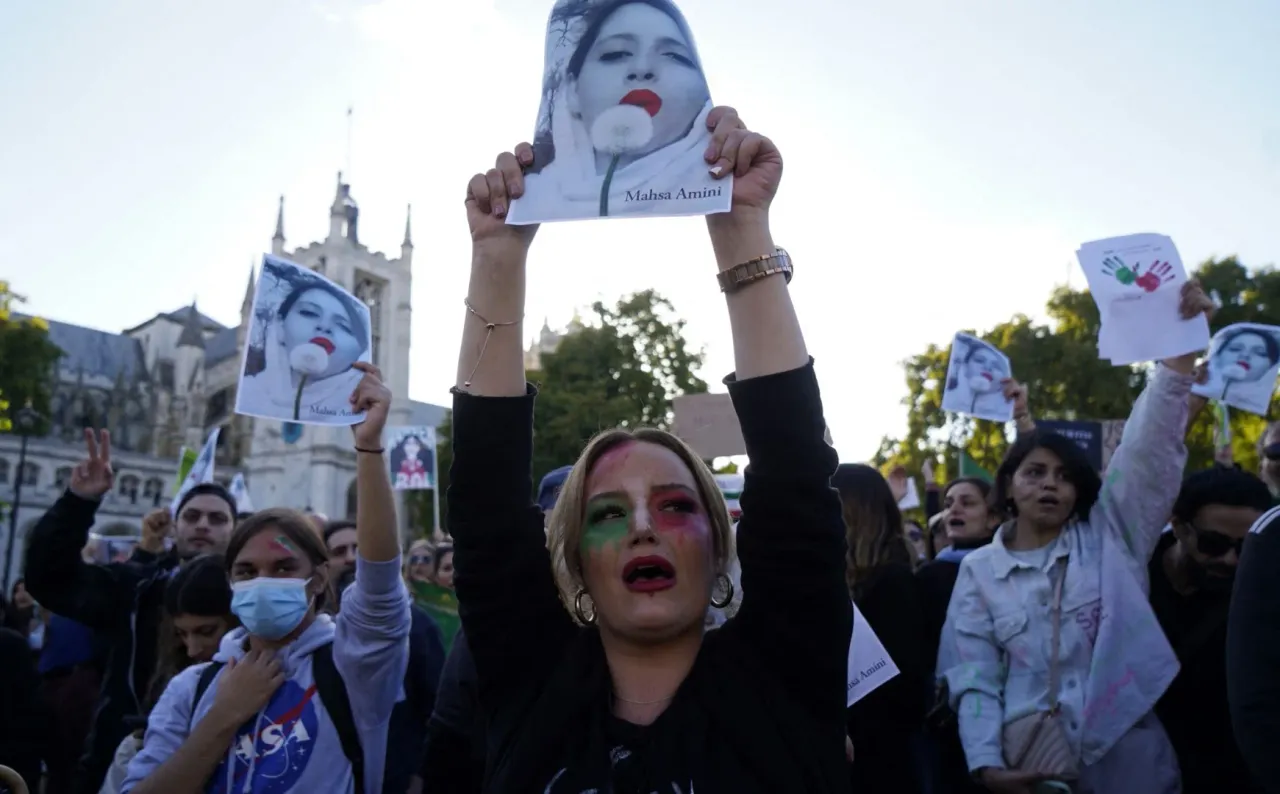
Small demonstrations began outside the hospital and then in Amini's hometown of Saqqez, in the western province of Kurdistan, following her funeral. Within weeks, protests had spread across Iran, calling for greater freedoms for women and for the population at large.
The protests lasted into early 2023 and drew support from around the world. The United Nations' Independent International Fact-Finding Mission on Iran later corroborated reports by foreign-based rights groups that at least 550 people were killed during the unrest, including 68 children and 49 women, across 26 of Iran's 31 provinces.
A Kurdish phrase, "Woman, Life, Freedom," became the slogan of the movement. Activists and observers have described it as the most significant social and cultural shift in Iran in decades.
"From my perspective, the movement 'Woman, Life, Freedom' is the biggest social and cultural change in Iran in decades," said Pouran Nazemi, a writer, poet and women's rights activist who has been arrested multiple times in recent years. "The institutions still use physical violence and occasional arrests against us. But something fundamental has changed."
Nazemi said the movement had clear goals from the outset: ending the mandatory hijab and halting state violence against the population. Though those goals were not formally achieved, she said the protests led many Iranians to recognise their own power within society.
The impact is visible in daily life. Women across Tehran and other cities are increasingly appearing in public without headscarves, a shift that would have been difficult to imagine before 2022.
"I thought we would never be able to choose the way we want to dress, but the movement created massive cultural change and a more progressive identity that can never be taken away now," said Bahar, a 26-year-old Tehran resident who withheld her surname for security reasons.
Bahar said she had previously kept a headscarf around her neck out of fear of reprisals. She no longer does so.
Another Tehran resident, Setareh, said she faces fewer instances of verbal abuse on the city's streets for her choice of dress and is rarely refused service by ride-hailing drivers for not wearing a hijab. "People and families, especially men, are now more accustomed to women dressing more naturally, even if they don't like it," she said.
A 17-year-old student told reporters she does not think about wearing a hijab in public and regularly posts images of herself in colourful clothing on social media. "My mother is not wearing a hijab either," she said. "She is still a bit afraid and always carries a scarf so she can cover up in an emergency."
Despite the cultural shift, the mandatory hijab remains law. Authorities have continued efforts to enforce it, and a strict hijab bill passed in late 2023 has been under debate since. In a virtual parliamentary session on September 6, several lawmakers urged Parliamentary Speaker Mohammad Bagher Ghalibaf to send the proposed legislation to the president for signing. One lawmaker described the absence of head coverings as a "deep wound in the body of society."
The resistance of Iranian women to state dress codes predates the 2022 uprising. In 2006, women's rights activist and writer Mansoureh Shojaee co-launched the "One Million Signatures" campaign, seeking a million signatories to a petition calling for the repeal of laws discriminating against women. The initiative addressed issues including divorce, child custody, inheritance, court testimony and polygamy. It was met with arrests, police summons and court proceedings from the outset.
Mandatory hijab has been enforced in Iran since shortly after the 1979 Islamic Revolution. Four years after Amini's death, the debate over women's dress and state authority remains unresolved.