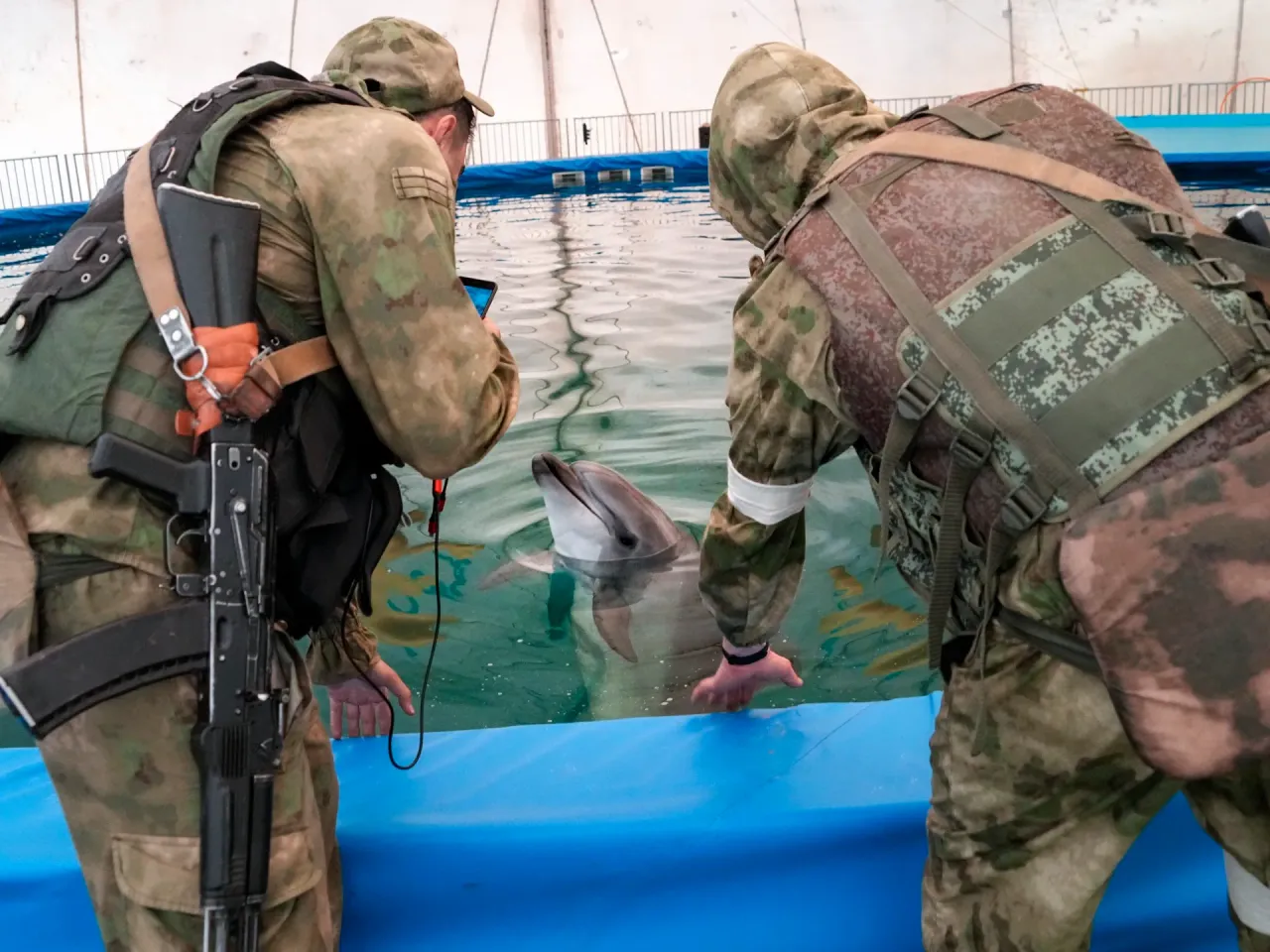
Fishers and poachers along the Black Sea coast regularly find suffocated dolphins entangled in their nets. They release them by cutting off their fins and dropping them back into the sea. The bodies, bearing net marks on their skin, are often washed ashore.
Fishing and poaching in littoral Black Sea nations plummeted following Russia's full-scale invasion of Ukraine in 2022, as Moscow sought to occupy Ukraine's entire Black Sea coastline. That effort failed, but the ongoing hostilities have been killing "hundreds times more" bottlenose and short-beaked dolphins and harbour porpoises than before.
That assessment comes from Ivan Rusev, head researcher at the Tuzly Lagoons national park in southern Ukraine. In 2022 alone, some 50,000 dolphins died as a result of the conflict. By 2026, that figure had exceeded 120,000 — roughly one in four cetaceans in the Black Sea.
Dolphins are apex predators. Their decimation further damages an ecosystem already affected by chemicals from munitions, as well as spills of oil, fuel and vegetable oils from dozens of sunken or damaged warships, tankers and freighters.
Many dead dolphins still have their fins but appear severely malnourished. Explosions, cruise missile launches from warships and military sonar systems disorient the animals, disrupting their echolocation — their primary tool for navigation, communication and hunting.
"If a dolphin can't fish, it loses weight fast," said Rusev, whose park covers 280 square kilometres of salty lagoons that serve as a stopover and breeding site for migratory birds.
Deprived of food, dolphins turn to consuming their own blubber, which has already accumulated pollutants from wastewater, agricultural runoff, microplastics and antibiotics. This self-poisoning weakens their immune systems, leaving them vulnerable to lethal respiratory tract infections caused by morbillivirus.
The chronic environmental damage from the war was compounded by the 2023 destruction of the Kakhovka dam on the Dnipro River. The collapse released most of the reservoir's 18 cubic kilometres of water, contaminated with fertiliser runoff, heavy metals and machine oil.
Fish species such as mullet and bluefish have become scarce. Naval mines spotted near Istanbul have added to restrictions and bans already affecting fishing across Black Sea nations. The decline in fish stocks directly impacts dolphins.
"With dolphins at the top of the food chain, everything from zooplankton to fish reaches them," Rusev said.
Environmentalists from Bulgaria, Romania and Turkiye have also reported a spike in dolphin deaths, though the cause of death could not always be established. Dimitar Popov of Green Balkans, Bulgaria's oldest nature conservation group, noted that most stranded cetaceans are found in an advanced state of decomposition.
"Most of the stranded dead cetaceans are usually in an advanced state of decomposition, making detection of net marks and other marks almost impossible," Popov said.
He agreed with Rusev that "sonar systems of warships and submarines definitely affect cetaceans and their echolocation and hearing abilities."
Russian environmental monitors, by contrast, attributed dolphin deaths to "parasites" and "virus infections," without further explanation.
The Black Sea is considered one of the world's youngest seas. Some scholars hypothesise it was a freshwater lake until approximately eight thousand years ago, when the Bosporus Strait burst open in an event that may have inspired the biblical account of the Great Flood. Its waters lack oxygen and support no fauna or flora below 50 to 100 metres depth, making the ecosystem particularly fragile.
Only a small fraction of dead dolphins are ever washed ashore, but their appearance has distressed coastal communities already living under near-daily drone and missile attacks.
In August, Tetiana Smolchenko was taking a seaside walk in the southern city of Odesa with her eight-year-old son Oleh when the child spotted an emaciated, decaying dolphin on the beach. "I nearly threw up," said the 33-year-old, whose husband serves in the military.