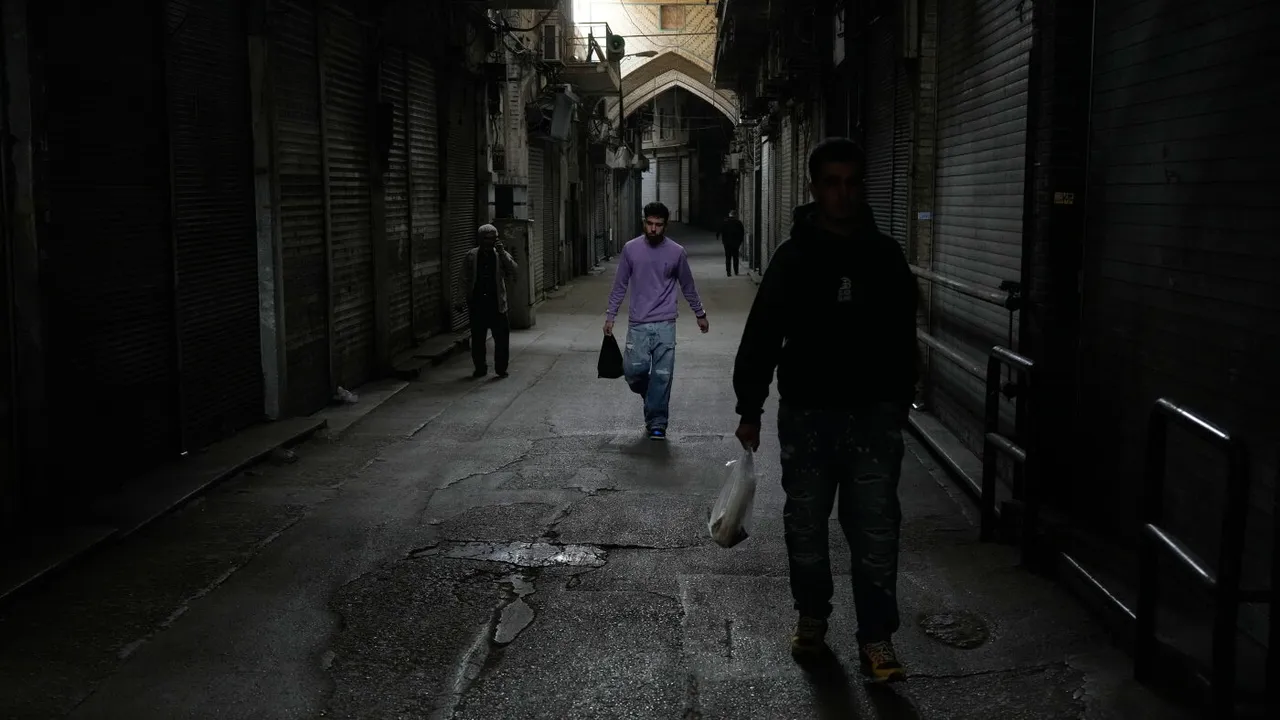
Since the United States and Israel launched military operations against Iran more than six months ago, ordinary Iranians have borne the brunt of a collapsing economy. Inflation has skyrocketed, driving up the costs of fuel, food, and rent. Livelihoods across the country are unraveling, forcing many to borrow just to survive and to put major life milestones on hold.
While the official unemployment rate in Iran sits at 9%, independent analysts say the true figure is significantly higher. The desperation for work is palpable: Jobvision, a prominent Iranian job-seeking portal, reported a 50% spike in resume submissions in late April alone.
Even state-sanctioned labor leaders have acknowledged the depth of the crisis. In May, Alireza Mahjoob, head of Iran's Workers House — the country's primary labor organization — admitted on state television that joblessness was far worse than anticipated. "We don't know how much it will afflict our already fragile working class, leaving us all helpless and powerless," Mahjoob said.
Rasoul, a 42-year-old engineer in Tehran, had long reassured his wife about their financial security. If times ever got truly tough, he told her, he could always drive for Snapp — Iran's local ride-sharing equivalent to Uber. Then the war arrived, and his worst-case scenario became reality.
In January, during a government crackdown on protests, Iranian authorities severely restricted internet access to cut off communication with the outside world. Because his tech company depended on international networks, the disruptions severely damaged its delivery services.
"The company's situation got really bad," Rasoul said. "They were losing customers one by one."
By mid-February, he had been laid off, triggering a period of severe depression. Like all Iranians interviewed for this report, he spoke on the condition that his full name be withheld out of fear of government retribution.
Desperate to pay his bills, Rasoul turned to his backup plan and began driving for Snapp at night. "I remember being extremely anxious — accepting a ride, waiting, having the passenger get in, and so on," he recalled.
The strategy failed. Ever-tighter U.S. sanctions and a naval blockade of the Strait of Hormuz drove up fuel prices, and costly vehicle repairs quickly ate into his meager earnings. Ongoing airstrikes made navigating the streets at night far too dangerous. He eventually had to rely on extended family to stay afloat.
Personal plans, including starting a family, have been completely shelved. "I thought that after marriage I could keep working and traveling, going places together," Rasoul said. "But since we got married, nothing."
Other industries have faced complete collapse due to supply chain disruptions and regional instability. Kayvan, a 42-year-old materials engineer also from Tehran, had helped a Chinese firm establish a business supplying raw materials to Iran's oil sector. When fighting escalated, maritime trade came to a halt.
"The environment became so unsafe," Kayvan said. "Transit routes and shipping routes were shut down, the Strait of Hormuz was closed, sea transport became impossible."
With clients unable to place orders, the business collapsed entirely. "It was like those American movies where people dump their belongings into a box and clear out their desk," Kayvan said, describing the day he had to leave his job.
To survive, Kayvan's family relied entirely on his wife's income and rapidly dwindling personal savings. "Terrifying inflation, unprecedented price hikes — we've genuinely never experienced days like these before," he said, adding that the conflict simply needs to stop. "We're all just falling apart."
For some, temporary relief has come, though it offers little peace of mind. In July, Rasoul managed to secure a new role as a sales manager. Yet with the conflict continuing and the broader economy in freefall, stability feels like an illusion.
"We're like passengers on a train," he said.