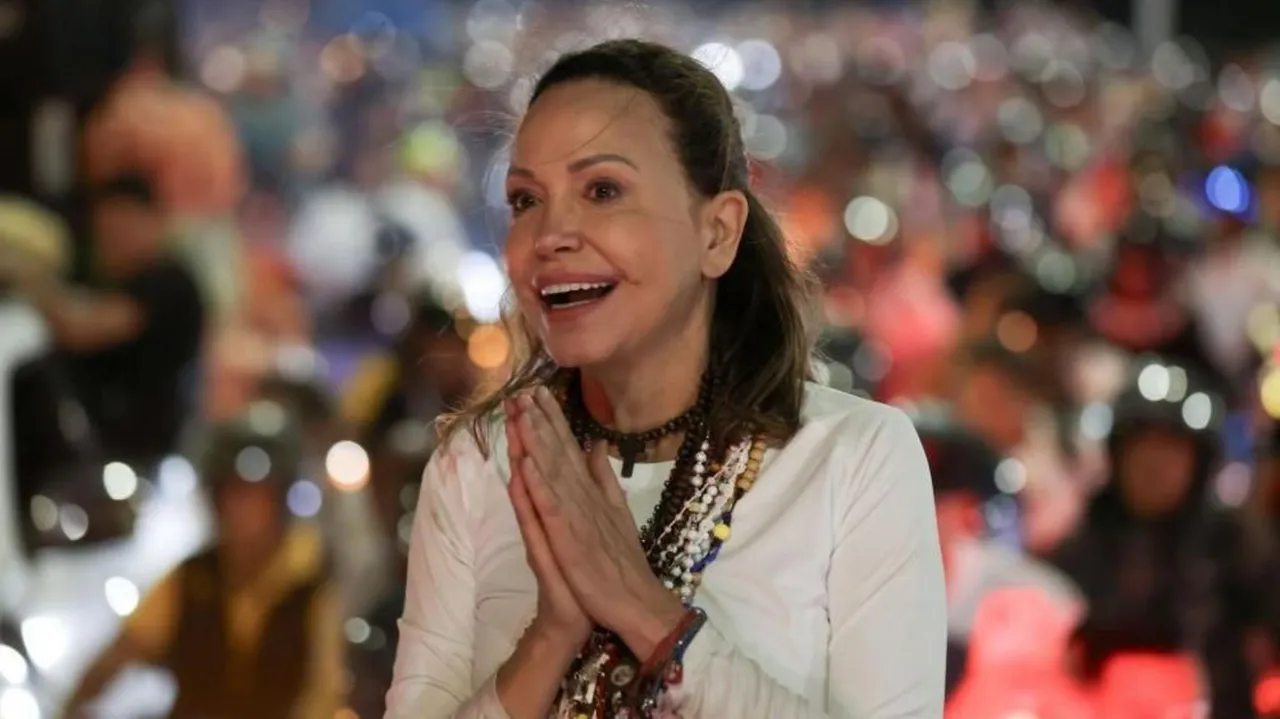
Venezuelan opposition leader María Corina Machado returned to Caracas on Sunday after nearly a year in exile, greeted by thousands of cheering supporters lining highways, toll plazas and city streets waving national flags and chanting slogans including "freedom."
Wearing her trademark white T-shirt and blue jeans, Machado leaned out of the sunroof of her vehicle as her convoy of cars and motorcycles entered the capital, shouting: "This country is giving lessons to everyone."
Earlier, in the city of Guacara, she was seen singing the national anthem in a plaza packed with supporters. Her convoy travelled from the western state of Lara to Caracas along roads lined with jubilant crowds.
Machado had left Venezuela last December to receive the Nobel Peace Prize in Oslo for her work promoting democracy. Facing the threat of arrest by the government of then-President Nicolás Maduro, she had been smuggled out of the country with assistance from the United States and took refuge in the Argentine embassy in Caracas before her departure.
She was unable to return for months. Her spokesperson said she faced travel restrictions and flight cancellations, partly due to concerns within the Trump administration that her presence could inflame tensions during a period of transition, and partly due to interference from acting President Delcy Rodríguez.
Much has changed in Venezuela since Machado's departure. Maduro was removed from power by US forces on 3 January and taken to New York, where he faces charges of drug trafficking, weapons offences and torture. He has pleaded not guilty. He was replaced by his former vice-president, Rodríguez.
The Trump administration subsequently signed a major oil deal with Venezuela, granting the United States a 100-year concession over an estimated 65 billion barrels of Venezuelan crude oil. The deal was reached in conjunction with a Venezuelan private company, North American Blue Energy Partners, run by businessman Alejandro Betancourt.
Machado has openly criticised the deal, directing her criticism at the Rodríguez government and at Betancourt. She has been careful not to target President Trump directly, having given him her Nobel medal and continuing to seek his trust and support.
President Trump has repeatedly expressed satisfaction with Rodríguez, calling her "wonderful" and "a terrific person" — a notable shift from his previous characterisation of the Maduro administration as made up of "narco-communists."
Rodríguez responded coolly to Machado's return. Speaking in rare comments to reporters on state television, she said: "The show could have been avoided — the airports are right here."
Machado's spokesperson said she was willing to meet with the Venezuelan government to discuss the political situation.
Venezuelan political analyst Benigno Alarcón described Machado's return as the most significant political event since 3 January. "It means the most important political leader in Venezuela is back in the country," he said.
"The reception for her return shows that her ability to mobilise her support remains intact, which means the opposition in Venezuela now has something very solid: a leadership which is present on the ground as opposed to solely in exile," Alarcón added.
Supporters on the streets echoed that sentiment. "María Corina is the indisputable leader of Venezuela," said 20-year-old Gregory Noriega. "Her return represents hope."
"This is a step forward in the electoral process which we've been waiting for since last year," said 18-year-old Hilary, who gathered in the capital hoping to see Machado's convoy pass. Her friend Manuel added: "She's returned after the double earthquakes when Venezuela needs her. The whole country is behind her to show that now Venezuela isn't scared."
A joint study by political think tanks Polis and Nexo indicates that Venezuela recorded three times as many street protests in the first nine months of this year as in all of 2025, spanning issues ranging from politics to workers' rights.


