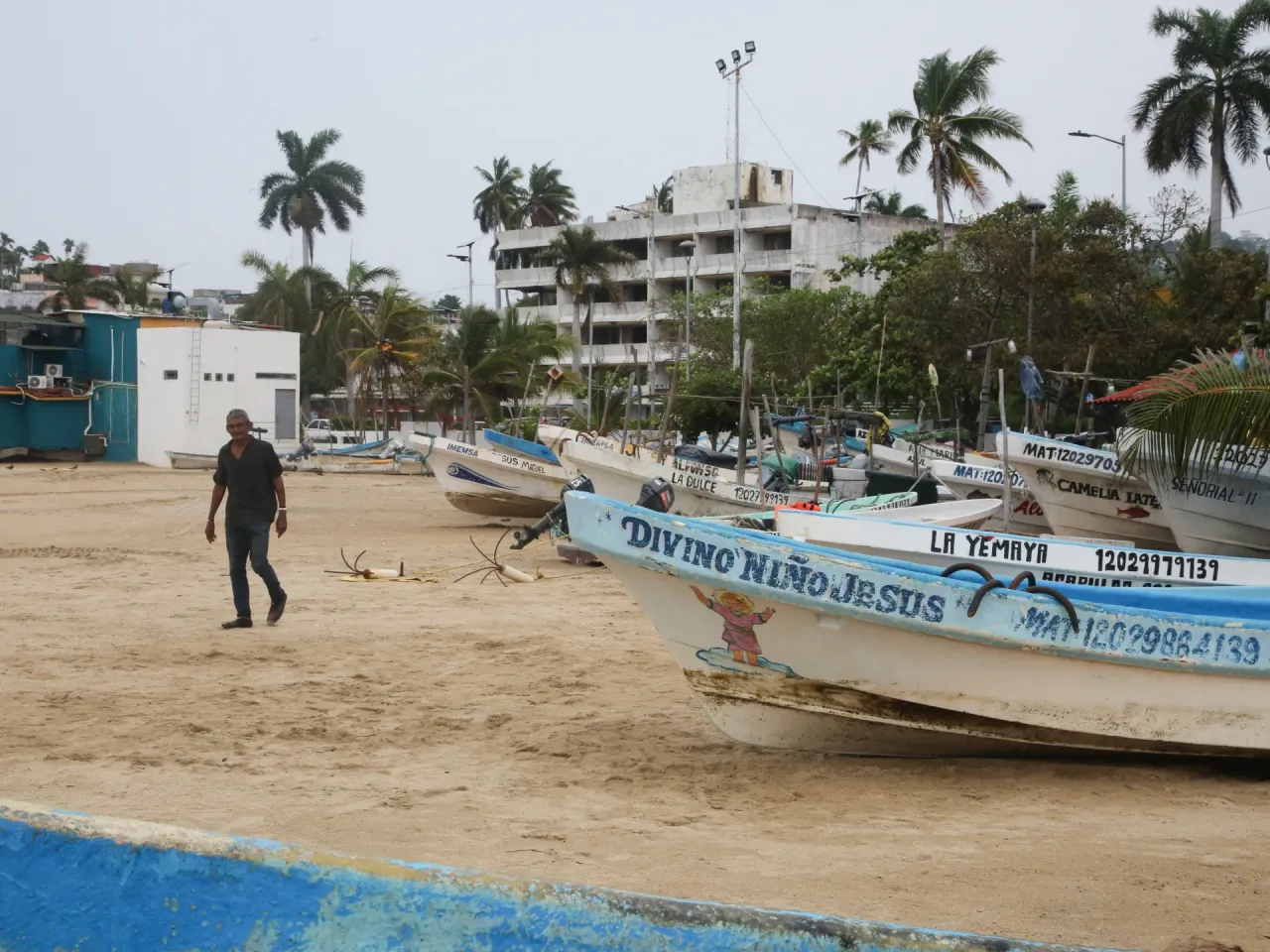
Hurricane Trudy maintained its strength as it moved toward Mexico's western coast on Saturday, with forecasters warning it could intensify further before beginning to weaken on Sunday.
The United States National Hurricane Center reported that Trudy was located approximately 305 kilometres (190 miles) south-southeast of Manzanillo early on Saturday, carrying maximum sustained winds of 150 km/h (90 mph).
The storm was advancing at around 13 km/h (8 mph) and was forecast to approach southwestern and west-central Mexico later in the day, before passing near the coast overnight into Sunday.
A hurricane warning was in effect from Manzanillo, in Colima state, to Cabo Corrientes, in Jalisco. Hurricane conditions were expected in the warning area on Saturday night, while tropical storm conditions were forecast to spread across the region during the day. Hurricane conditions were also considered possible in areas under a hurricane watch.
Trudy was forecast to bring between 10 and 20 centimetres (four to eight inches) of rain, with isolated totals of up to 38 centimetres (15 inches), across parts of Michoacan, Colima and Jalisco through the weekend. The National Hurricane Center warned of life-threatening flooding and landslides, particularly in areas of steep terrain.
Outer rain bands were expected to produce between five and ten centimetres (two to four inches) of rain, with isolated totals of approximately 15 centimetres (six inches), across Guerrero and Nayarit, where localised flash flooding was considered possible.
The National Hurricane Center also warned of potential coastal flooding from storm surge in areas exposed to onshore winds, accompanied by large and destructive waves.
Swells generated by Trudy were already affecting parts of Mexico's southwestern coast and were expected to spread northward toward the west-central coast through the weekend, creating life-threatening surf and rip current conditions.
The Mexican navy urged the maritime community and coastal residents to exercise extreme caution due to high waves, heavy rainfall and the risk of rising river levels, flooding and landslides in vulnerable areas.
The state of Colima said risks were currently assessed as low, but warned that the storm could bring significant rainfall with potentially damaging effects. Officials noted that the ground remained saturated following a succession of storms that have struck the Pacific coast this year.
Trudy is the latest in a series of storms to hit Mexico's Pacific coast in 2025.