Two Australians and a Japanese citizen are among the 69 people confirmed dead following last week's high-speed train collision in Spain, authorities announced late on Monday.
A legal body set up to handle victim identification, comprising police and forensics experts, confirmed the three latest victims in a statement. They have not been named.
Australia's Department of Foreign Affairs and Trade confirmed it was providing consular assistance to the families of the two Australians who died. "We send our deepest condolences to the families at this difficult time," the department said.
Foreign Affairs Minister Penny Wong also expressed her condolences, saying she sent her "deepest condolences on behalf of Australia" to her Spanish counterpart, Jose Manuel Albares, and to the people of Spain following the "devastating" collision. "Our thoughts are with those who have lost loved ones, those injured and all affected by this tragedy," she said.
The crash occurred on 28 October when a Renfe high-speed train ploughed into the back of a stationary train operated by the Iryo company near the village of Urda, approximately 130 kilometres south of Madrid. More than 540 people were on board the two trains.
The failure of an automatic safety system halted all trains on a 63-kilometre stretch of track. However, a control centre authorised the Renfe service to resume its journey while the other train remained stationary.
The victims include 54 Spanish nationals and 15 foreign citizens — four from the United States, two Australians, two Japanese, and one each from Argentina, Canada, France, Mexico, Portugal, Tunisia and the Czech Republic.
Forensics teams have been working to identify the dead, in some cases from individual body parts, leaving victims' relatives enduring an agonising wait.
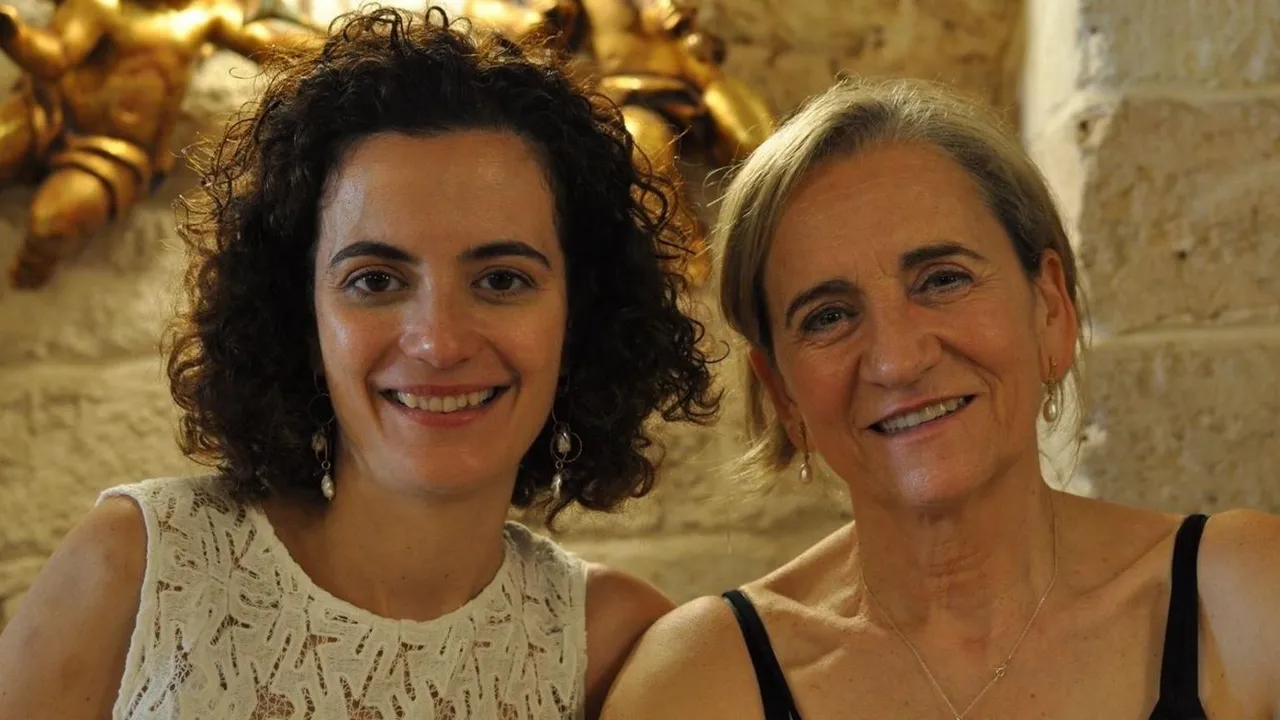
Among those killed was Dr Marta Shahbazi, 41, a scientist and principal investigator at the University of Cambridge's Stem Cell Institute. She had been travelling to collect a scientific excellence award from the Spanish Society for Developmental Biology at a conference in El Rompido, Andalusia.
Her aunt, Professor Maria Jose Alonso of the University of Santiago de Compostela, paid tribute to her niece following a funeral held in Madrid on Monday. "Hundreds of friends came from all over the world... because Marta was an amazing lab mate and amazing friend," she said. "She was the friendliest person you can imagine, with lots of energy. She was a light for all of us."
Alonso said Shahbazi had originally planned to travel to the ceremony by car with her family but decided to take the train instead. "Her family was here in Madrid, and they could have gone together by car — but she said 'no, stay here'," she said.
The University of Cambridge's Laboratory of Molecular Biology paid tribute to the "inspiring, talented and passionate scientist" and described her death as a "profound shock and a huge loss." It noted that Shahbazi was a "much-admired role model for a 'mother scientist', a term she used to describe herself."
Professor Bertie Gottgens of the University of Cambridge's Stem Cell Institute said the scientific community was "shocked and deeply saddened" by her death.
The disaster is one of the deadliest rail accidents in Europe this century and Spain's worst crash since 2013. It was also Spain's second high-speed train collision this year, following a crash in Andalusia in January that killed 46 people.
Australian Labor MP Jason Clare said on Thursday that accidents of this kind were "something people never, ever recover from." "The whole country is in shock at the moment, seeing these images on our screens. It's just horrific," he said.