US President Donald Trump said he would love to see a united Ireland during a two-day visit to Dublin, sparking swift reactions from political leaders across Ireland and the United Kingdom.
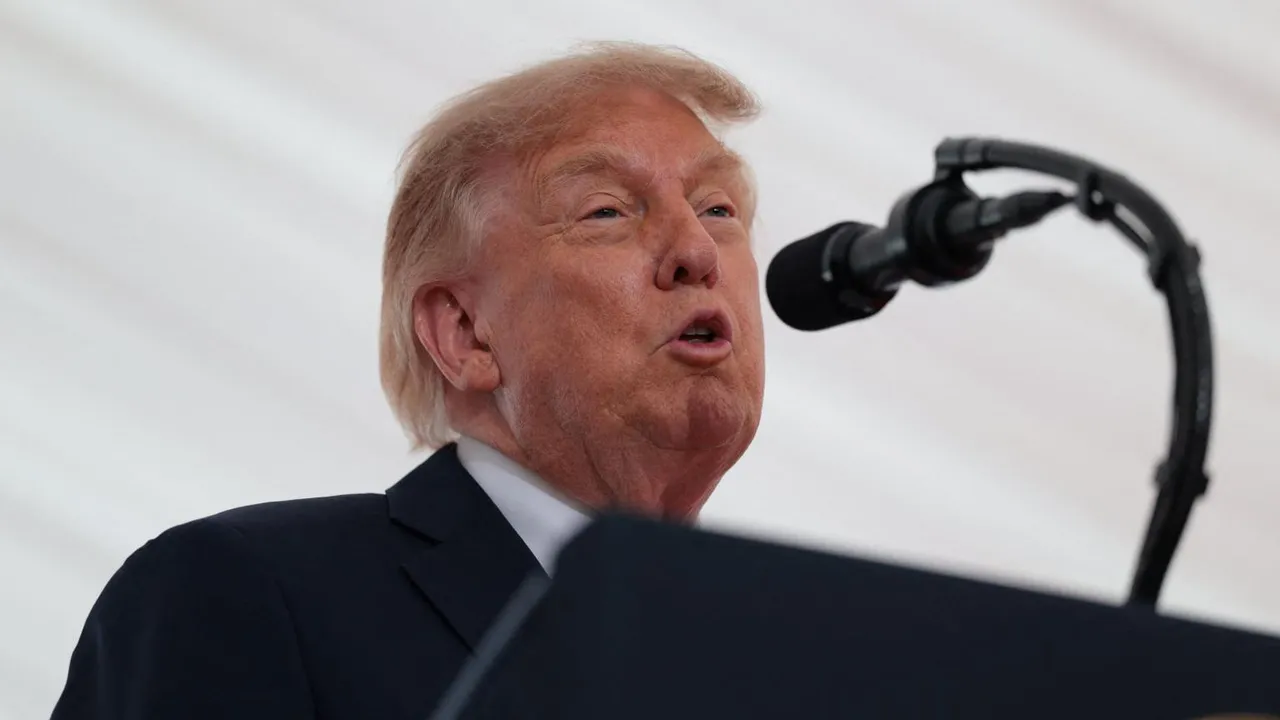
Trump made the remarks while meeting Irish Prime Minister Micheal Martin at Farmleigh House in Phoenix Park. Sitting beside Martin, Trump told reporters: "Well, I don't want to cause any problems, but I will tell you, I'd love to see it unified."
"It's going to happen eventually ... I think it would be a fantastic thing," he added. "Now the UK will have something to say about it ... but I think it would be a great thing, I mean, how can it be bad?"
Martin declined to respond to reporters' questions about Trump's comments during the meeting.
A spokesperson for Martin later said the remarks should "come as a surprise to no one," adding that Trump has been "consistent in his view that he sees unity in Ireland as the optimal outcome."
Earlier in the day, Trump had a courtesy call with Irish President Catherine Connolly at Aras an Uachtarain, the official presidential residence. He later travelled to County Clare to attend the Amgen Irish Open golf tournament.
The visit drew significant public opposition. More than 10,000 people marched through Dublin to protest against Trump's presence. Further demonstrations were planned in western Ireland, near Trump's golf course in Doonbeg. Protesters cited concerns over US military actions, Trump's foreign policy, and the cost of security arrangements for the visit.
Trump's comments on Irish unity came weeks after British Prime Minister Andy Burnham said a referendum on Northern Ireland leaving the United Kingdom was "off the table." Responding to questions in the House of Commons on Wednesday, Burnham said: "I am not aware that there is majority public support for another referendum, and until that changes, there will not be one."
A spokesperson for Burnham said his position remained unchanged following Trump's remarks, referring to the prime minister's statement that he "will stick to it (the Good Friday Agreement) 100%." Burnham also said the question of a border poll was a matter for the Northern Ireland secretary "when there is clear consensus in the country - when public opinion has changed to the point at which the call has to be considered."
Under the terms of the 1998 Good Friday Agreement, a referendum on Northern Ireland leaving the UK can be held only at the discretion of the British government. The agreement also states that the secretary of state must hold a border poll if it appears likely that a majority of people in Northern Ireland would vote for Irish unification. The precise circumstances under which that threshold would be met remain a subject of ongoing debate.
Earlier in the week, Martin had called for greater clarity on when a border poll could be triggered.
Unionist leaders in Northern Ireland rejected Trump's remarks. Democratic Unionist Party leader Gavin Robinson said: "President Trump knows better than most that elections matter. Northern Ireland's constitutional future will be decided by the people of Northern Ireland, not by commentary in London, Dublin or Washington."
Former DUP MP Ian Paisley, described as a close friend of the Trump family, said: "everyone is allowed a personal opinion even when it's wrong."
Ulster Unionist Party leader Jon Burrows said that while America is an "important ally," Northern Ireland's future would be decided by its people. Traditional Unionist Voice leader Jim Allister said Trump "is not the first US President to meddle in the affairs which don't concern him."
Nationalist and republican figures offered a more positive response. Sinn Fein leader Mary Lou McDonald acknowledged Trump's comments and said the onus was now on the Taoiseach to begin planning for unity. Social Democratic and Labour Party leader Claire Hanna described it as "fairly extraordinary" to see Trump speaking openly about Irish unity while standing in Dublin.
"When even Donald Trump has clocked that Irish unity is no longer some distant or theoretical prospect, it tells you something about just how far this conversation has shifted," Hanna said.
Ireland's Foreign Minister Helen McEntee said: "Something to this magnitude can only happen where there's consent from the Irish people. It's something that we have to work on and we have to work towards."
Later, at an event at the US Ambassador to Ireland's residence, Trump appeared to walk back the directness of his earlier remarks, saying there is "no good answer" to a question about a united Ireland. Recalling the exchange, he said: "Oh that's a nice question, I have a nice answer, I think, we'll read about it tomorrow."
Polls show a comfortable majority in Northern Ireland currently favour remaining in the UK, though the gap has narrowed since Britain's departure from the European Union.