Spanish police launched a large-scale operation on Friday to move thousands of migrants from the beaches of Ceuta, a Spanish enclave on the North African coast, to a newly built temporary camp in the territory's port area.
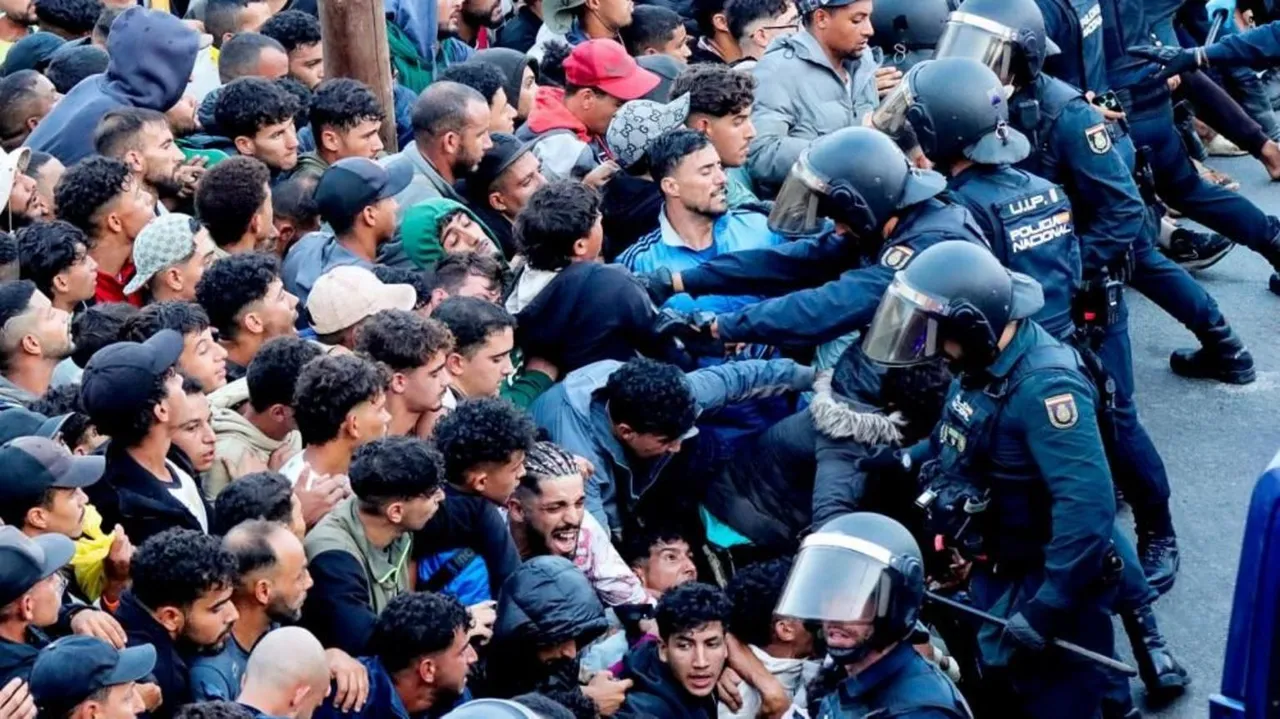
The operation began at approximately 07:00 local time (05:00 GMT). More than 170 officers were deployed, including drone technicians. During the transfer, police struggled to contain crowds of people jostling to secure a place at the new tented site.
Officers fired into the air and struck people with batons as they worked to maintain order. Some migrants broke through the police cordon along the designated two-kilometre route to the port, with video showing young men running in the darkness. The situation was later described as having been "brought under control quickly."
The new temporary facility has a capacity for 1,700 people. According to reports, it is equipped with showers and beds. Several hundred migrants had reached the camp by the time reports were filed.
More than 72,000 migrants crossed into the 18.5-square-kilometre enclave from Morocco at the end of July in an unprecedented border surge, although most subsequently returned. Figures on how many remain differ: Ceuta's authorities have estimated 13,000 are still in the enclave, while the Spanish central government has put the number lower. A separate estimate cited in reports places the figure at approximately 10,000.
The operation is part of the Spanish government's effort to concentrate migrants in facilities where they can be identified and cared for while their individual administrative status is determined. NGOs have said thousands remain unhoused and have been sleeping rough in makeshift camps.
The chaotic scenes have intensified political pressure on Prime Minister Pedro Sanchez, who has faced sustained criticism over his handling of the crisis. The opposition has accused Sanchez of having advance knowledge of the influx. Sanchez has insisted it was impossible to predict, though government documents indicate that intelligence services had warned of social media calls for a mass crossing the day before the events occurred.
Ester Munoz of the conservative People's Party said the government was "directly responsible for the invasion of Ceuta and for those who died."
Sanchez has blamed trafficking gangs and said the crisis was also fuelled by hoaxes and rumours spread on social media. He described the situation as "a humanitarian crisis and also an administrative challenge within the city itself."
Ceuta's Mayor Juan Jesus Vivas told European Parliament lawmakers earlier this month that the enclave had become a "pressure cooker."
"The city is completely different than it was before this event. Ceutans have lost their joy and their lifestyles have been completely shaken up," the conservative mayor said.
Since the July influx, residents of the enclave, which has an official population of 80,000, have expressed safety concerns. Some have destroyed migrant shelters and blocked aid deliveries.
On Friday, EU Migration Commissioner Magnus Brunner said that images from Ceuta were undermining broader efforts to manage migration across Europe, despite a sharp decline in irregular arrivals following tougher EU policies.
"We have the decreasing numbers, but images from Ceuta, of course, overshadow the actual successes and the actual facts and figures," Brunner said in an interview. He added that such images "fuel the far right," which was why "it is so important to return those people as soon as possible to show that we have control."
Ceuta has been in Spanish possession since 1580. It is one of two Spanish territories on the North African coast, along with Melilla, and sits behind a border fence that migrants from across Africa regularly attempt to cross or swim around in search of a better life in Europe.