Spain entered a second day of mourning on Friday as families of victims of Wednesday's deadly high-speed train collision continued to wait for news of missing loved ones.
The crash killed at least 69 people and injured more than 100. Some families flooded social media with desperate appeals for information, posting photographs and describing the clothing their relatives were wearing when they boarded the trains.
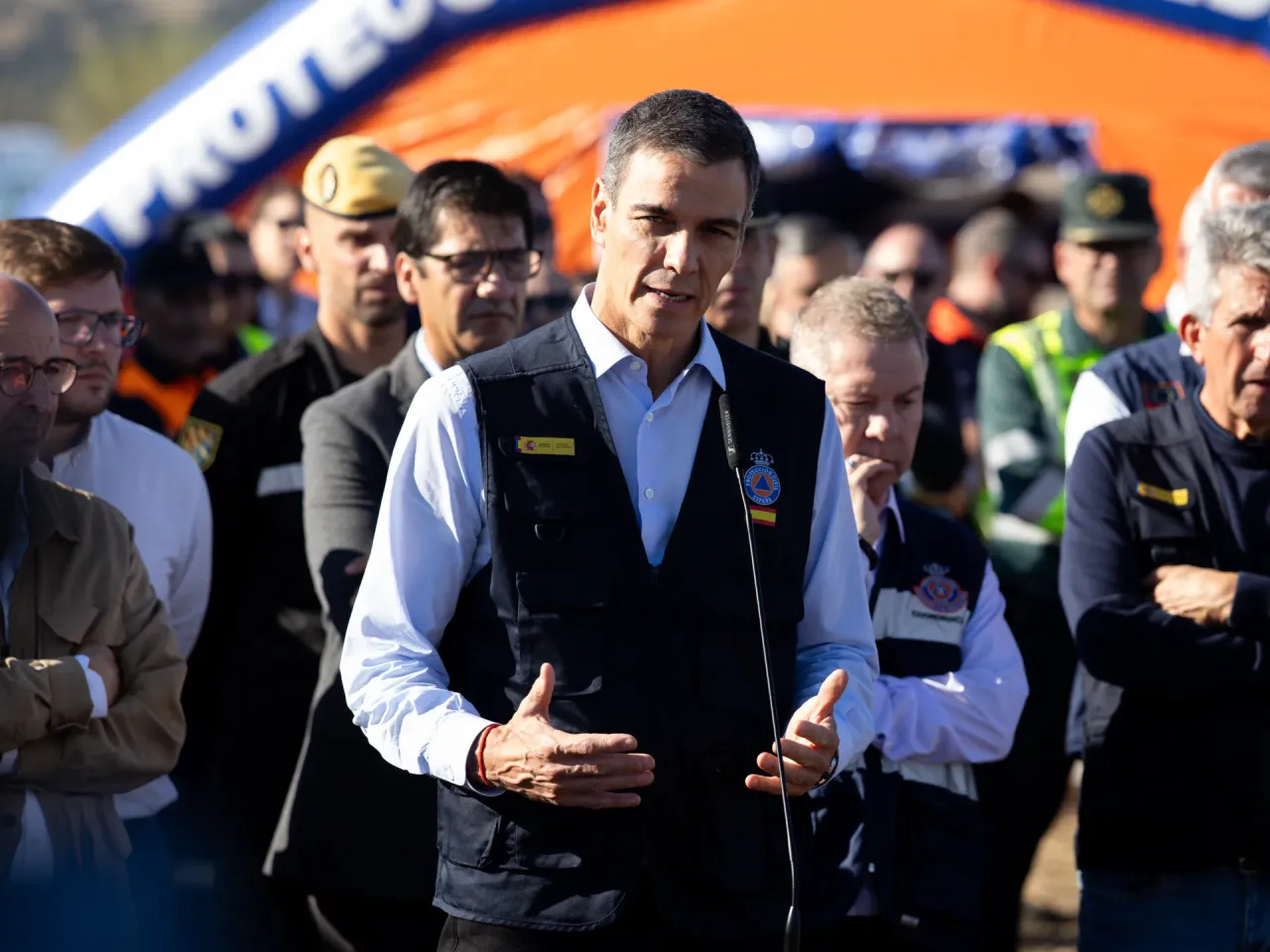
Spanish Prime Minister Pedro Sanchez acknowledged that "trust in high-speed rail has been broken" and said the government was working to find answers.
"It's unacceptable for a country like Spain — which has such a powerful high-speed rail system — to experience two accidents of this nature and magnitude within a single year," Sanchez said. "Our task isn't merely to investigate the causes of what occurred, but also to provide solutions to further strengthen our nation's high-speed rail system. Public trust in the high-speed system has been broken; the government's responsibility goes beyond diagnosing the causes — it must also offer solutions to ensure that a tragedy of this scale doesn't happen again."
The collision occurred at approximately 8:53am local time on Wednesday, when a high-speed train travelling from Madrid to Seville slammed into the rear of a stationary train on the same track near Urda, in the central region of Castilla-La Mancha, close to Toledo.
One of the trains was operated by state-owned Renfe and the other by private rail company Iryo. Both were travelling from Madrid toward the southern region of Andalucia when the Iryo train came to a halt and the other struck it from behind, knocking several carriages off the track.
Victims came from at least 23 different foreign countries. Sanchez said the number of foreign nationals affected could be even higher than the 51 confirmed so far.
Spanish officials pointed to a failure involving the LZB train-control system, which has been in use on the Madrid-Seville high-speed line since it opened in the 1990s. Transport Minister Oscar Puente said the LZB signalling system — which automatically halts a train if the line ahead is occupied — had gone down in the run-up to the crash, though he stressed such incidents were not uncommon. Once the system failed, he said, control reverted to human operators, as is standard practice in other transport sectors.
Puente suggested that responsibility for the crash appeared to lie within the Madrid control centre of state infrastructure operator Adif.
Facing growing calls to resign, Puente dismissed them at a press conference. "My duty now isn't to talk about whether or not I carry on with my job; it's to solve the problems, clarify what happened and offer clear explanations," he said. "The most important thing I can do is offer solutions as best I can. If the investigation shows there were failures of organisation or control, we will act accordingly. And if individuals are found to be responsible, action will be taken."
Puente had earlier described Spain's railway system as "reliable and safe" while acknowledging the limits imposed by equipment and human error.
Isabel Pardo de Vera, former president of Adif, criticised the government over the pace of transition from the older LZB system to the European Rail Traffic Management System (ERTMS), raising further questions about whether warnings about the network had been adequately addressed.
The crash came nine months after 46 people were killed when two trains — also one from Renfe and one from Iryo — collided on the same line near the town of Adamuz in Andalucia. It also revived memories of a 2013 derailment at Angrois, near Santiago de Compostela, in which 80 people died.
Spain's high-speed rail network is considered one of the country's flagship public services. It carried approximately 45 million passengers last year.
The disaster has reshaped the political landscape ahead of Spain's November 29 general election. The conservative People's Party (PP) leader Alberto Nunez Feijoo demanded accountability, saying: "This is the moment to respect the dead, the injured and their families. That does not mean we will ignore the fact that Spaniards are asking tough questions that demand answers." The PP suspended campaign activities for two days.
Far-right Vox leader Santiago Abascal took a sharper tone. "We, too, are in mourning — but do not expect us to stay quiet. We will not maintain a complicit silence. It is my duty to denounce Sanchez's criminal handling of affairs and to work tirelessly so that this coming November 29th … Spain may rid itself of this mafia-like gang," he wrote on X.
Hundreds of mostly far-right demonstrators gathered outside Spain's Transport Ministry to demand the prime minister's resignation. "Spain can't take it anymore," read one banner.
Political analysts said the crash had fundamentally altered the tone of the campaign. "There are no winners in this tragedy, but it marks a new tone for the campaign where the conservative party could be more comfortable," said Yolanda Roman, global director for public affairs at ATREVIA.