Seven to ten passenger flights across Europe were targeted by suspected bomb threats on Tuesday, with no explosives found on any of the aircraft. Reports vary on the total number of flights affected, with some sources citing seven and others at least ten.
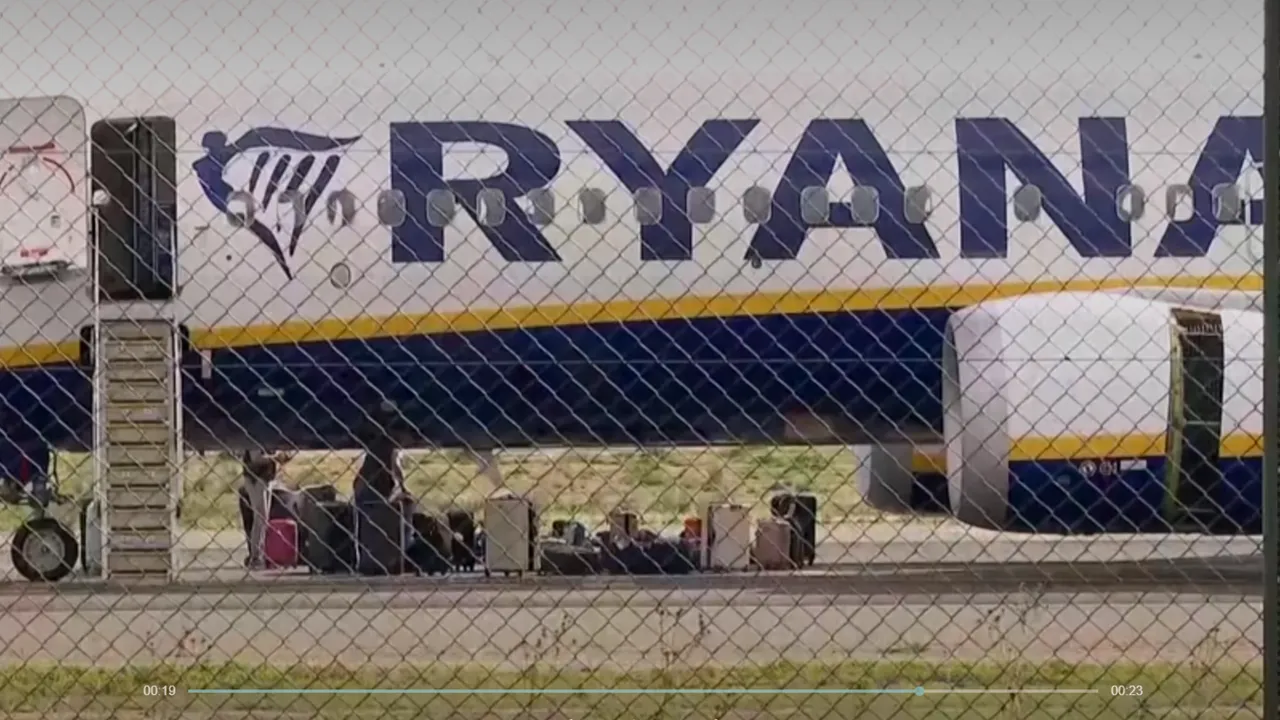
At least four Ryanair flights were among those targeted, making the Irish budget airline the most affected carrier. Two Ryanair flights, one originating from Dublin and the other from Lisbon, were searched after landing in Rome. The Dublin-bound flight was escorted by the Italian Air Force until it landed. Police bomb disposal experts at Rome's Fiumicino airport carried out standard security protocols, and inspections of passengers, luggage, and the aircraft yielded negative results.
A Ryanair flight from Manchester that landed in Murcia, southern Spain, was also found to have no explosives on board, according to Spanish authorities. One passenger, identified only as Sarah, said she was unaware of any threat during the flight. "We weren't told anything during the flight," she said. "The plane stopped quite suddenly and then we were kept on the runway for around 30 minutes." "Then the fire engines turned up, the bomb squad turned up and we were asked to evacuate." She added that the plane had not been on the ground a minute before it was "surrounded by fire engines and police and a bomb squad." All passengers were escorted by police and asked to leave their belongings behind. "We were only later told that it was an actual threat, a bomb threat to the plane itself," she said.
Two flights heading to Warsaw were also affected, including one from London Heathrow. That flight was diverted from Warsaw's main Chopin airport to the smaller Modlin airport, briefly forcing its closure. A Scandinavian Airlines flight from Copenhagen to Warsaw-Chopin landed as planned. Authorities also searched aircraft in Poland, Bulgaria, and Spain.
While no official link between the incidents has been established, authorities from multiple countries are cooperating to assess whether the threats were part of a coordinated effort to disrupt airspace across the continent.
The UK government described the incidents as "malicious hoax threats." In a statement, it said it had "one of the most robust aviation security systems in the world, with well-tested processes for dealing with any potential threats, as well as malicious hoax threats, like those we've seen today."
Aviation security expert Paul Mason said bomb threats on passenger planes "don't happen that frequently," making the scale of Tuesday's incidents "unusual." "It sounds like they've been made in a credible manner across a broad range of airlines," Mason said. "That would suggest to me that it's been a very deliberate act by a typical actor rather than a load of coincidental, malicious calls." He noted that there are "a lot of processes" that onboard crew and ground personnel must follow to validate the credibility of any threat, and that in some cases crew members may not be informed of what ground operators are dealing with.
Marco Chan, a former pilot and now a senior lecturer in aviation operations at Kingston University, said a bomb threat is treated as "genuine until it is resolved, even though most turn out to be hoaxes." He said crews will "quietly search" toilets, galleys, and storage areas, and will not touch a suspicious item unless it must be moved to a designated least-risk location on the aircraft.
Tuesday's incidents came a day after a Wizz Air flight from London Luton made an emergency landing in Budapest, escorted by a Hungarian fighter jet, following a separate bomb threat. Wizz Air later confirmed that security checks had been carried out and nothing was found.
In a separate development, a bomb alert triggered the evacuation of 1,537 passengers and crew from an Israel-bound cruise ship docked at the Aegean island of Syros in Greece. Initial checks of the Panama-flagged vessel Crown Iris found no explosives, according to the Greek Coast Guard. The ship was expected to resume its journey.