Swedish climate activist Greta Thunberg has joined student demonstrations in France as the country braced for another day of nationwide protests over chronic teacher shortages, overcrowded classrooms and crumbling school buildings.
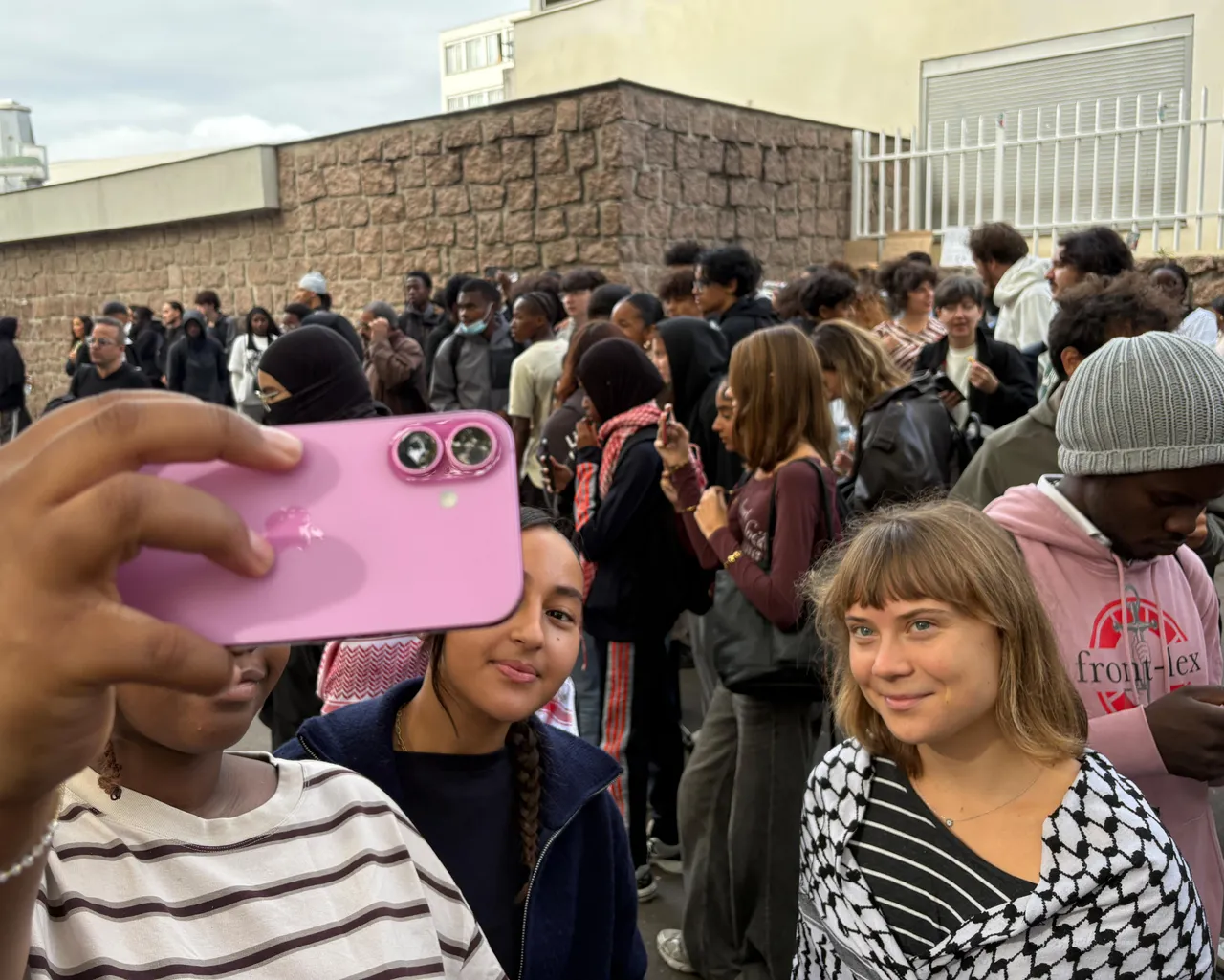
Thunberg, 23, arrived at the Lycee Paul Eluard high school in the Paris suburb of Saint-Denis on Tuesday morning, standing among students who have been blockading schools across the country.
"Young people are not being included in the conversation," she told reporters. "Our future is being stolen from us and, as we have seen here, schools are not getting the investment they need."
Lawyers in robes formed a human chain outside the school to protect pupils, following multiple allegations of police brutality against demonstrators.
The protests, now in their third week, began late last month when students demanded improvements to school buildings, an end to teacher shortages, and relief from overcrowded class schedules. They have since drawn backing from trade unions, some teachers, and left-wing opposition politicians, including the France Unbowed party.
Marches across the country drew more than 260,000 protesters last Tuesday and a further 70,000 to 75,000 on Thursday, according to interior ministry figures. Further demonstrations were expected on Tuesday in several major cities, including Paris, with wider public rallies against the rising cost of living planned for Saturday.
The university students' union posted on social media: "They're not listening to us, so we're going to them." An estimated 90 percent of France's universities were disrupted on Tuesday, with high schools in Paris, Marseille and elsewhere again blockaded.
Education Minister Edouard Geffray said on Tuesday that around 200 of the country's 3,700 high schools were completely closed, fewer than the previous week, adding that some schools near protest routes had also closed to avoid damage. He said 3,000 substitute teachers were being deployed in schools facing the most severe staff shortages. French media reported, however, that classes had been cancelled or disrupted in many more schools, with some lycees switching wholly or partly to online learning.
French authorities had hoped the protests would ease during the two-week half-term school holidays due to start this weekend.
President Emmanuel Macron on Monday called for restraint. "These are issues that deserve time, consultations, discussion and respect," he said.
Government figures show more than 6,800 people, mainly minors, have been taken into police custody over the course of the protests. Around 1,500 people are being prosecuted. Police have opened investigations into 24 allegations of brutality against demonstrators.
More than 200 teenagers, 100 school staff and 700 police officers have been injured. One young protester lost a hand from a police stun grenade, prompting the government to ban their use during the demonstrations. Another lost the use of an eye, and a third lost several teeth after a teargas canister was fired at close range.
A 19-year-old student in Paris told reporters that protesters were "disturbed by the level of repression never before seen for a student movement."
Rights groups and students have accused police of a disproportionate use of force. With a presidential election six months away, rival politicians have moved to exploit the unrest. Far-right frontrunner Marine Le Pen highlighted damage to schools and called for parents to foot repair bills, while radical-left politician Jean-Luc Melenchon praised the protesters as "incredible" and denounced police brutality.