Finnish authorities have ordered Google to temporarily suspend construction work at two planned datacentre sites after the company carried out extensive preparatory work without completing mandatory environmental impact assessments.
The Finnish Licensing and Supervision Authority (LVV) issued the notice on Tuesday, ordering work at the sites in Muhos and Kajaani to be suspended by 23 October at the latest. The company has until 14 October to submit a written explanation and set out how it intends to proceed.
The two sites form part of Google's announced €13 billion (£11 billion; $15 billion) investment in Finland, described by the company as its largest single investment in Europe.
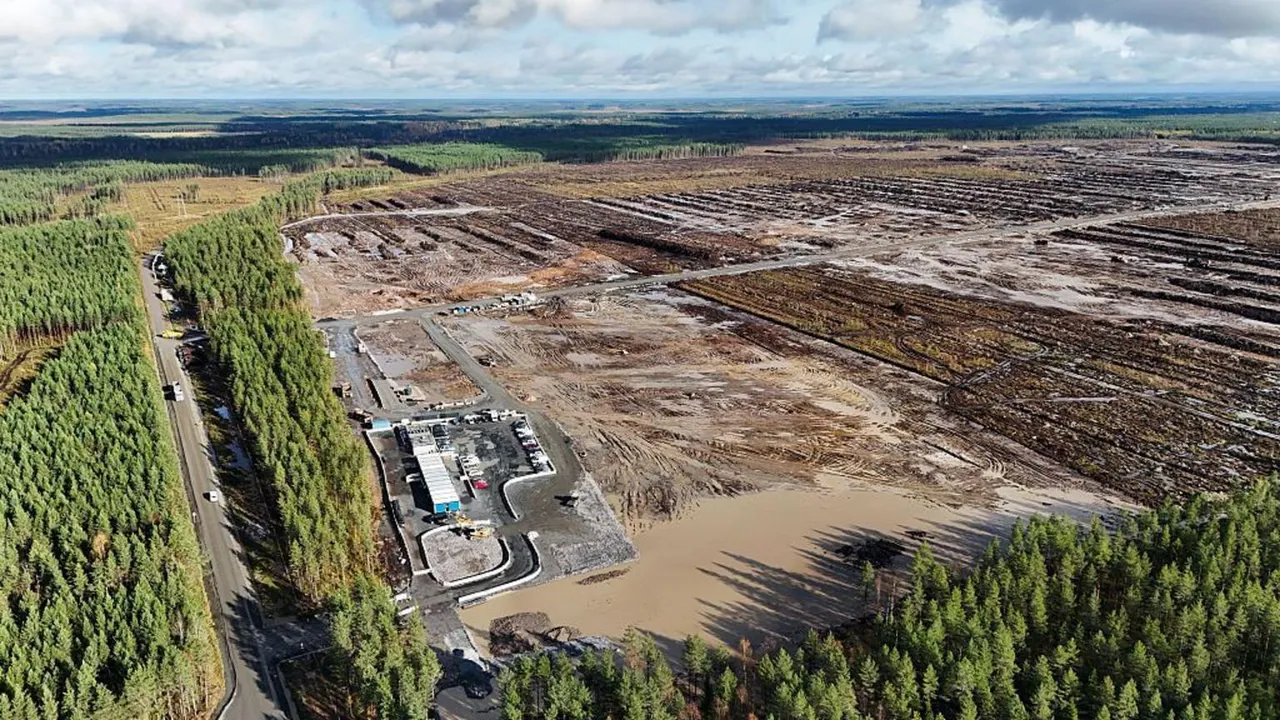
Preparatory work carried out at the sites included the removal of trees and topsoil, the construction of site roads and storage areas, and changes to drainage ditches. According to reports, around 330 hectares of forest were felled at the Muhos site without a completed environmental impact assessment. In Kajaani, logging reportedly took place across just under 200 hectares of land.
The LVV said the work constituted measures that "significantly alter the environment" and that an environmental impact assessment was required before such activity could proceed. The assessment is ongoing and expected to be completed later this year.
Tommi Muilu, head of the environmental department at LVV, said: "In our opinion, the measures in question will change the environment and cause impacts, the identification and assessment of which are among the key objectives of the EIA procedure."
The authority warned it could begin enforcement proceedings and impose a fine if the company failed to comply.
The orders were directed at Tuike Finland Oy, the company representing Google on the datacentre projects.
In a statement, Google said: "We understand the concerns and have fallen short of our own high standards in this instance." The company added that it had "acted in good faith under the Forestry Act", carried out nature surveys, and put measures in place to protect areas of high environmental value.
"As we continue our long-term work in the region, we are advancing our landscaping and biodiversity plans, which include tree planting across 130 hectares at Muhos," Google said.
The Finnish Association for Nature Conservation said the sites had been reduced to "sand" and attributed the oversights to the overheated market for new datacentres. The group had previously called for work to be halted while environmental requirements were examined.
Tapani Veistola, chief operating officer of the association, described the situation across the two sites as a "systemic problem". Of the Muhos site, he said: "It is not a forest any more. It is a sand area."
Veistola pointed to intense demand for datacentre capacity in Finland as a driving factor. "The main reason behind everything is the overheated market situation that makes companies speed up processes so much. Also a lack of expertise in municipalities."
Google announced last month that it would invest at least €13 billion in Finland over 2027 and 2028, with new datacentres planned in Kajaani, Muhos and Vaala, alongside investment in its existing facility in Hamina. The company said the infrastructure would help meet growing demand for services including Search, Maps and its AI assistant Gemini.
Google also stated that the construction phase would support more than 37,000 jobs and contribute an average of €3.6 billion a year to Finland's economy. As part of the expansion, the company signed a 22-year power purchasing agreement with Finnish energy company Fortum covering up to half the capacity of the Loviisa nuclear power plant.
Finland has attracted growing interest from datacentre developers, with its cool climate and low-carbon electricity supply among the factors making it an attractive location. Lower temperatures can reduce the energy required to cool server facilities.