Around 320,000 people took part in a third wave of mass protests across France on Saturday, according to the interior ministry, while organizers put the figure closer to half a million. The demonstrations were called over the cost of living, widening inequalities, and deteriorating public services.
The interior ministry figure represents a drop from an estimated 410,000 who marched the previous weekend. In Paris alone, 70,000 demonstrators took part, marching along boulevards on the south-eastern outskirts of the city and avoiding the centre.
Protesters included school students, trade union members, and gilets jaunes, or yellow vest, activists. Some demonstrators wore Halloween costumes. Placards carried slogans including "No need for teargas to make our future look bleak" and "Disguised as an angry citizen for Halloween."
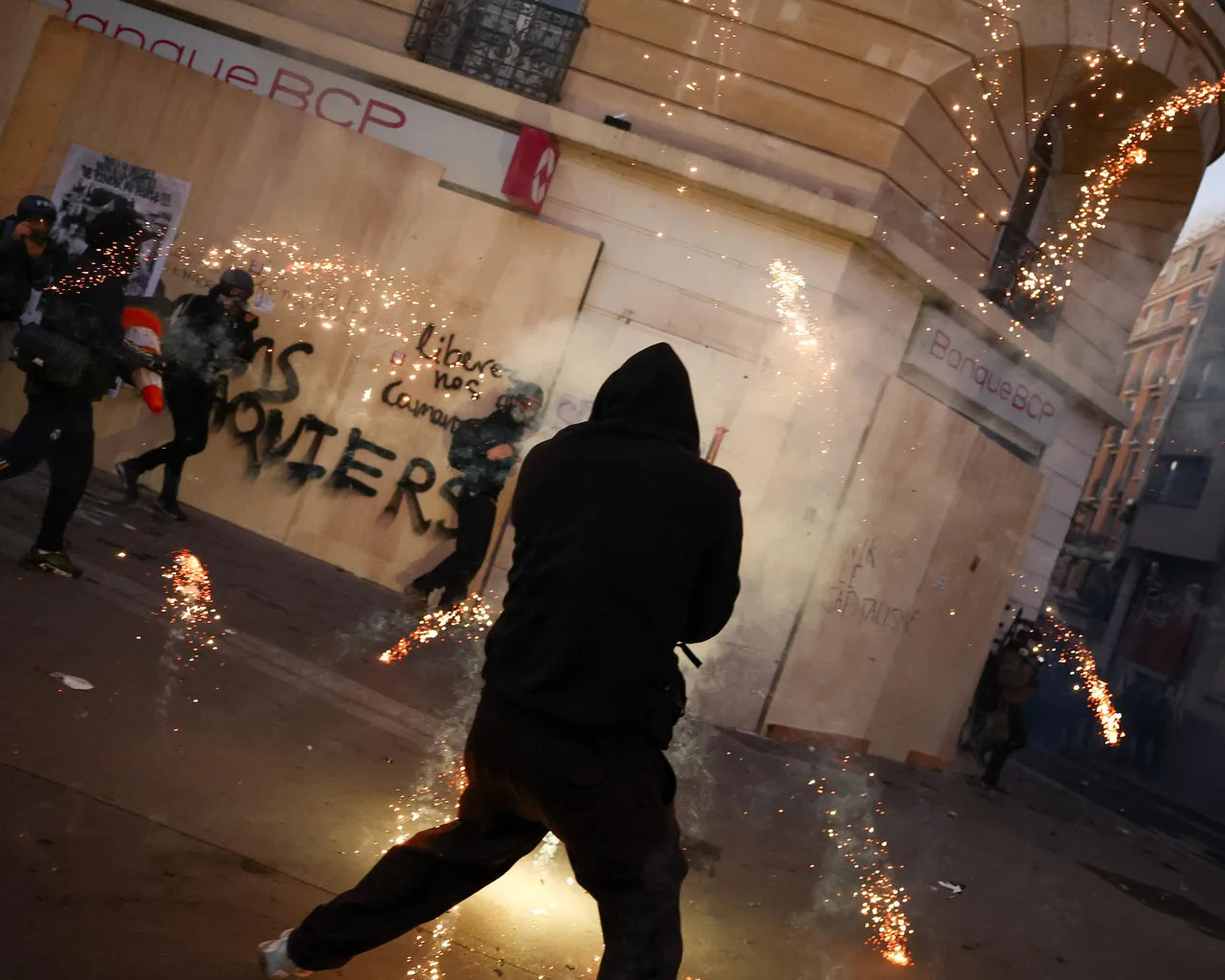
Interior Minister Laurent Nuñez said around 150 planned demonstrations across the country had passed off peacefully. However, as the marches ended, clashes broke out in several cities, including Paris and Marseille.
In Paris, dozens of masked individuals dressed in black used hammers to pry up paving stones and hurl them at police near the Porte de Charenton. At least one incendiary device was thrown at security forces. The Paris police prefecture described "a hardcore of several hundred rioters" who attacked officers with projectiles.
One riot police officer was struck by a Molotov cocktail in Paris. Nuñez described the incident as an "attempted murder." "We are fully prepared for those looking for confrontation tonight," he said.
Police responded with teargas, stun grenades, and baton charges in several cities. In Lyon, protesters threw projectiles at officers, who responded with teargas. In Toulouse, police deployed water cannon against an unauthorised protest attended by several thousand people, mostly young demonstrators. A total of 511 arrests were made nationwide.
Nuñez had earlier in the week announced the deployment of 70,000 police and gendarmes, including elite units, warning that Saturday looked like "a very high risk" day.
Among those marching in Paris was Jérôme Rodrigues, who said: "The French economy is doing badly no matter what happens, because today we're being run by a group of incompetents who juggle billions while families are struggling with a few cents. That's why we're here, to keep shouting our demands louder and louder."
In Nantes, protester Camille Guérin said: "We say no to the cost of living, no to the far right, yes to high school students' demands, yes to giving citizens a voice."
Saturday's protests came two weeks after widespread street violence and looting struck numerous French cities during a first wave of demonstrations on 17 October, described as one of the worst days of civil unrest in the country's recent history.
Student groups vowed to stage new high school and university blockades on Tuesday and Thursday. Sabrine Kharbach of the student organisation Union Étudiante said: "Then we will join the 5 November demonstration called by workers and trade unions."
Protests also took place elsewhere in Europe. In Germany, police fired water cannon to disperse demonstrators after youth-led protests organised by a group called "Gen Z regelt!", meaning Gen Z will sort this, ended in clashes. Protesters hurled fireworks and other projectiles at officers.