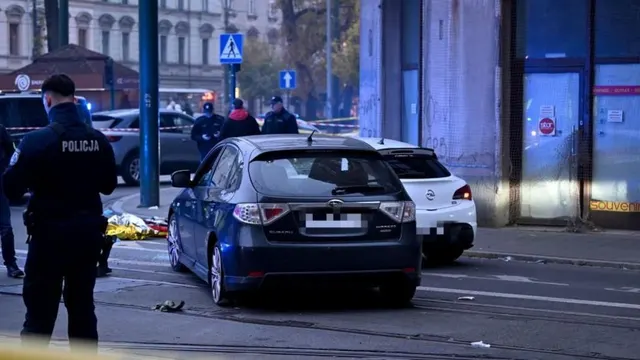
France is preparing for a third consecutive weekend of protests, with authorities warning of a "very high risk" of disorder. Germany is also bracing for large-scale demonstrations on the same day, as a wave of youth-led protests continues to sweep across Europe.
French Interior Minister Laurent Nuñez said Saturday represented a "very high risk" day for public order. He announced that 70,000 police officers and gendarmes, including elite units, would be deployed nationwide to prevent a repeat of the violence seen in previous weeks.
Nuñez said radical groups had used social media to call for violent Halloween gatherings. He warned that the greatest threat to public order would likely come after mainstream cost-of-living demonstrations had officially ended.
"We are seeing many calls from the labour movement, the radicalised far left and certain radicalised gilets jaunes [yellow vests], urging people to attend rallies on public streets starting at 8pm in many cities across France," Nuñez said. The calls were "accompanied by various messages which are quite radical," he added, including some demanding "revolution."
He said authorities would "tolerate zero excesses" and promised an "extremely firm" security response.
More than 40 metro stations in Paris will be closed on Saturday. Authorities have restricted marches in several cities, with Paris police authorising demonstrations only on the capital's outskirts. Curfews have been imposed in parts of Paris. Face-covering masks will not be permitted at demonstrations.
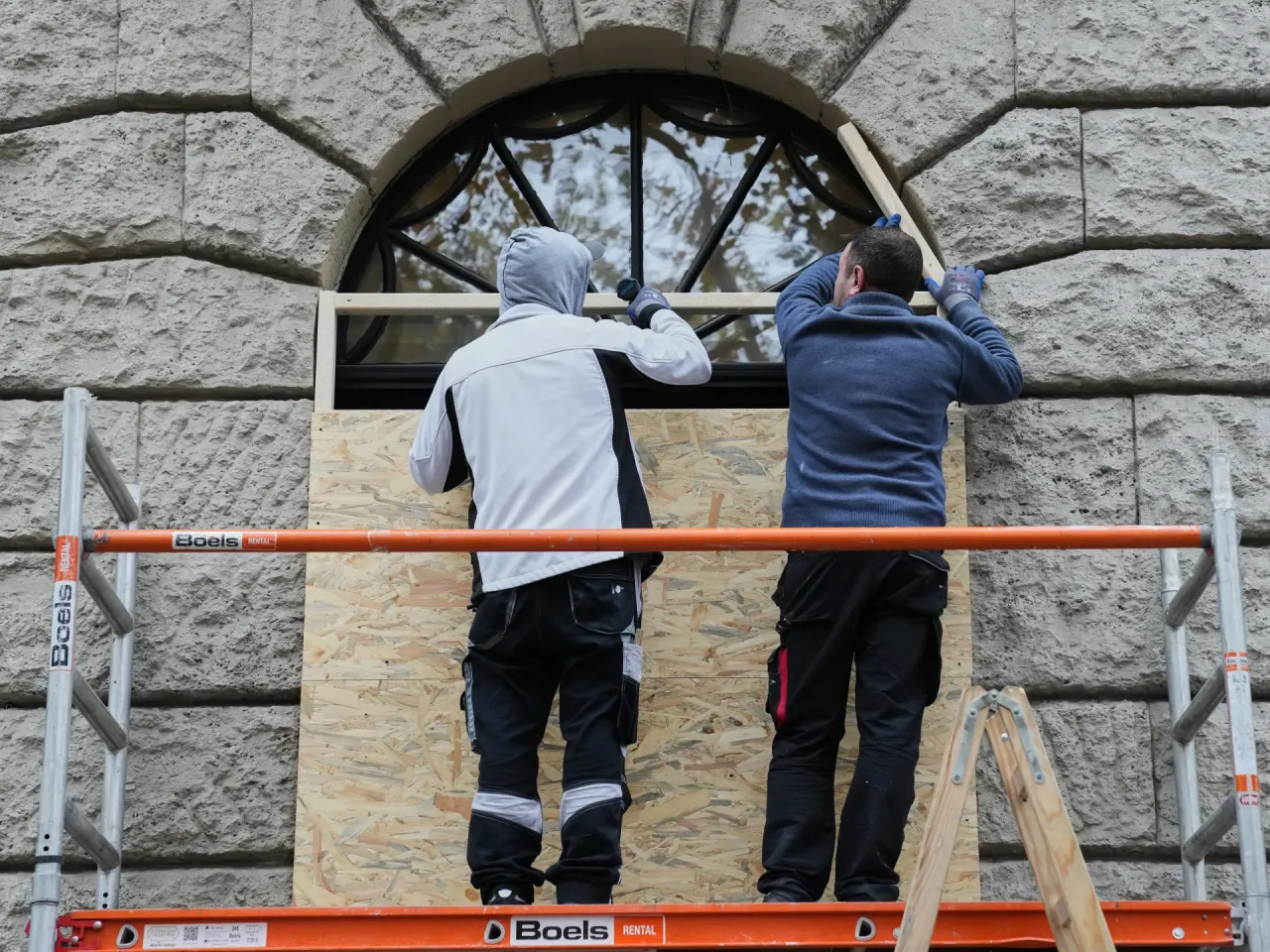
Shops and businesses across Paris and other French cities boarded up their windows on Friday. Alain Di Crescenzo, president of France's Chamber of Commerce, said businesses were deeply worried.
"Shopkeepers can't wait for Saturday to be over," Di Crescenzo told broadcaster France Inter. Halloween "is not helping matters," he said, "because we're going to have people wearing masks."
The French protests, now in their third weekend, initially focused on the rising cost of living and poor school conditions. They have since expanded to include demands for greater civil liberties and the right to protest. Demonstrators include Yellow Vest activists, trade unions and students. The unrest comes six months ahead of presidential elections, amid growing support for the far right.
Two weeks ago, widespread unrest broke out across France as demonstrations descended into large-scale looting and riots. Last weekend saw further demonstrations and intermittent clashes with police.
In Germany, a loose alliance of groups known as "Gen Z regelt!" — which translates roughly as "Gen Z has got this!" or "Gen Z is sorting it" — has called for supporters to turn out in more than 30 cities on Saturday. By Friday, more than 150,000 to 160,000 people had registered online saying they planned to attend, with rallies planned in Berlin, Frankfurt, Cologne, Munich and Hamburg.
The movement's demands include more government spending on schools, climate protection and housing, and opposition to any plans to reinstate mandatory military service. Protesters also cite the high cost of living, poorly maintained schools and government spending cuts, and accuse politicians of making decisions with little regard for younger generations.
Around 10,000 protesters, mainly pupils, students and their parents, are expected at the Brandenburg Gate in Berlin on Saturday afternoon, with a smaller gathering planned later in the Mitte district.
Berlin's police chief, Barbara Slowik Meisel, said she would deploy an additional 1,500 officers in the capital, though she said she had little reason to fear coordinated attacks on people or property. "We have no concrete evidence of any coordinated looting operations being planned," she said.
The Gen Z regelt organisers have called on participants to remain peaceful. "Our protest is peaceful, without exception. Violence goes against everything we stand for. Only through peaceful means can we achieve something together," the group stated.
However, the federal pupils' conference, a youth political lobbying group, distanced itself from Saturday's demonstrations, citing the initiative's "unclear" organisational structure. It plans to hold a separate protest in Berlin on 20 November, to include teachers and other youth movements focused on the decline in German school performance.
Political reactions in Germany have been divided. Alexander Throm, of the ruling conservative Christian Democratic Union parliamentary group, wrote in the Handelsblatt business newspaper: "Scenes like those in France must be prevented at all costs."
Felix Banaszak, co-leader of the opposition Green party, cautioned against attempts to cast suspicion on the protests in advance. "The [CDU's] rhetoric, which seeks to criminalise these protests pre-emptively and paint them as the work of marauding gangs, may even drive people towards radicalisation," he told the RND media group.
Similar protests in recent weeks have also taken place in Italy, Spain, Portugal and Albania, with demonstrators across the continent citing rising prices, declining public services and a lack of prospects for younger generations.