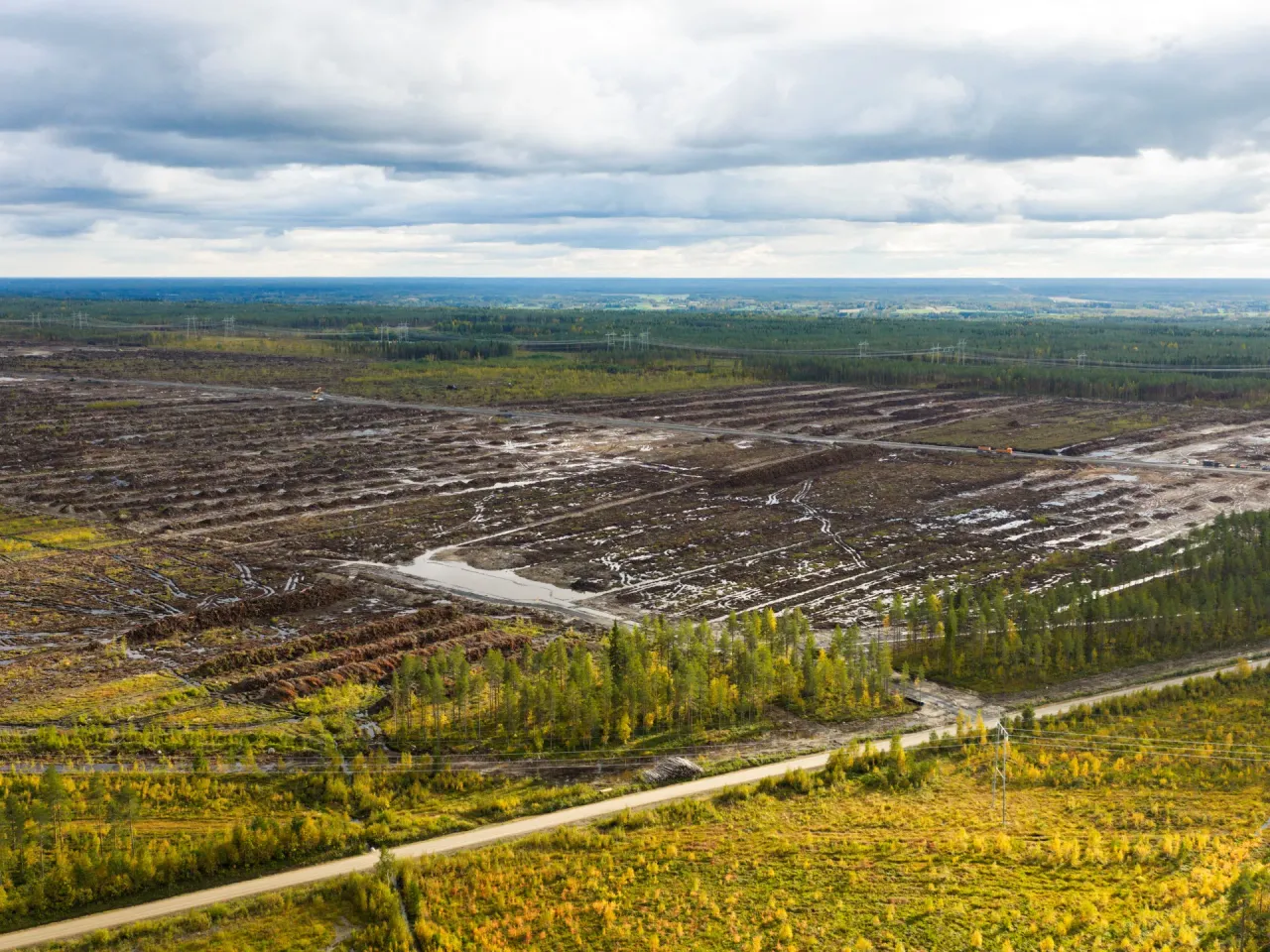
Finnish police have launched a criminal investigation into suspected breaches of environmental law at the construction site of a planned Google data centre in northern Finland.
Authorities allege that Tuike Finland, a local Google subsidiary, cleared and drained forest at a planned site near the town of Muhos before environmental impact assessments required under Finnish law had been completed. Campaigners estimate that around 250,000 trees were felled at Muhos and 150,000 at a second site in Otanmäki, approximately 100 kilometres to the south-east.
"Based on preliminary information, there have been ambiguities and shortcomings in the drainage and water management at the construction site of Tuike Finland Oy's datacentre project," Finnish police said in a statement on Thursday.
"We are investigating whether the company's operations have breached the Water Act and resulted in environmental damage," Detective Superintendent Kari Pakanen said, adding that a guilty finding could lead to a corporate fine. Pakanen declined to say whether any individuals could become targets of the investigation.
A Google spokesperson said the company would cooperate with the police investigation and continue to focus on maintaining compliance at its sites. Google's Finland country manager, Antti Järvinen, has previously apologised for the forest clearings, but argued that the company had acted according to "the best understanding we had of the legislation at the time."
Earlier this month, Finnish authorities ordered Google to suspend work at both sites after the company failed to complete environmental impact assessments before clearcutting the land. The Supervisory Agency, which oversees environmental permits and assessments, told Google to halt "preparatory measures altering the environment."
The data centre project is part of a deal, valued at approximately 13 billion euros or 15 billion dollars, announced last month by Alphabet's Google to invest in artificial intelligence infrastructure in Finland. Google has described it as its largest investment in Europe. Finnish authorities are currently considering applications for a total of 145 new data centres at various stages of planning.
Videos and photographs showing the scale of the forest clearance, and Google's initial reluctance to address the issue in the days after the news broke, have prompted widespread anger in Finland, where respect for the natural environment runs deep among the public.
More than 93,000 people have signed a petition demanding greater data centre regulation and compensation for environmental damage. The controversy has sparked a national debate over what data centre deals mean for communities, the environment and energy prices, and the issue could have an impact on parliamentary elections due in April.
"All the outrage and dismay directed at Google, I can very much share that, especially when we are talking about the parent company valued as the third-largest in the world," Finnish Green MP Oras Tynkkynen said. "There is just no excuse. You have to know the legislation of the country you are operating in; you can afford to hire the best legal experts to help you navigate the local legal requirements."
Tynkkynen called Google's actions "unforgivable", but cautioned that while the anger directed at the US tech giant was justified, it was also diverting scrutiny away from legacy Finnish forestry companies, which he said were "by far the biggest contributors to biodiversity loss in this country."
Experts have questioned the economic benefits of data centre projects for Finland. "Really, for Finland, there are no benefits," said Jussi Kangasharju, professor of computer science at the University of Helsinki. "They are international companies serving international customers. Datacentres ultimately have little benefit for others except the datacentre operator."
Finland's cool climate, low-carbon electricity and government endorsement of AI projects have made the country one of Europe's main destinations for data centre investment in recent years. AI data centres are among the main drivers of a projected rise of up to 40 percent in Finland's electricity consumption in the coming years, according to grid operator Fingrid, if all agreed grid connection projects go ahead.
Finnish Prime Minister Petteri Orpo said in September that the deal would boost the economy, playing down concerns that it would increase energy demand and push up power prices. Attracting investment was a "top priority," he said, and the deal would "deliver lasting benefits."