Residents of Oleshky, a Russian-occupied town in southern Ukraine, were evacuated on Friday as part of a joint relief operation involving both sides of the conflict — the first such operation in four years and eight months of war.
A ceasefire, described as the longest and most widespread since Russia's invasion of Ukraine began in 2022, has been in force across the entire frontline region of Kherson since Tuesday. The pause in fighting allowed the road out of Oleshky to be demined ahead of the evacuation.
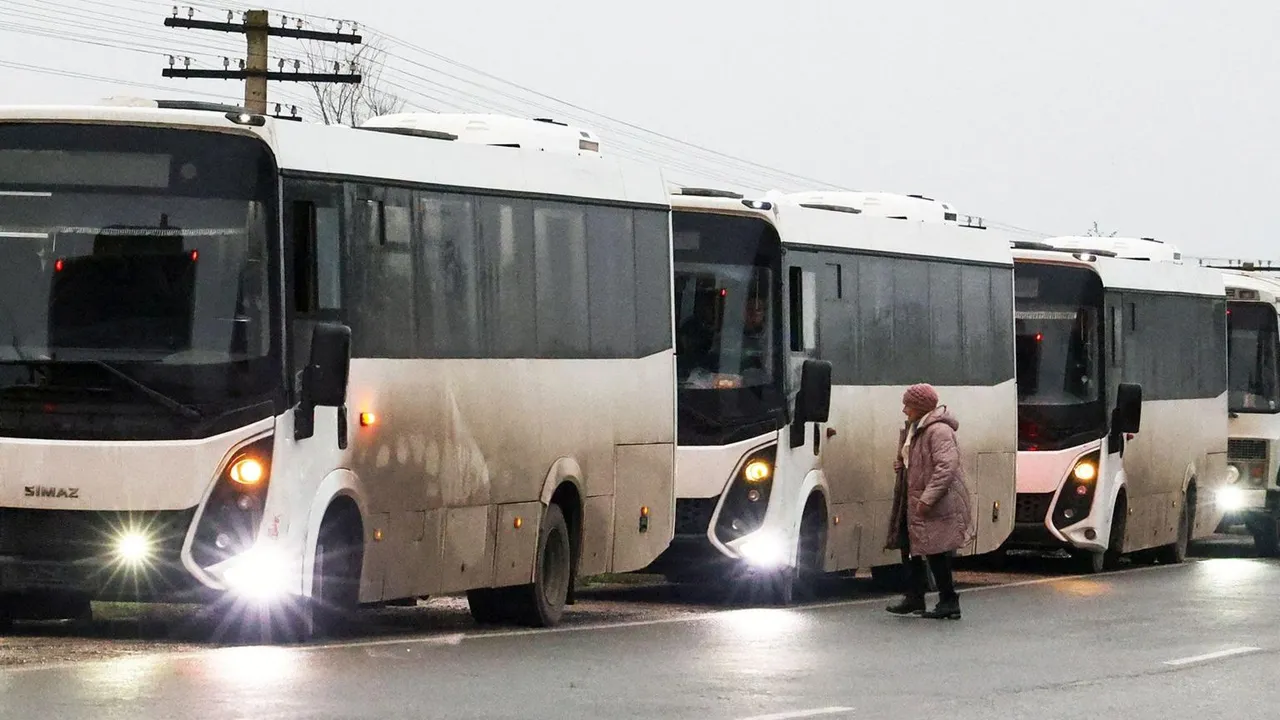
Residents who wished to leave were given a four-hour window on Friday. A convoy of 25 buses was brought in to allow up to 750 people to depart by 14:00 local time (12:00 GMT), with ambulances also on hand for those with limited mobility.
"Everyone who wishes to leave Oleshky will be given the opportunity to do so safely," Ukraine's human rights ombudsman Dmytro Lubinets said on Friday morning. "At the same time, those who decide to remain will be able to stay and will receive all the necessary humanitarian assistance."
Several hundred people were understood to have decided to stay, despite widespread devastation and the absence of gas, electricity and running water.
Ukrainian military positions lie five kilometres from Oleshky. Evacuees travelling to Ukrainian-controlled territory were required to first pass through Russian-occupied land before reaching the southern Russian city of Anapa. From there, they were to board a Russian government plane to Gomel in Belarus and then travel by road across the border into Ukraine's Chernihiv region.
Others were expected to choose to remain in Russian-occupied territory.
Both Lubinets and Russia's children's rights commissioner Maria Lantratova posted videos from Oleshky on their social media channels, showing residents being given the choice to form two groups depending on whether they wished to be taken to Russian-controlled territory or to Ukraine.
In one video, Lubinets was seen meeting tearful locals. "The problem is that a lot of people are staying," he said. "I was told that it was their own choice, we will do everything possible for the humanitarian aid to arrive."
Russia said on Thursday it had prepared "dozens of tonnes" of aid for residents who did not wish to leave, including food, medicine, hygiene products and fuel for generators.
Speaking to journalists on Friday evening, Lantratova issued a joint appeal with her Ukrainian counterpart addressed "to the US First Lady... that humanitarian missions such as this one, delivering aid to residents in need, be conducted on a regular basis under the coordination of Mrs Melania Trump."
One Oleshky resident said she had decided against leaving because "they wouldn't take my animals, so that's it."
A woman named Olena, now living in Kyiv, said her grandmother and wider family in Oleshky were also staying behind. "The older generation does not want to leave," she said. "I've barely managed to persuade my father — and only because I've just had a baby, who he would never see otherwise."
Olena said her grandmother's sister died in Oleshky last winter after stepping on a landmine hidden under snow. "She lost her legs after stepping on a landmine, covered in snow... People took her to the hospital in a garden wheelbarrow," she said. "That's how locals transport all wounded and dead people in Oleshky to the hospital and the hospital's morgue: in garden wheelbarrows."