The European Union has unveiled proposals to ban social media for children under 13, as a growing number of countries move to restrict children's access to online platforms.
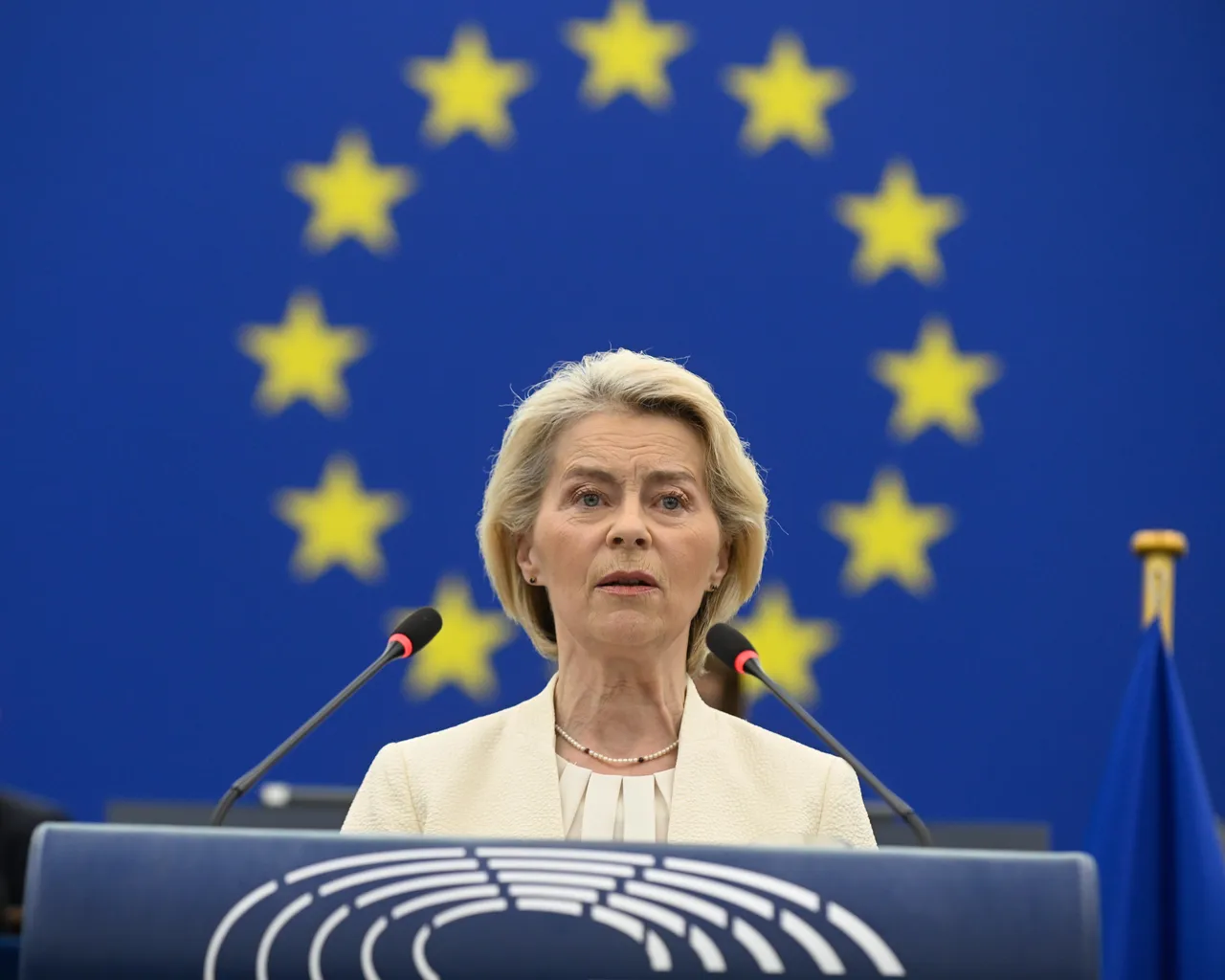
European Commission President Ursula von der Leyen confirmed the plans on Wednesday, saying social media apps were "depriving children of their childhood" and that big tech platforms needed to prove the safety of their products.
Von der Leyen promised a draft law imposing a total ban on social media for children under 13. Those aged 13 to 15 would be permitted "mini accounts" under parental supervision, with time limits on apps.
The Commission is set to publish its social media plan on Thursday. The proposal will then need to be agreed upon by the European Parliament and all 27 EU member states before it can become law.
Von der Leyen also pledged that the Commission's Digital Fairness Act, due to be submitted to the European Parliament this year, would address features such as addictive design, which she said was "harming everyone."
The Commission president made the remarks in Strasbourg as part of her annual state of the union address.
In a wide-ranging speech, she also promised a European heatwave plan and committed to an emergency response mechanism to manage sudden inflows of migrants, referencing events at the Spanish enclave of Ceuta in August.
Von der Leyen extended an unprecedented invitation to Canada to become an "associate member" of the EU and pledged to set out ideas for a European security council involving Canada, Norway, Ukraine and the United Kingdom.
On defence, she said the EU needed its own version of NATO's Article 4 — an "emergency security protocol" under which all member states would convene at the request of another in response to a hybrid attack.
"Europe needs its own counter-hybrid playbook," she said. "We urgently need a consensus on how to respond to certain incidents — those which fall below armed aggression but clearly threaten our national security."
NATO's Article 4, separate from the collective defence clause Article 5, allows alliance members to consult when one believes its territorial integrity, political independence or security is threatened.
European nations have recently faced a series of hostile acts attributed to Russia, including sabotage, incursions by military jets into European airspace and a drone attack on Leipzig airport.
Warning that Ukraine faced a tough winter ahead, von der Leyen suggested the EU may have reached its limits on economic restrictions against Russia.
"What is needed is not necessarily new sanctions, but above all the enforcement of existing sanctions," she said.
After 21 rounds of measures, EU member states have found it increasingly difficult to agree on further sanctions against Russia's war effort, with many wary of the cost to their own economies.
Von der Leyen also addressed Europe's divisions over whether to impose trade restrictions on Israel and its illegal settlements in the West Bank. The Commission has declined to publish a proposal banning such trade, though several EU member states and allies — including France, Canada and the United Kingdom — have moved in that direction.
"When Europe is divided, it cannot change the course of events," she said.