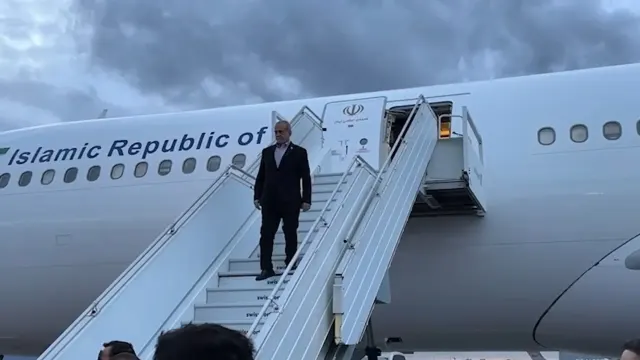
Donald Trump arrived in Ireland on Saturday for a two-day visit combining diplomacy and golf, a trip that has drawn attention for blurring the lines between his presidency and personal business interests.
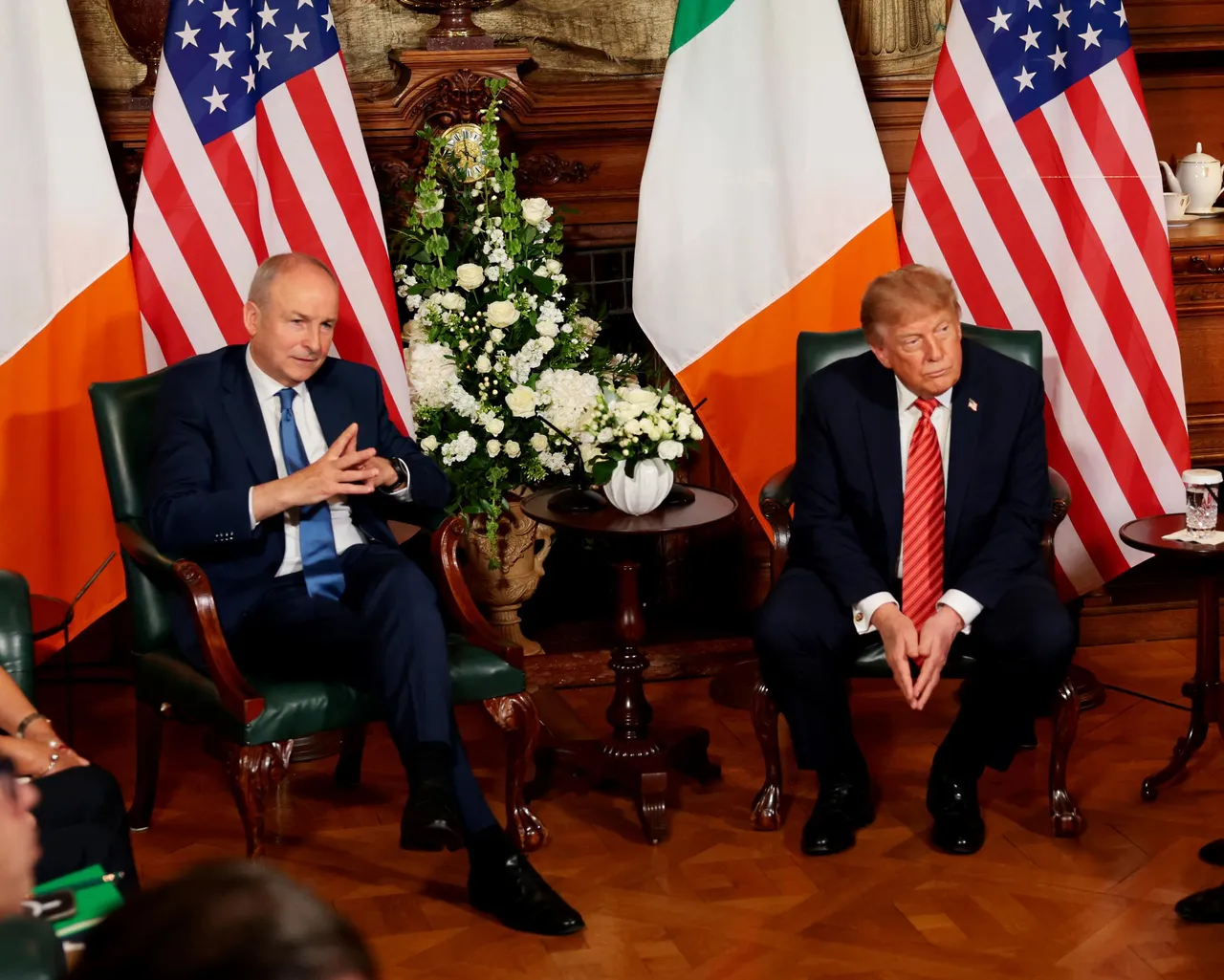
Trump met Irish Taoiseach Micheál Martin at Farmleigh House in Dublin, where he made candid remarks on a range of topics, including the question of Irish unification.
Speaking to reporters after the meeting, Trump said he would "love to see it unified," predicting that a united Ireland is "going to happen eventually." He suggested it "may as well happen now" and appeared to cast Martin as the person best placed to advance the cause.
"Well, I don't want to cause any problems, but I will tell you I'd love to see it unified. I have friends on both sides, great people. They're Irish people. How can they be bad, right? I'd love to see it unified. I think it would be a great feather in everybody's cap if that happened. It's going to happen eventually. You know what? The way I look at it, it's going to happen eventually. It may as well happen now. We're talking about it and you got the right man over here to get it moving. But, yeah, I think it would be a fantastic thing. Now the UK will have something to say about it, obviously. But I think it would be a great thing. I mean, how can it be bad?"
Trump later appeared to walk back the remarks during a speech at Deerfield in Dublin, joking that there was "no good answer" to the unification question, adding: "No matter what you say, no matter how well you say it."
The British government moved quickly to clarify its position. A spokesperson for Prime Minister Andy Burnham said his stance on Irish unification remained unchanged. During Prime Minister's Questions on Wednesday, Burnham had said he would stick to the Good Friday Agreement "100 percent." "I am not aware that there is majority public support for another referendum, and until that changes, there will not be one," he said.
Trump also met Irish President Catherine Connolly at Aras an Uachtarain. Among the gifts Connolly presented to Trump was a St Brigid's Cross, traditionally associated with peace, along with a collection of poetry that included Michael Longley's sonnet Ceasefire.
The choice of gifts carried clear symbolic weight. Before winning the Irish presidency last year, Connolly was an independent left-wing member of parliament for Galway who had protested against Trump's 2019 visit and more recently criticised his positions on Gaza, Iran, and other issues. "If we are going to act as an independent sovereign state, a neutral republic, we must use our voice to speak to power and the abuse of power by president Trump," she had said. When asked about her criticism in March, Trump replied: "He's lucky I exist."
Closing his speech at Deerfield, Trump praised Ireland and its people in characteristically blunt terms. "This country is fantastic, it's just a fantastic place, I love it," he said. "I have investments here but that's not why I love it. I like it because of its special people, you have unbelievable people in Ireland."
He had earlier offered a more colourful assessment of the Irish character during the same address. "You know they say you can't generalise about groups of people, countries, but you can. People love coming to Ireland. You know why? Because they love you. You love the people. There's a friendliness. There's also a viciousness and a toughness. Let me tell you, you are some of the most vicious bastards... but when you want to be nice, there is nobody nicer."
Protests took place in Dublin during the visit. When asked about the demonstrations, Trump said he had been unaware of them. "I didn't know there was a protest. It can't be a very big one because we've been all over Ireland today already, it's early in the morning... but I haven't seen any protest. It's a friendly protest," he said.
Trump arrived in Ireland under tight security. The visit, which spans two days, combines official diplomatic engagements with golf at one of his Irish properties.