Serbia's Student List movement has won a historic election victory, defeating former president Aleksandar Vučić after 14 years of increasingly authoritarian nationalist rule, and is now preparing to begin talks on forming a government.
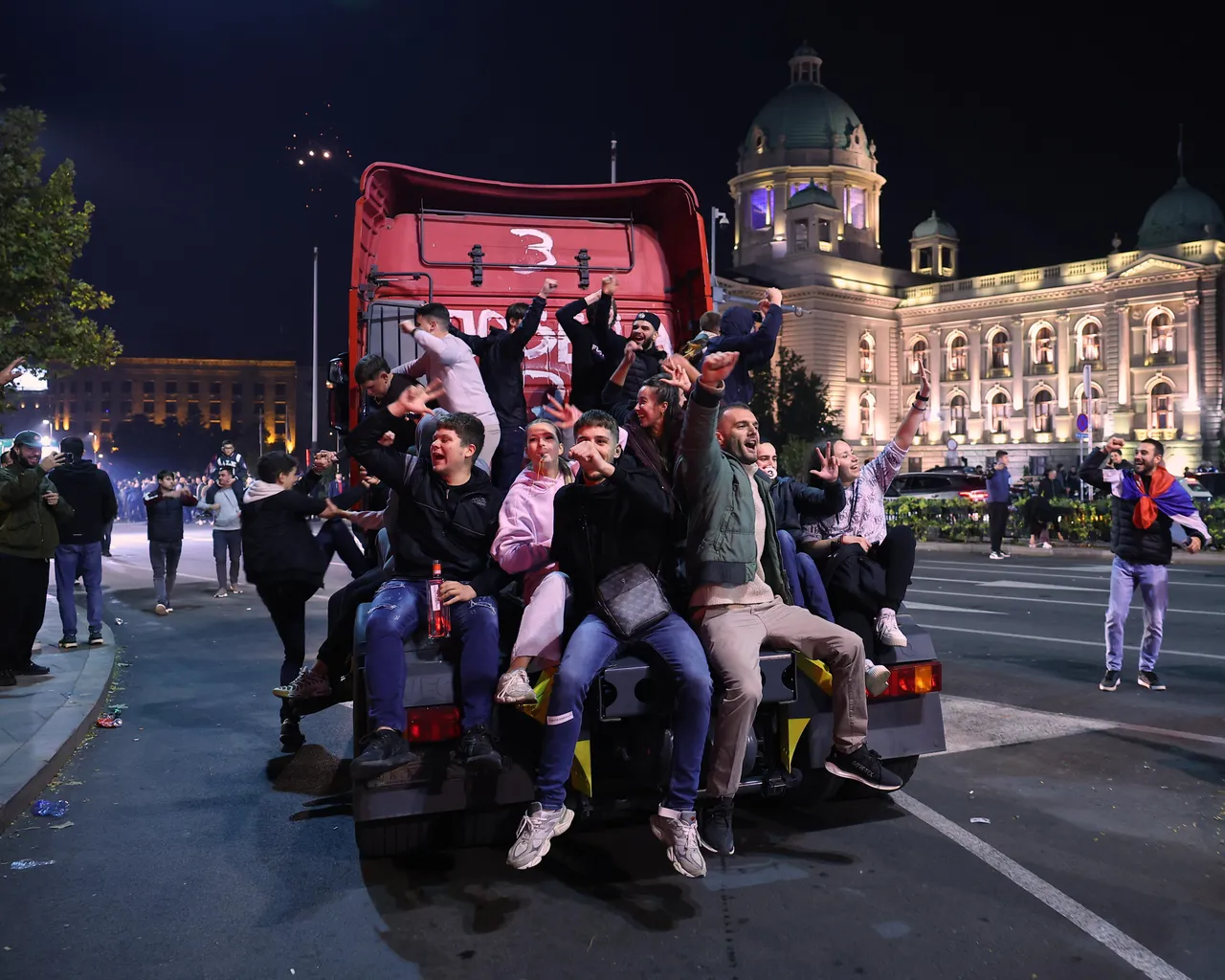
Vučić conceded defeat late on Sunday, bringing his domination of Serbian politics to an abrupt end. Supporters of the Student List took to the streets across the country on Monday to celebrate the result.
With 100% of ballot samples counted, projected results from the Centre for Free Elections and Democracy in Belgrade showed the Student List on 53% of the vote, giving it 141 seats in the 250-seat parliament. Vučić's Serbian Progressive Party won 39%, giving it 103 seats. The remaining seats went to national minority party lists.
The victory caps two years of anti-government protests triggered by the collapse of a canopy at the Novi Sad railway station that killed 16 people.
The movement, which has no experience of government, was built around collective decision-making and is deliberately leaderless with no hierarchy. Its candidates included academics, actors, farmers and students. It remains unclear who will be appointed prime minister and who will form the cabinet.
Prominent figures within the Student List include Ilija Srdanović, a cardiologist who headed the candidate list; Dejan Šoškić, a former central bank governor; and Radomir Saičić, a chemistry professor at Belgrade University who spoke on behalf of the List following its victory.
"Everyone in the student movement, and every candidate on the list, has a complete and very clear understanding of the weight of the responsibility before us," said Ana Mirković, a university educationist, psychologist and Student List candidate. "We do not see the election result as gaining power and privileges, but as taking on a historic debt to our own people and to our own children."
Mirković said the movement's first priority was "the social and psychological detoxification" of the country.
Vučić's 14-year rule has been described as a "textbook regime" of autocracy, with his party extending control over the media, judiciary and other state institutions. Elections under his rule were marred by registration irregularities, media bias and voter bribes.
The Student List's platform centres on a pledge to fight corruption and restore the rule of law. Key proposals include creating an independent police unit accountable to prosecutors rather than the interior ministry, and a purge of police officers linked to organised crime.
The movement also aims to ban the appointment of party loyalists to state-owned companies and to promote financial accountability and public scrutiny of all major state infrastructure contracts through new independent bodies.
Mirković said the new government would dismantle a "system of intimidation" that encouraged "fear and polarisation", by "urgently opening up" the media, ending pressure on public-sector workers and "stopping institutional violence."
She added that the aim was to "rebuild society from the ground up: full disclosure of all contracts and financial flows; depoliticising and strengthening the judiciary; renewing the education and healthcare systems", and that state capture should "never again" be possible.
The Student List deliberately kept divisive foreign policy issues, including relations with the EU and Russia, in the background during the campaign. The Kremlin said on Monday it hoped the new leaders "understand that cooperation with Russia is in Serbia's interests."
Analyst Dušan Vučićević said that from the outset the movement "insisted as much as possible that Serbia must first and foremost address domestic political issues — the literal dismantling of every institution, from the national to the local level."
The new government faces a significant challenge in overhauling institutions staffed with civil servants loyal to the outgoing regime. University professors and other experts who stood on the List are expected to lead that process, though observers note the work of institutional recovery is only just beginning.
The Student List's win marks a profound political shift in Serbia and could offer inspiration to other student movements that have emerged across Europe in recent weeks.