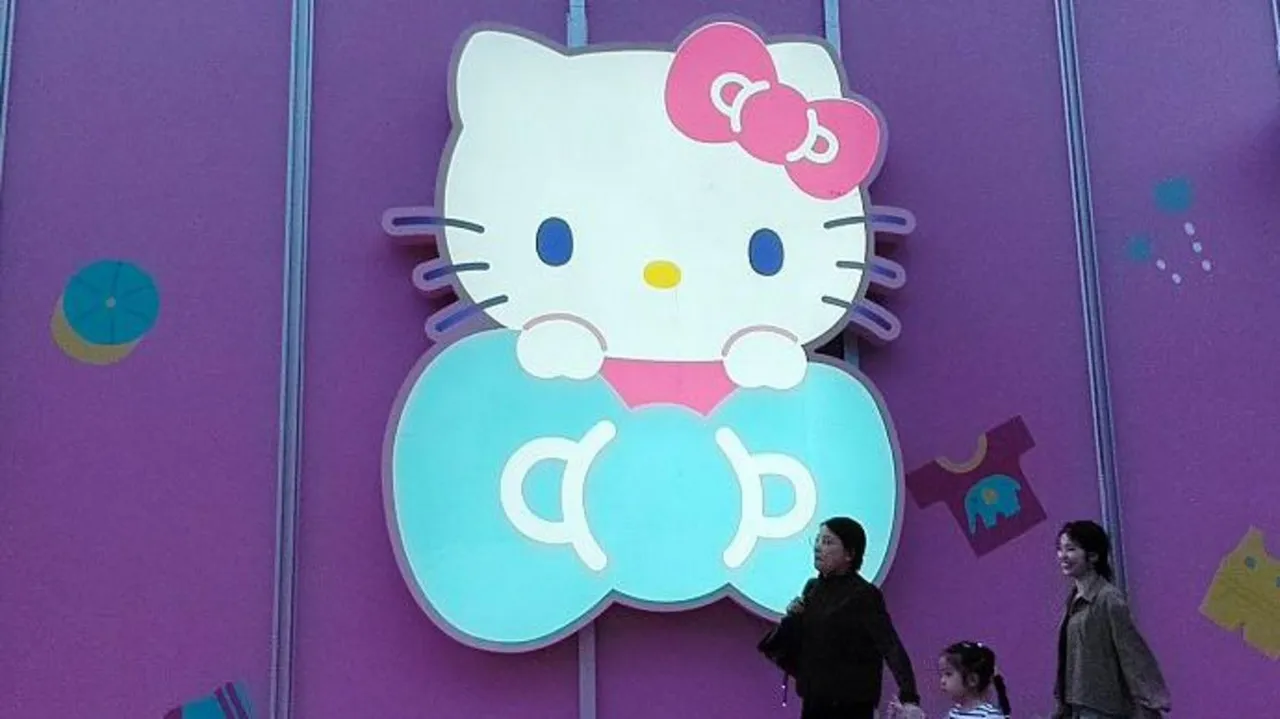
Sanrio, the Japanese company behind Hello Kitty, has apologised and ended its merchandise partnership with the popular spy thriller Vivant following an outcry from Chinese state media and social media users.
The backlash was triggered by scenes in the drama's second season in which Chinese agents use brutal methods to torture members of a secret unit of Japan's self-defence forces. In one episode, aired on 4 October, a Chinese agent is shown cutting off the fingers of a Japanese intelligence officer and stabbing him in the abdomen.
Chinese state media condemned the portrayal as a "deliberate smear" against China. The state-run Global Times said the acts depicted "bear striking similarities to the torture inflicted on Chinese nationals by invading Japanese troops" during the Second World War, adding that the drama "distorts the truth by attributing these atrocities to modern Chinese characters."
The drama, produced by the Japanese TBS network, stars Masato Sakai as a salaryman drawn into a web of international crime and espionage. Its first season, set in a fictional central Asian country, had not attracted similar controversy.
Sanrio announced its decision to end the collaboration in a post on the Chinese social media platform Weibo, stating that the show "contained elements inconsistent with Sanrio's core values."
"Since its inception, Sanrio has consistently used its characters to convey values such as care and connection, and remains committed to its corporate philosophy of fostering harmony among all people," the company said in a statement issued late on Wednesday.
"We take the feedback we have received regarding this incident very seriously. Moving forward, we will strengthen our review processes for all future collaborative projects."
The Vivant-themed merchandise had featured Hello Kitty alongside other Sanrio characters, including My Melody and Cinnamoroll, dressed as characters from the show.
China is a significant market for Sanrio. According to reports, the Tokyo-based company generated 781 million yuan, equivalent to approximately 117 million dollars, in revenue from China in the first half of this year, representing an increase of more than 40 percent compared to the same period last year.
The Global Times warned on Wednesday that Sanrio "stands to lose far more than short-term sales" by associating with what it described as "anti-China content," adding that "the trust and emotional bond it has built up over a long time will also suffer." The paper also said the Hello Kitty character "should not dance with Japan's right wing."
A spokesperson for the Chinese foreign ministry said on Thursday that the incident should "serve as a warning to the international community and discerning people in Japan."
The controversy unfolds against a backdrop of strained relations between Beijing and Tokyo. Japan's Prime Minister Sanae Takaichi sparked a diplomatic dispute in November last year when she told parliament that a Chinese attack on Taiwan could trigger the deployment of Japan's self-defence forces if the conflict posed an existential threat to Japan.
Since then, Beijing has applied pressure on Tokyo through a series of measures, including restrictions on rare earth exports, curbs on tourism, and the return of pandas on loan to Japan.
Takaichi said earlier this month that she had recorded episodes of Vivant and planned to watch them over the year-end and new year holidays.
The Sanrio episode follows a separate controversy involving French footballer Kylian Mbappé, who was dropped by several Chinese brands after jokingly referring to Mao Zedong as a "dictator." The Real Madrid forward, who carries the nickname "the dictator" for his influence on the game, later apologised for what he called his "ill-judged" remarks.


