North Korea has test-fired two types of submarine-launched strategic cruise missiles in the sea off its east coast, state media KCNA reported Thursday.
The tests, conducted on Wednesday, were aimed at examining the reliability of the country's war deterrents and improving the navy's ability to perform strategic missions, according to KCNA.
One of the missiles fired was a Pulhwasal-3-31, the same type of strategic cruise missile North Korea said it test-fired from land the previous week. Senior military officers observed both launches.
KCNA stated that the tests had no adverse impact on the security of neighbouring countries.
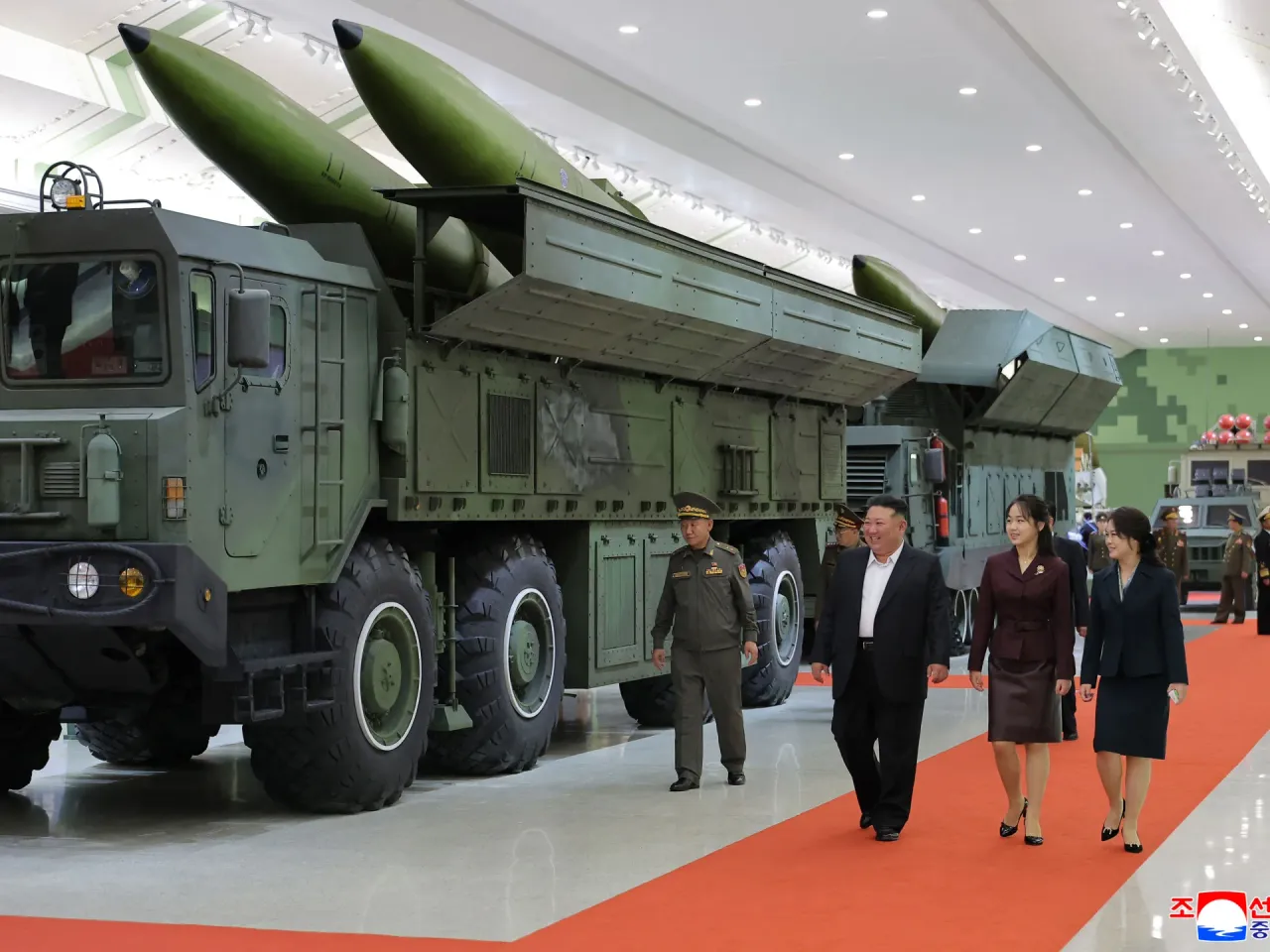
North Korea is not yet believed to have launched a modern missile submarine in full operation. Developing such a capability remains a top military priority for leader Kim Jong Un, who has overseen the development of a range of strategic ballistic and cruise missiles.
Last year, Kim toured his country's submarine production facility, where state media images showed an 8,700-tonne nuclear-powered missile submarine under construction. During the visit, he criticised a nuclear submarine deal between the United States and South Korea, describing it as a threat to stability on the Korean Peninsula.
The submarine-launched missile tests are the latest in a series of weapons tests by Pyongyang in recent weeks.
Earlier this week, North Korea fired multiple ballistic missiles towards the sea off its east coast. On October 3, it also tested a hypersonic intermediate-range missile designed to evade missile defences in South Korea and Japan.
Following the ballistic missile launch, Seoul's Joint Chiefs of Staff spokesperson Jang Do-young said the move appeared to be a show of force, coming days after South Korea tested its own hypersonic weapon.
Last week, South Korean President Lee Jae Myung oversaw the country's first public test firing of a hypersonic missile. Lee's office said the weapon, once fully developed, would enhance South Korea's ability to strike key targets by surprise in the "Korean Peninsula theatre of operations."
Tensions between the two Koreas have further escalated following a landmine blast in the Demilitarized Zone in September that wounded three South Korean soldiers. Seoul blamed North Korea for the incident.
A joint South Korean-United Nations investigation concluded that two landmines that exploded in the DMZ were planted by North Korean forces approximately one year ago. Seoul subsequently demanded an official apology from Pyongyang.
North Korea has sharply accelerated military fortification along the DMZ as part of Kim Jong Un's "hostile-states" policy, launched in 2023, which aims to permanently sever ties with South Korea.
Diplomatic efforts on the Korean Peninsula have stalled since the collapse of denuclearisation talks between Washington and Pyongyang in 2019. While US President Donald Trump has raised the possibility of meeting Kim Jong Un during his second term, no such meeting has taken place.