The International Atomic Energy Agency (IAEA) has raised the alarm over evidence that North Korea has constructed a new uranium enrichment facility at its main Yongbyon nuclear complex, calling it a cause for "serious concern."
The new two-storey building is capable of housing up to 28 centrifuge cascades — machinery used to enrich uranium — according to the watchdog's report, which was based on analysis of satellite imagery, open-source material, and photographs published by North Korean state media.
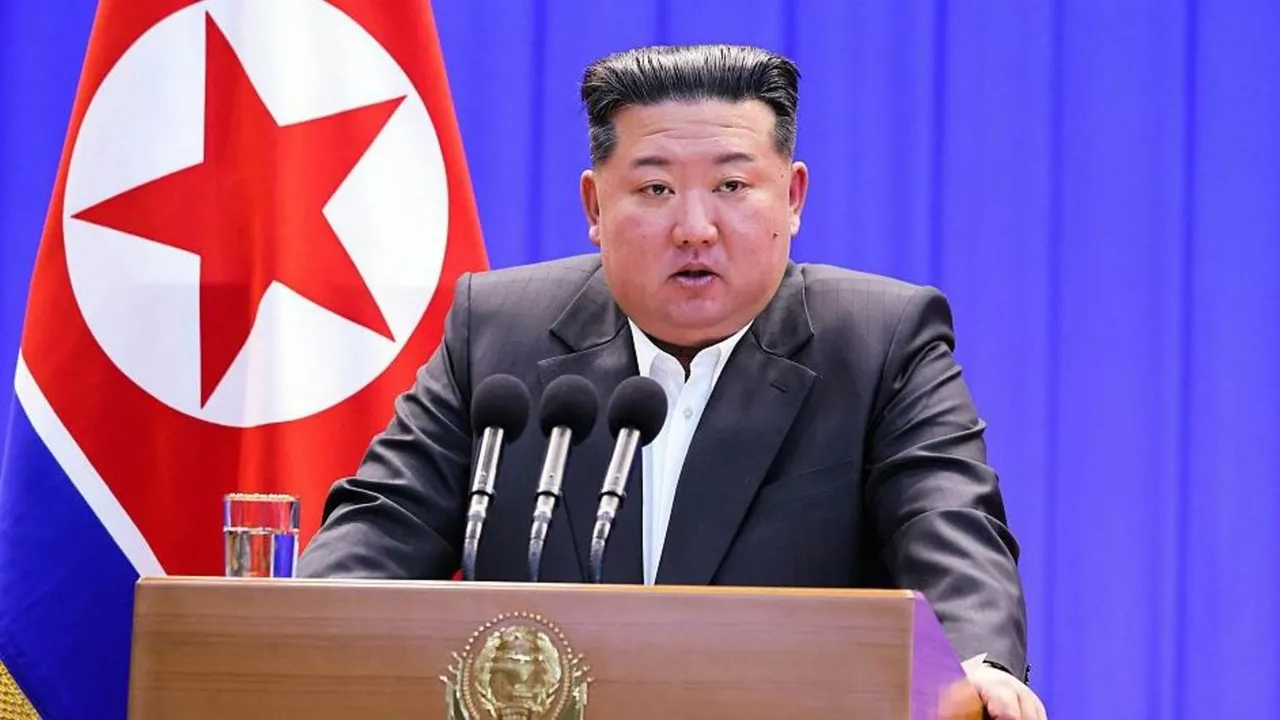
The IAEA identified the structure as Yongbyon's second uranium enrichment facility after comparing satellite images taken during its construction with media photographs of a visit to the site by North Korean leader Kim Jong Un on 3 June.
During that visit, Kim claimed the country's capacity to produce weapons-grade nuclear material had more than doubled over the past five years. He praised the "greatly expanded production capacity," adding that it would "offer the possibility of carrying out larger plans" and promised "vast future plans to exponentially strengthen the country's nuclear forces."
According to a 2025 analysis by the James Martin Center for Nonproliferation Studies, cited by South Korean media, the potential 28 cascades comprising 4,592 centrifuges at the Yongbyon facility could yield approximately 85 kg of weapons-grade highly enriched uranium per year — enough to build three or four additional nuclear warheads.
In a statement released this week, IAEA Director General Rafael Grossi said: "The ongoing operation of enrichment facilities at Kangson and Yongbyon and the reported further expansion of [North Korea's] production of weapons-grade nuclear material is a cause for serious concern."
He added: "The continuation and further development of the DPRK's nuclear programme are clear violations of relevant UN Security Council resolutions and are deeply regrettable."
The IAEA report also noted that operations had begun at an expanded enrichment site in Kangson, near the capital Pyongyang. An annex at the Kangson facility was first constructed in 2024, with indications that operations there started in January of this year.
The agency, which has had no inspectors inside North Korea since it was expelled in 2009, relies on satellite imagery and open-source analysis for its assessments. A satellite image dated 4 September shows the nuclear material production factory at Yongbyon.
The IAEA had first referred to the existence of the new Yongbyon building in June, though Grossi had raised the possibility of its construction earlier in the year. In April, the agency said North Korea appeared to be stepping up its ability to produce nuclear bombs, noting the apparent expansion at Yongbyon.
Estimates of North Korea's current nuclear arsenal vary significantly. South Korea's defence minister said in August that the North possessed between 80 and 120 nuclear warheads, a figure based on estimates by private research organisations. That figure is considerably higher than the 57 cited by US President Donald Trump the same month.
North Korea has conducted six nuclear weapons tests to date, the last of which took place in September 2017. The country has also carried out multiple long-range ballistic missile tests since 2017.
In a report submitted to the UN Security Council in 2020, international experts concluded that North Korea had "probably developed nuclear devices to fit into the warheads of its ballistic missiles."
"What makes North Korea's nuclear programme so concerning is that many of its facilities are unknown, concealed, and thus difficult to target," said Edward Howell, a lecturer at the University of Oxford. "Beyond Yongbyon, we know that other facilities exist: Kangson, for instance. The embeddedness of North Korea's nuclear doctrine within its foreign and domestic policy means that we should expect there to be more concealed production sites."
North Korea's nuclear programme has accelerated significantly under Kim Jong Un, who has overseen a record number of missile tests. The country has demanded international recognition as a legitimate nuclear state.