New Zealand faces a weeks-long wait to determine the shape of its next government after a closely contested general election failed to deliver a decisive victory to either the incumbent right-wing coalition or the opposition left bloc.
On preliminary results, with nearly 100 percent of regular votes counted, the centre-right National Party secured 42 seats, its coalition partner Act won 13, and New Zealand First took 12. The combined 67-seat majority is narrow, with the left bloc just three seats behind.
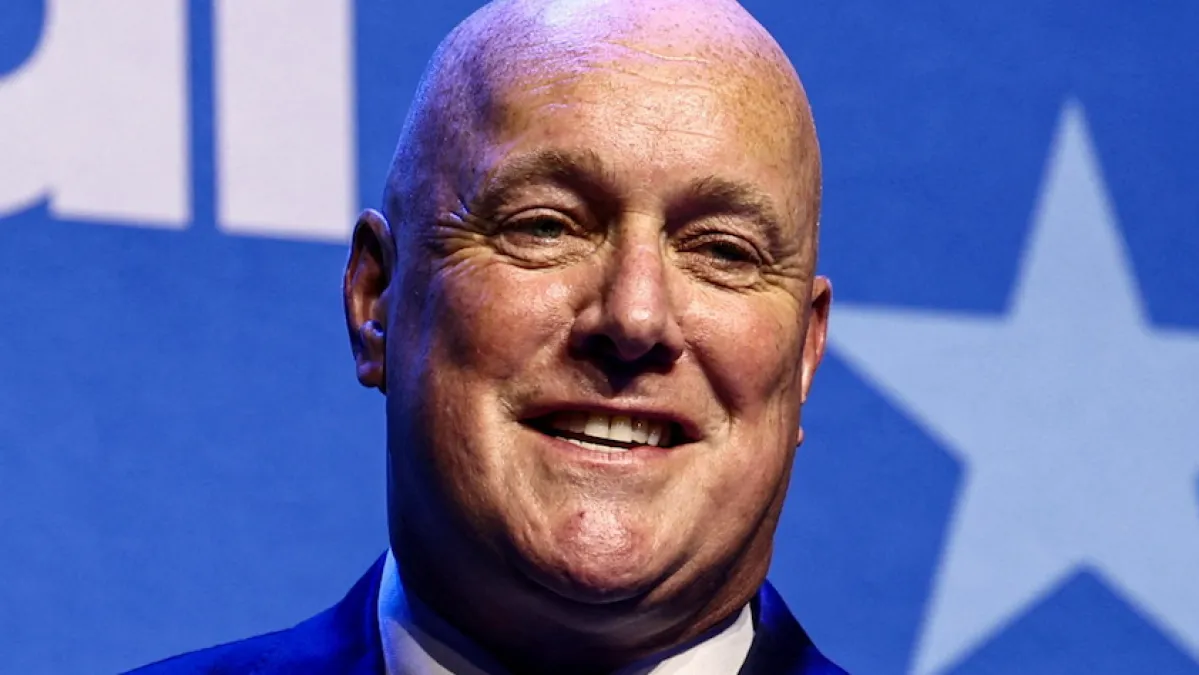
Prime Minister Christopher Luxon told supporters at Auckland's Viaduct Events Centre just before midnight that the results were "too close to call" and that special votes would need to be counted before any coalition negotiations could begin. He said National remained the largest party in parliament and had "a pathway to forming the next government."
National edged Labour by just 0.02 percent in the party vote.
Labour, led by Chris Hipkins, secured 35 seats. Its traditional coalition partners, the Greens, won 16 seats, and Te Pati Maori took five. Even with seven seats from centrist newcomer party Opportunity, the left bloc remains three seats short of forming a government.
Speaking before supporters at the Cosmopolitan Club in Upper Hutt, north of Wellington, Hipkins joked that New Zealand had spoken but "it may take a bit longer to work out what they've said." He added: "As things stand tonight, it is clear that we are not going to know the shape of our next government for a little while longer yet," promising Labour would get "straight to work" should the final count favour his party.
Special votes, which include overseas ballots and votes cast outside a voter's home electorate, will not be officially counted until 27 November. In 2023, around 600,000 such votes were cast, representing 21 percent of the total. These votes have historically tended to favour left-leaning parties. In the previous election, special votes resulted in Te Pati Maori and the Greens gaining three additional seats between them.
The outcome of those votes could significantly alter the current seat distribution and determine whether the right-wing bloc retains its slim majority.
A sluggish economy and persistently high inflation have driven record support for smaller parties across the political spectrum, including Act, New Zealand First, the Greens, and the newly formed Opportunity party.
Opportunity has entered parliament for the first time in New Zealand's history, currently polling at 5.9 percent and clearing the threshold required for representation. Since New Zealand adopted the mixed-member proportional electoral system in 1996, no entirely new party had previously managed to meet that threshold. All previous minor parties had emerged from splits within existing parliamentary groupings.
Opportunity's leader, Qiulae Wong, told supporters in Auckland she was "stoked." "It's looking very promising for us," she said. "Let's just see how the rest of the votes fall."
Pre-election opinion polls had positioned Opportunity as a potential kingmaker. While the right bloc does not currently need the party to govern, a shift in the special vote count could yet bring that role into play.
Under New Zealand's electoral system, voters cast two ballots: one for a local electorate MP and one for a party. The system is designed to produce a parliament that reflects each party's share of the nationwide vote. However, when a party wins more electorate seats than its party vote would entitle it to, those additional MPs are retained in what is known as an overhang.
National won more electorate seats than its party vote share allows, potentially gaining five additional overhang seats. Te Pati Maori also picked up five overhang seats. With all additional seats factored in, the next parliament could contain as many as 130 members, a record under the MMP system, meaning 65 seats would be required for a majority.
The overhang seats benefit National's path to power, but come at a cost. Four of the party's most senior ministers, including Nicola Willis, Paul Goldsmith, Chris Bishop, and Gerry Brownlee, are set to leave parliament, having failed to win electorate seats while the party did not secure enough votes to bring in list-only MPs.


