India's Foreign Minister S. Jaishankar delivered a blunt public assessment of the United States this week, signalling a notable shift in how New Delhi is handling its relationship with Washington under President Donald Trump.
Speaking at an Asia Society event in New York following the close of the United Nations General Assembly on Monday, Jaishankar said the US had been an insensitive partner on the issue of terrorism, had warmed to India's archrival Pakistan, and had pursued "self-centred" trade policies that disproportionately hurt the Global South.
The remarks mark a departure from India's long-standing practice of addressing friction with friendly nations quietly and away from public view. That approach has been especially characteristic of New Delhi's dealings with Washington, where the bilateral relationship has historically enjoyed broad bipartisan support.
Analysts say the shift reflects mounting tensions between the two capitals and the volatility that Trump has introduced into the relationship.
"If I stand back and look at the [India-US] relationship, I note that much of the world has had a more difficult relationship with the US," Jaishankar said. "I mean, that may not be a consolation, but that's a reality."
The changing tone also comes at a politically sensitive moment for Prime Minister Narendra Modi, who faces growing domestic pressure and opposition criticism over what critics describe as repeated concessions to Washington.
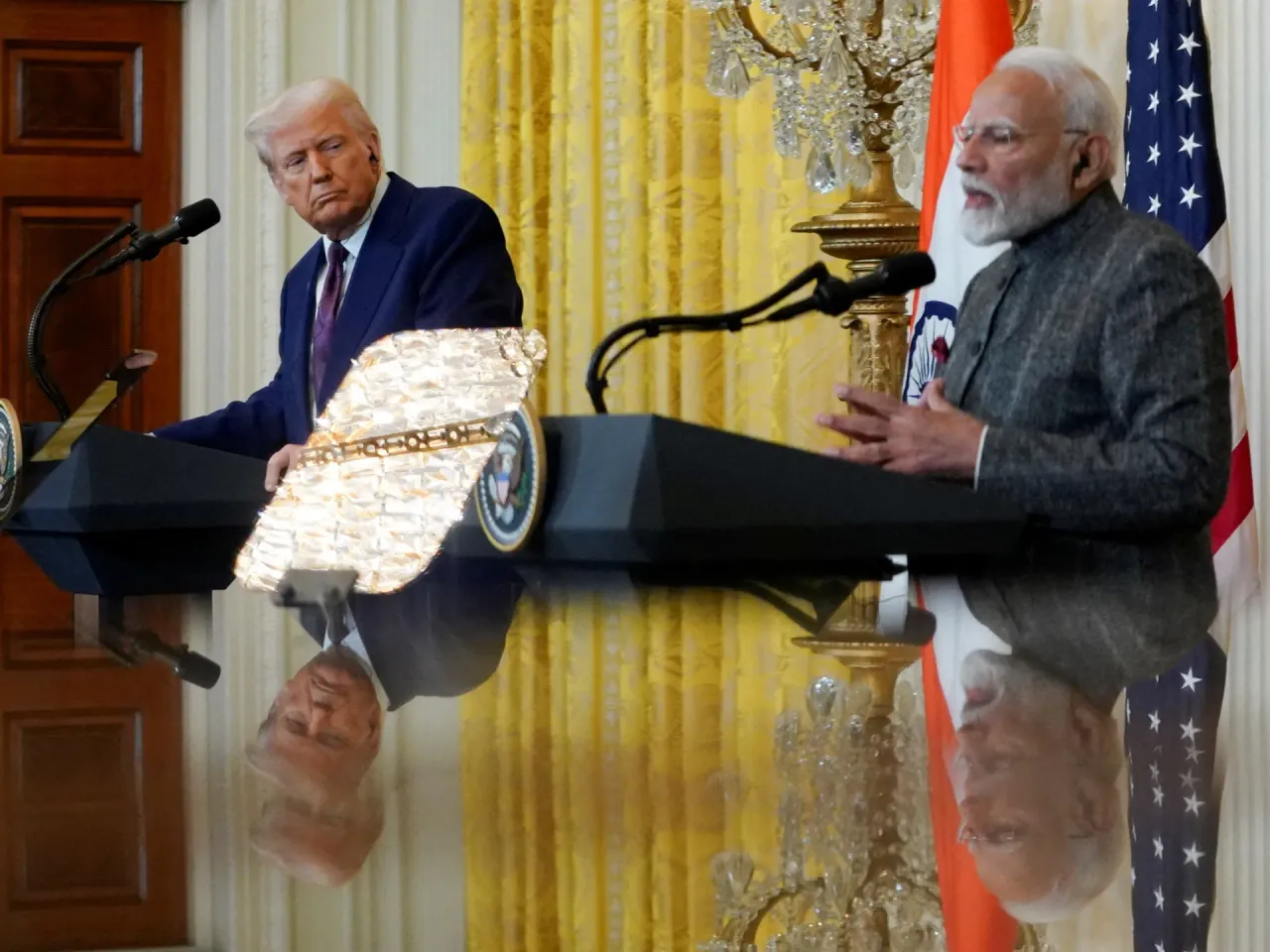
On Wednesday, Modi held a telephone call with Trump, which the Indian prime minister described as "productive" — a notably cooler characterisation compared with his previous references to Trump as a "good friend."
Chietigj Bajpaee, a senior research fellow for South Asia at the Chatham House think tank, said Jaishankar's remarks "offer a frank assessment" of the current state of the India-US relationship. "Clearly, the shine has come off the bilateral relationship after India was initially among the most optimistic about a second Trump term," he said.
Trade has been one of the central flashpoints. Washington is India's largest trading partner, with bilateral goods trade reaching $149.1 billion in 2025. However, the relationship remains imbalanced, with India running a $58.4 billion goods surplus.
Jaishankar noted that countries "should not be so self-centred that you're in your own world and take your decision and say, 'Well, it was not my intention to make your life difficult.'"
He also pointed to the economic spillover from the wars in Iran and Ukraine, arguing that basic needs of nations should not be neglected in the pursuit of narrow national interest.
On the trade negotiations themselves, Jaishankar acknowledged that talks had so far produced a roadmap rather than a finalised agreement. He cited the significant differences between the two economies, including per capita income gaps and the structure of their respective societies and production systems.
Agriculture has been among the most contested areas, with India keeping its market largely closed for decades to protect its farming sector. "The expectation that it could rapidly move forward was tested against the ground reality, which was much more complex," Jaishankar said, adding that there is now "more or less an understanding on the trade agreement."
India was at one point among the countries facing the steepest tariff rates imposed by the Trump administration. After the US Supreme Court struck down Trump's sweeping tariffs in February, the administration turned to alternative measures, including a new 10 percent global tariff.
Earlier this month, Trump signed legislation allowing the US to impose tariffs of up to 100 percent on countries that purchase Russian oil — a provision that directly affects India.
Jaishankar acknowledged that the negotiations had created "bumps last year for the relationship," but expressed confidence that once a deal is finalised, it "would contribute to a better relationship."
Ajay Bisaria, a retired diplomat who served as India's high commissioner to Canada and Pakistan and as ambassador to Poland, said India had made a deliberate choice to be more public in its pushback against Washington given the current climate.